
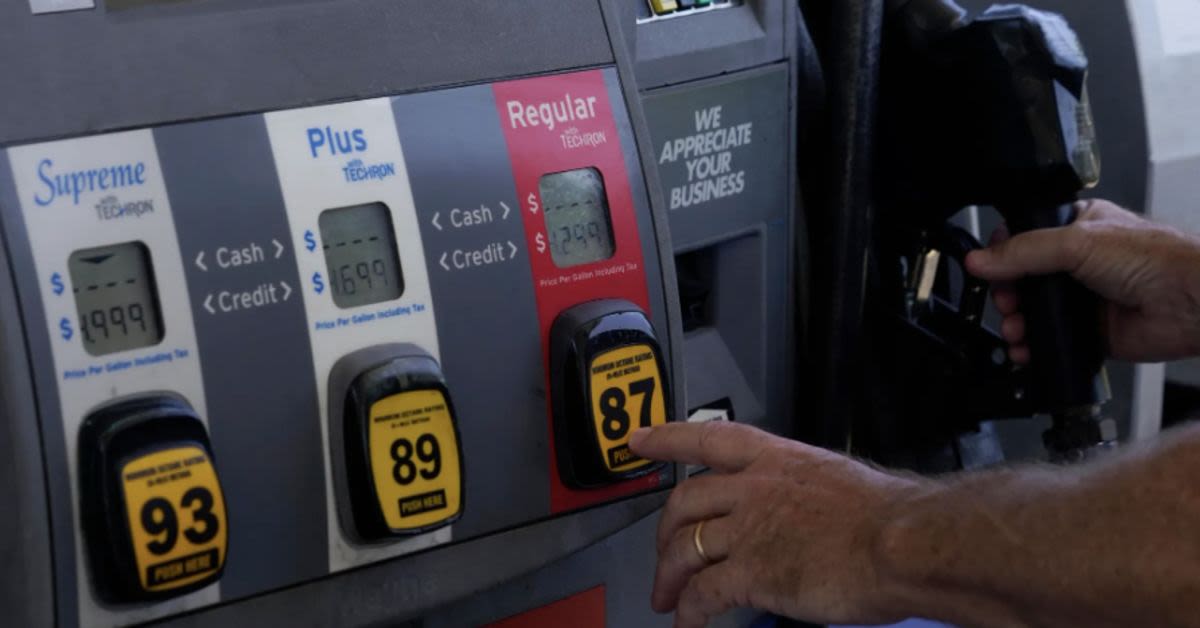
American motorists, even as gasoline prices tick upward amid renewed tensions in the Strait of Hormuz, still pay barely a fraction of what drivers in much of Europe and Asia are forced to shell out at the pump because the United States chose lower taxes and real energy security while Europe and California deliberately chose the opposite and are now living with the painful, entirely predictable consequences.
According to the Daily Caller, the core driver of this price gap is not geology or luck but taxation policy. As the Wall Street Journal reported on April 22, European governments routinely stack $3$4 per gallon in excise duties, value-added taxes and assorted green levies on top of the base fuel cost.
In Germany, retail gasoline recently climbed to the equivalent of $8.75 a gallon, with taxes alone accounting for more than half of that total price. By contrast, most U.S. states impose fuel taxes of roughly 20 cents per gallon, a fraction of the European burden and a reflection of a fundamentally different governing philosophy.
This divergence is no cultural accident. After World War II, Americans built a sprawling, car-centered economy and have consistently rejected European-style punishment at the pump, while European electorates tolerated it and their political class weaponized fuel taxes as both a convenient revenue stream and a tool to coerce the behaviors preferred by central planners.
The economic fallout is now baked into Europes cost structure. Higher fuel levies translate into higher costs for trucking food, shipping goods and powering industry, meaning Europeans do not merely pay more to fill their tanks they pay more for everything that moves on petroleum, and their living standards suffer accordingly.
Energy security forms the second pillar of Americas advantage. The United States produces more than two-thirds of the oil it consumes and imports most of the remainder from Canada and other friendly Western Hemisphere suppliers, leaving U.S. consumers largely insulated from the worst effects of Middle Eastern turmoil.
Europe, by contrast, spends its time lecturing the world about energy transition while remaining dangerously dependent on imported fuels despite sitting atop known, undeveloped reserves. The same governments that demonize oil and gas refuse to develop their own resources, choosing instead to outsource their vulnerability first to Russia, then to OPEC, and now to U.S. LNG, a pattern that is not prudent policy but willful self-sabotage clothed in false virtue.
Nowhere in America is this failure of policy imitation more glaring than in California. The state has effectively imported Germanys disastrous model and turned itself into the nations premier energy basket case, with an 81-cent state gas tax, a 6070 cent cap-and-trade penalty, boutique California blend fuel mandates and layers of environmental rules explicitly designed to punish gasoline and driving, leaving the Golden State with pump prices routinely $2 above the national average.
These policies have strangled in-state production. Refineries are closing or idling, and California now imports gasoline from South Korea, the Bahamas and the Middle East, exposing its residents to global supply shocks even as its political leadership continues to preach climate alarm orthodoxy.
Gavin Newsom and his bureaucrats want voters to believe its all President Donald Trumps fault, but it isnt. It is, instead, the entirely foreseeable outcome of using tax and regulatory warfare to force a premature energy transition, a campaign that has not produced a smooth transition so much as de?industrialization and a steady erosion of household prosperity.
The broader lesson for policymakers is damning. High-tax, high-regulation, import-dependent energy strategies do not deliver utopia or planetary salvation; they deliver chronic vulnerability, inflated living costs and persistent economic drag, as Europes drivers paying double or triple for fuel can attest after politicians prioritized revenue and ideology over abundance, with California following suit and becoming a cautionary tale for the rest of the country.
Most U.S. states, by contrast, are reaping the rewards of the opposite approach. They rely on reasonable taxation that does not treat fuel as a sin, encourage aggressive domestic production that has delivered record output, and maintain supply chains resilient enough to weather global crises without systemic collapse, so that while prices may rise during supply shocks, there are no lines at the pump and no widespread shortages the fruit of policy grounded in reality rather than fantasy.
Americas advantage at the pump is neither accident nor mystery: It is the direct result of rejecting the punitive European model that California eagerly embraced. Policymakers who ignore this lesson are not visionaries but ideologues imposing measurable harm on the people they claim to serve, a warning that resonates as geopolitical risks mount.
The current global turmoil should serve as a wake-up call to voters and legislators alike. Punitive taxation and regulatory strangulation of conventional energy produce scarcity, insecurity and higher costs borne by working families, while Americas formula of lower taxes and energy dominance delivers affordability, resilience and genuine energy security.
Europe and California stand as expensive warnings of what happens when nations choose ideology over reality. Americans outside of the Golden State, if they wish to preserve both prosperity and security, should reject that failing path with zero apology and insist that energy policy serve citizens rather than fashionable dogma.
David Blackmon, an energy writer and consultant based in Texas who spent 40 years in the oil and gas business specializing in public policy and communications, argues that this debate is ultimately about whether governments trust markets and individuals more than bureaucrats and activists. The views and opinions expressed in this commentary are those of the author and do not reflect the official position of the Daily Caller News Foundation, but they underscore a choice that will determine whether the United States continues to enjoy its hard-won energy edge or squanders it by importing Europes mistakes.
Login