
Democrats and their allies in the establishment media appear unable or unwilling to stop filtering American politics through the narrow lens of skin color.
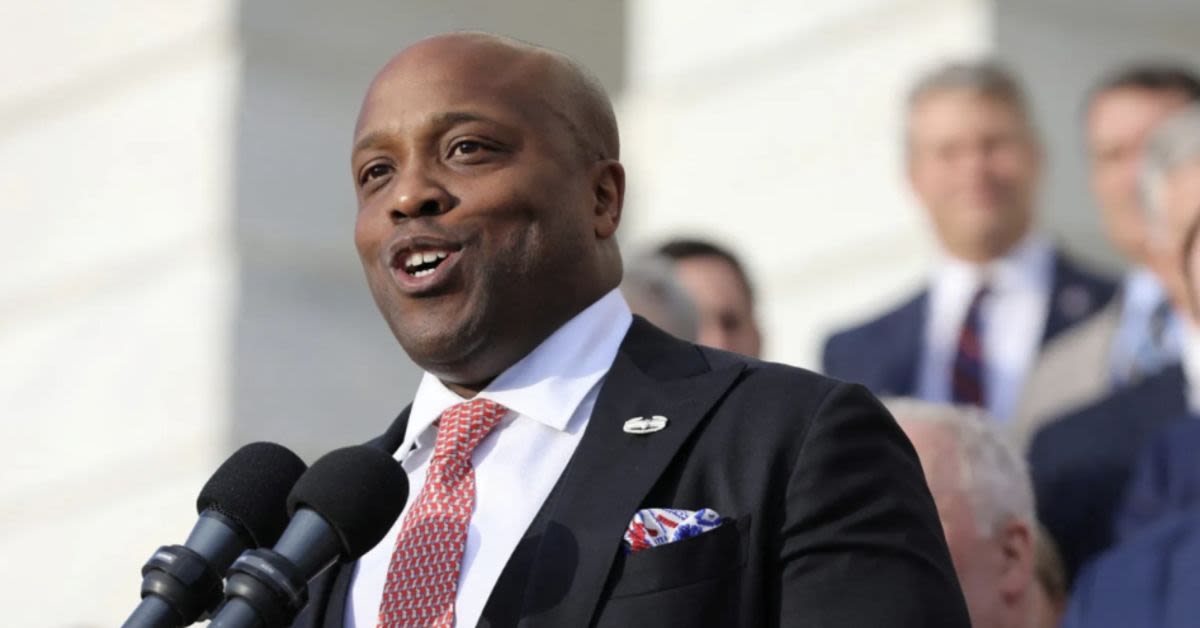
According to Western Journal, this fixation on race has become so pervasive on the left that it obscures their real aims, turning every policy dispute into an argument about identity rather than principle. A recent exchange on the steps of the U.S. Capitol, captured in a clip posted to X, illustrated this dynamic when Republican Rep. Wesley Hunt of Texas a black conservative was confronted with a race-charged question about the Supreme Courts latest ruling on the Voting Rights Act.
The reporters assumptions collided head-on with Hunts insistence that merit, not melanin, should guide voters choices.
The backdrop was the landmark Supreme Court decision striking down racial gerrymandering under the 1965 Voting Rights Act. In practical terms, the Court held that states may no longer use race as a factor when drawing congressional districts, a practice long defended by Democrats as a supposed civil rights necessity. Moreover, the justices determined that the Voting Rights Act itself actually forbids such race-based mapmaking, undercutting decades of left-wing legal and political strategy. Analysts now estimate that Democrats could lose as many as 12 House seats in the Deep South as a result of the ruling.
For constitutional conservatives, however, the decision represents a long-overdue return to the principle that the law should treat citizens as individuals, not as members of racial blocs. It is both logically sound and morally consistent with a republic in which skin color is no longer a lawful or customary barrier to equal participation. That is precisely how Hunt, a principled conservative, interpreted the ruling when questioned by Pablo Manrquez of the left-wing outlet MeidasTouch. The reporter opened with a premise steeped in identity politics rather than constitutional law.
Theres been a lot of talk how there wont be any black Republican members in the new term, Manrquez said to Hunt. What do you make of that?
Hunts response was as concise as it was devastating to the reporters narrative. Nothing, he replied when asked what he made of the possibility that fewer black Republicans would now serve in Congress. I dont understand how thats relevant.
Undeterred, Manrquez tried to pivot to the topic of recruitment, implicitly suggesting that the GOP should be counting heads by race. Hunt refused to take the bait and instead returned to first principles. Im not here because Im black, the congressman said. I am here because I am [a] qualified representative for Congressional District 38. And the American people choose who they want to choose.
That such a straightforward affirmation of merit and voter sovereignty confounds progressive commentators says much about the ideological drift of the modern left. For activists and media figures who see racism lurking behind every ballot and policy, the idea that race need not define political identity is almost heretical. And the one thing I dont want to get into, Hunt added, is this game of race-bait all day, every day. If theres four, if theres 10, if theres none we are talking about who is the best person, that is best qualified to fill a seat, regardless of the way that they look.
Hunt then turned to his own electoral record to underscore how little race matters to voters who prioritize competence and shared values. I represent a white majority district that President Trump would have won by over 20 points, and I won by 25 points the last time I ran, the congressman said. In Texas House District 38s 2024 election, he defeated white Democrat Melissa McDonough by 25.5 points, according to Ballotpedia, a result that shatters the lefts simplistic narrative that white voters will not support black conservatives.
For progressives who insist that America remains irredeemably racist, such outcomes are deeply inconvenient. White Texans, voting in a solidly conservative district, chose a black Republican by an even wider margin than they gave to Donald Trump, suggesting that policy alignment and performance matter far more than identity. Hunt closed his remarks by invoking the moral standard that once united the civil rights movement but is now routinely ignored by the left. Im being judged not by the color of my skin, but the content of my character, the congressman said. I dont care how many black people are here; I want the most qualified people that are here.
Yet even an explicit reference to Martin Luther King Jr. will not deter modern liberals from their relentless focus on race. Those who, like Hunt, refuse to let their skin color dictate their politics are smeared with the usual slurs sellouts, Uncle Toms, and worse for daring to think independently. The hypocrisy is not confined to rhetoric; it shows up at the ballot box as well. In November 2025, Democrats in Virginia chose a white former CIA officer, Abigail Spanberger, as governor over a black Republican woman, Winsome Earle-Sears, despite their constant lecturing about representation and diversity.
The pattern is unmistakable: Democrats talk endlessly about race, but their true priority is power. Race is a tool, a means of mobilizing grievance and fear to secure electoral advantage, not a genuine commitment to equality before the law. Conservatives, by contrast, seek to move beyond racial obsessions and judge candidates on character, competence and adherence to constitutional principles, even when identity politics might offer a tactical edge.
If the Supreme Courts decision helps dismantle race-based districting and restores a focus on individual rights, it will mark a significant step away from the lefts divisive racial arithmetic and toward a healthier, colorblind civic culture.
Login