
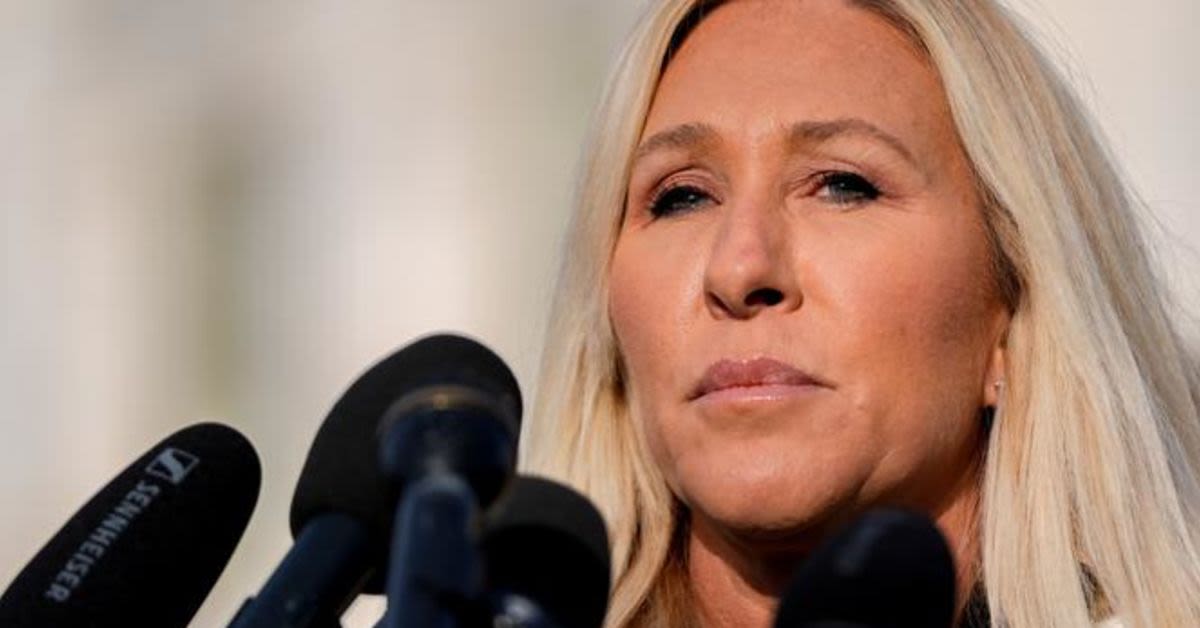
Former Georgia Rep. Marjorie Taylor Greene may be estranged from President Donald Trump, but she is still sending pointed warnings his way about who is and is not truly on his side.
During a lengthy appearance on Tucker Carlson Uncensored on Wednesday, Greene unloaded on what she described as a class of Republican lawmakers who rode into Washington on establishment money while quietly despising the America First movement.
According to Western Journal, Greene suggested that some GOP members have never shared the movements goals and instead arrived in Congress already captured by the donor class and the permanent political machinery.
Greene singled out New York Republican Rep. Mike Lawler as a prime example of this problem, accusing him of being a creature of the very forces that have long tried to blunt Trumps influence and dilute the populist energy of the MAGA base. There are Republican members of Congress that never had good intentions, ever, ever, she said, according to Mediaites transcript. And they came into the House of Representatives already completely supported and propped up and funded by this nasty entanglement Im talking about in Washington, and I watched it with my own eyes when I watched Mike Lawler get elected.
Greene went on to describe what she saw as the coalition behind Lawlers rise, emphasizing that his support network was deeply tied to well-organized, well-funded interest groups rather than grassroots conservatives. Perhaps unsurprisingly given Carlsons own skepticism of the GOP establishment, Greene continued her attack on Lawler, noting that he was heavily supported and funded by the Jewish community there and was heavily being supported by all the Christian Zionists.
Greene recalled her reaction as she watched Lawlers campaign gain traction, saying she quickly realized he was not aligned with the populist right despite running as a Republican. And I was like, Wow, what is going on with this guy? And it turns out he did win his race, Greene recounted. It was a narrow victory, but he did win it. And of course, he instantly came into the House of Representatives, completely bought and paid for by all of the establishment donor class that had supported him.
Once in Congress, Greene said, Lawlers hostility toward Trump and toward those who backed the president became impossible to ignore, even as he benefited from the party infrastructure built on Trumps popularity. He hated Donald Trump, made fun of him constantly, mimicked him, making fun of his voice. He used to attack me, make fun of me, come and find me on the House floor, and make fun of me for supporting Donald Trump, and this was in the four years before Trump got elected as president again in 2024, she continued.
Greene added that Lawlers behavior and positions were so out of step with the conservative base that she initially questioned whether he belonged in the Republican Party at all. And I was just like this guy is literally one of the worst well, I would say hes the worst, but really Randy Fine is the worst. But Mike Lawler was unbelievably I thought he was a Democrat.
Lawlers record has already raised eyebrows among conservatives who expect Republicans to stand firm on core issues such as border security and the rule of law. He drew particular ire when he joined a bipartisan push for what critics on the right viewed as a form of amnesty for illegal immigrants, a move that clashed sharply with the enforcement-first approach championed by Trump and his supporters.
As the husband of an immigrant who recently became a citizen, Ive seen firsthand just how broken our immigration system is, Lawler said at the time, defending his stance. Both parties have failed to fix the problem for decades and it is going to take both parties working together to solve this.
Lawler promoted the so?called Dignity Act as a commonsense compromise, language that often signals to conservatives yet another Washington deal that rewards lawbreaking while promising future enforcement that never materializes. The Dignity Act is a commonsense, bipartisan measure that secures our porous border, creates a process for those already here to pay restitution and integrate into American society, and fixes our legal immigration system so that people who want to come here can do so and can contribute to our society, our economy, and our culture as immigrants have and always will.
Given Trumps well-known insistence on border walls, deportations, and ending incentives for illegal entry, it was inevitable that many in the MAGA movement would view Lawlers proposal as a betrayal of the voters who demanded a tougher stance. From a conservative perspective, any pathway that normalizes the presence of illegal immigrants risks undermining sovereignty, the rule of law, and the interests of working-class Americans who bear the brunt of mass migration.
Greene claimed that Lawlers posture shifted dramatically once Trump secured what she described as his second election victory in 2024, suggesting that the congressmans anti-Trump rhetoric faded when it became politically inconvenient. For grassroots conservatives, her account reinforces a long-standing concern: that too many Republicans talk like moderates in Washington, talk like conservatives at home, and ultimately answer not to voters but to the establishment donor class Greene denounced so bluntly.
Login