
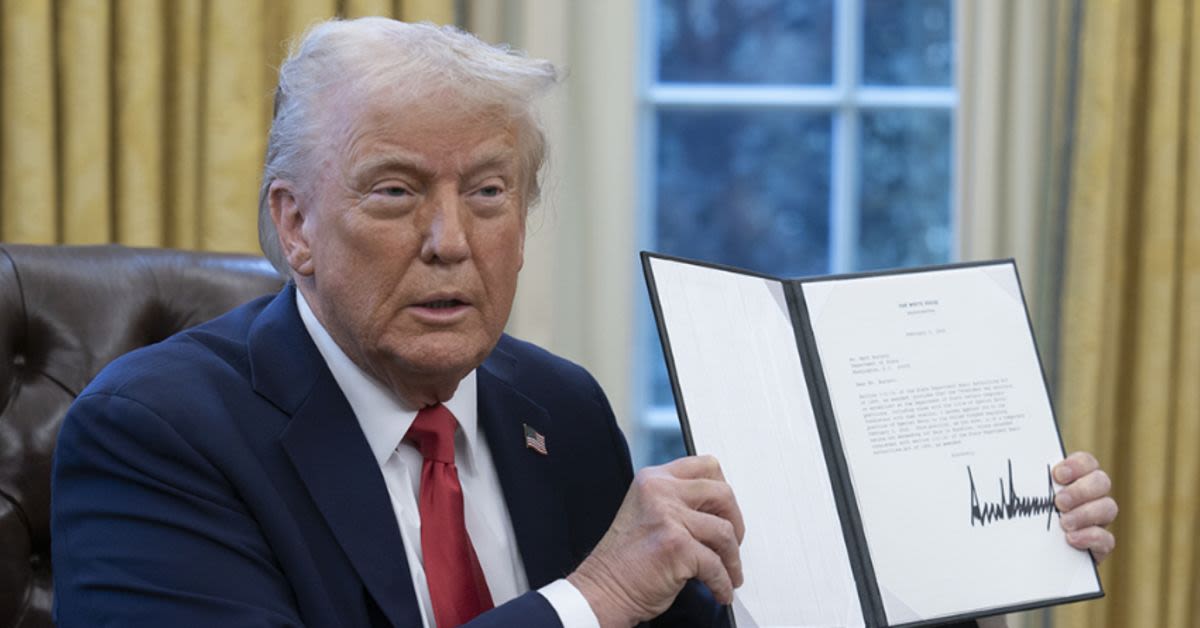
President Donald J. Trump signed a sweeping executive order designed to expand access to high-quality, low-cost retirement accounts for millions of Americans who currently lack employer-sponsored savings plans.
The order, framed as a major step toward empowering workers rather than expanding federal control, creates a new federal informational platform and paves the way for a more market-driven approach to retirement security. As reported by Gateway Pundit, the initiative is aimed squarely at independent contractors, part-time workers, employees of small businesses, and the self?employedgroups that have long been underserved by traditional retirement systems dominated by large employers and government-favored institutions.
Announcing the move, Trump emphasized that the new framework would give ordinary Americans access to the same caliber of retirement options long reserved for federal employees. Beginning at the start of next year, every American will be able to go to http://TrumpIRA.Gov and open a new, low-cost IRA account. Youll then be able to access the same type of retirement accounts that federal employees enjoy, Trump said.
The president underscored that the program is not a new entitlement in the mold of expansive welfare schemes, but rather a tool to help working Americans build their own nest eggs through personal responsibility and disciplined saving. As part of the Federal Savers Match program, low income Americans will be eligible to receive up to $1,000 per year in matching funds deposited directly into their accounts, Trump said.
Trump cast the initiative as a corrective to a system that has too often left the working poor and those outside large corporate payrolls behind, while public-sector workers enjoy generous, taxpayer-backed plans. This is a great thing for millions of Americans who lack employer-sponsored plans. This will be really revolutionary because theyll be covered, he said.
The executive order opens with a clear statement of principle that aligns with a conservative vision of limited but purposeful government: use federal authority not to crowd out private enterprise, but to highlight and facilitate access to private-sector solutions. By the authority vested in me as President by the Constitution and the laws of the United States of America, and to ensure that every American worker has access to a simple, portable, low-cost retirement-savings option, it is hereby ordered, the document begins.
In Section 1, the order acknowledges a longstanding problem that Washingtons bureaucracy and union-aligned interests have largely ignored: Tens of millions of Americans lack access to employer-sponsored retirement plans. It notes that Workers in small businesses, part-time workers, independent contractors, and self?employed workers face unnecessary barriers to saving for retirement, and declares that the Administration intends to give these often-left-out American workers access to the same type of retirement-savings opportunities offered to every Federal worker and to establish an easy and transparent way for eligible workers to obtain up to a $1,000 match for their savings.
The order stresses that Hard-working Americans deserve retirement security in portable savings vehicles that offer access to low-cost investments similar to those offered to Federal workers in the Thrift Savings Plan. Rather than expanding government-run accounts, the policy of the United States under this order is to promote high-quality, low-cost individual retirement accounts (IRAs) offered by private-sector financial institutions that meet objective standards of cost, transparency, and fiduciary responsibility.
It further states that It is further the policy of the United States to increase public awareness of the Federal Savers Match enacted in the bipartisan SECURE 2.0 Act (Public Law 117-328, Division T) and to facilitate participation in eligible retirement-savings vehicles that provide diversified, index-based investment options. This approach leverages existing law while correcting the information and access gaps that have kept many lower-income and nontraditional workers from benefiting.
The order explains that Through a federally administered retirement-savings informational platform that highlights qualifying high-quality, low-cost, private-sector IRAs, the United States will promote retirement-savings participation, provide access to retirement-savings options similar to those enjoyed by Federal employees, and encourage workers to reap the rewards of the vibrant American private-sector along with the power of compound earnings. In other words, the federal government will serve as a guidepost, not a monopolistic provider, pointing citizens toward vetted private offerings.
Section 2 formally establishes TrumpIRA.gov as the central hub for this effort, with a firm deadline and a clear mission. The Secretary of the Treasury shall, by January 1, 2027, establish a website (TrumpIRA.gov) that provides individuals, with a particular focus on independent contractors, self-employed individuals, and other workers who do not have access to an employer-sponsored retirement plan, with information about high-quality, low-cost IRAs, the order states.
It further clarifies that Individuals who contribute to qualifying IRAs, and who are otherwise eligible, are entitled to a Federal Savers Match contribution of up to $1,000 pursuant to 26 U.S.C. 6433. This match, already authorized by statute, is thus made more accessible and visible to the very people Washington elites often claim to champion but rarely empower.
Under subsection (b), the order directs that TrumpIRA.gov shall list financial institutions that offer IRAs under 26 U.S.C. 408, accept the Federal Savers Match contribution under 26 U.S.C. 6433(e)(2)(C), and meet other criteria, as directed by the Secretary of the Treasury, consistent with applicable law. The site must also explain the cost and quality criteria described in subsection (c) of this section, allow individuals to filter and select IRAs based on their cost and quality, and provide information regarding the opportunity to receive the Federal Savers Match contribution under 26 U.S.C. 6433, consistent with applicable law.
Subsection (c) lays out the standards that financial institutions must meet to be highlighted on TrumpIRA.gov, ensuring that workers are not steered into high-fee, opaque products that benefit Wall Street more than Main Street. The site shall identify financial institutions that offer IRAs that: (i) provide a menu of investment options that meet stated criteria including: (A) investment fund products or model portfolios, including life-cycle or targeted-retirement-date options as described in 29 C.F.R. 2550.404c-5(e)(4)(i), or balanced funds as described in 29 C.F.R. 2550.404c-5(e)(4)(ii); or (B) funds that are designed to protect principal on an ongoing basis, as described in 29 C.F.R. 2550.404c-5(e)(4)(iv).
Crucially, the order insists on low fees, a key concern for conservatives who recognize how compounding costs can quietly erode lifetime savings. The IRAs must maintain low administrative costs, with overall net-expense ratios, inclusive of operating costs, management fees, and administrative expenses, limited to .15 percent, and they do not impose minimum-contribution or balance requirements.
In subsection (d), the order ties TrumpIRA.gov directly to the intent of Congress in the SECURE 2.0 Act, but in a way that emphasizes informed choice and personal responsibility. In accordance with section 104(a) of the SECURE 2.0 Act, TrumpIRA.gov shall be designed to increase public awareness of the opportunity for eligible individuals to make contributions to retirement-savings vehicles and receive the Federal Savers Match contribution; facilitate low-cost, safe, and informed retirement-savings decisions; and increase retirement saving, the text reads.
Section 3 turns to the practical implementation of the Federal Savers Match, directing the Treasury Department to ensure that eligible savers actually receive what the law promises. The Secretary of the Treasury shall take all necessary steps, as appropriate and consistent with applicable law, to ensure that qualifying individuals who contribute to IRAs, including those who open IRAs listed on TrumpIRA.gov and otherwise satisfy all applicable requirements, receive the Federal Savers Match contribution, the order mandates.
It also instructs Treasury to work cooperatively with the private sector rather than against it, stating that The Secretary of the Treasury shall take all necessary steps, as appropriate and consistent with applicable law, to encourage financial institutions to accept the Federal Savers Match contributions in accordance with rules established by the Secretary. This reflects a philosophy that sees private financial firms as partners in expanding opportunity, not adversaries to be micromanaged.
Section 4 addresses charitable contributions, recognizing that faith-based and nonprofit organizations often step in where government fails, especially for vulnerable populations. The Secretary of the Treasury and the Commissioner of the Internal Revenue Service shall, as appropriate and consistent with applicable law, provide guidance with respect to the tax treatment of contributions made by tax-exempt organizations to IRAs maintained by workers who are members of a charitable class entitled to receive the contribution without jeopardizing the organizations tax-exempt status, the order states.
This provision could empower churches, charities, and community groups to help low-income workers start or grow retirement accounts, reinforcing civil society rather than expanding bureaucratic dependency. It also offers clarity to nonprofits that might otherwise fear IRS reprisals for assisting their members in building long-term financial security.
Worker protections are addressed in Section 5, which calls for balanced oversight that safeguards savers without smothering innovation or choice. The Secretary of the Treasury and the Secretary of Labor shall issue regulations, exemptions, or guidance, as appropriate and consistent with applicable law, to ensure that IRAs maintained by financial institutions, including those listed on TrumpIRA.gov, protect workers, maintain transparency, and prevent prohibited transactions within the meaning of 26 U.S.C. 4975, the order directs.
This language aims to prevent abuses and conflicts of interest while avoiding the kind of heavy-handed regulatory overreach that has, in the past, limited options and raised costs for small investors. It reflects a belief that transparency and clear rules, not paternalistic mandates, are the best way to protect workers interests.
Section 6 looks beyond the executive order itself, calling for legislative action to cement these policies into law and make them durable beyond a single administration. The Secretary of the Treasury, in consultation with the Assistant to the President for Economic Policy, shall prepare legislative recommendations to codify the policy set forth in this order so that workers lacking access to employer-provided retirement plans, including workers in small businesses, part?time workers, independent contractors, and self-employed workers, have access to a retirement option with low fees, eligibility for the Federal Savers Match or other matching contributions, diversified index?based investment options, automatic portfolio choices, and portability, the order states.
By seeking to codify these principles, the Administration signals that retirement security for nontraditional workers should not be a temporary experiment but a permanent feature of a modern, flexible labor market. It also challenges Congress to move beyond rhetoric and enact reforms that respect individual choice while expanding opportunity.
Section 7 contains a standard severability clause, ensuring that if any part of the order is struck down or limited by the courts, the rest remains in force. If any provision of this order, or the application of any provision to any individual or circumstance, is held to be invalid, the remainder of this order and the application of its other provisions to any other individuals or circumstances shall not be affected thereby, it reads.
This is a common legal safeguard, but it also reflects an awareness of the increasingly litigious environment in which conservative reforms often face immediate legal challenges from progressive activists and allied institutions. The order is structured to withstand such attacks and preserve its core protections for workers.
Section 8 sets out general provisions clarifying the relationship between this order and existing legal authorities and budget constraints. It specifies that Nothing in this order shall be construed to impair or otherwise affect: (i) the authority granted by law to an executive department or agency, or the head thereof; or (ii) the functions of the Director of the Office of Management and Budget relating to budgetary, administrative, or legislative proposals.
The order further notes that This order shall be implemented consistent with applicable law and subject to the availability of appropriations. It concludes with a standard disclaimer that This order is not intended to, and does not, create any right or benefit, substantive or procedural, enforceable at law or in equity by any party against the United States, its departments, agencies, or entities, its officers, employees, or agents, or any other person, and adds that The costs for publication of this order shall be borne by the Department of the Treasury.
Taken together, the executive order represents a distinctly conservative approach to retirement policy: it harnesses private-sector competition, insists on low fees and transparency, respects existing law, and focuses on empowering individuals rather than expanding bureaucratic control. By creating TrumpIRA.gov and elevating the Federal Savers Match, the policy aims to give millions of workers outside the traditional corporate and government systems a fair shot at building real retirement security, using the tools of free markets and personal responsibility rather than the false promises of ever-growing government dependency.
Login