
Power is the one thing American politicians are never supposed to sound comfortable talking about.
The entire architecture of the American constitutional order separation of powers, federalism, checks and balances rests on a profound distrust of concentrated authority and a sober recognition of human ambition. As reported by Western Journal, the system assumes that ambition must counteract ambition, not glorify it, and that no official should ever sound intoxicated by his or her own influence.
So when an elected representative begins speaking openly and proudly about how powerful she is, she is not merely indulging in rhetorical excess; she is exposing a mindset fundamentally at odds with the spirit of the republic. This is not, at its core, a partisan critique but a structural one, because whether it is a Republican boasting about executive reach or a Democrat treating political clout as a status symbol, the instinct of a self-governing people should be the same: skepticism.
Power in the American system is meant to be constrained, dispersed, and relentlessly challenged, not wielded like a personal credential or a social-media trophy. Voters are not supposed to be dazzled by how much power a politician claims to command; they are supposed to be reassured by how carefully that power is limited and how seriously it is treated as a temporary trust.
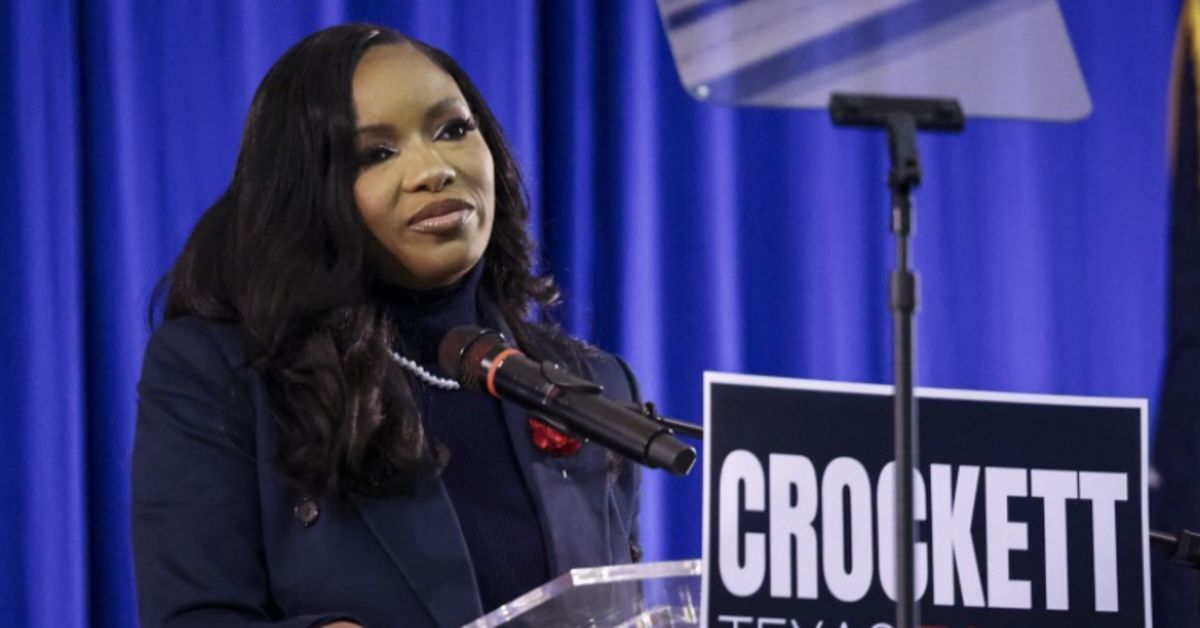
That is what makes the recent comments of hyper-progressive Texas Democratic Rep. Jasmine Crockett so revealing. The embattled lawmaker appeared Wednesday on Sherri, the daytime talk show hosted by actress Sherri Shepherd, and proceeded to offer a display that perfectly captured the modern progressive obsession with identity and status.
True to form, Crockett began her viral remarks by framing the entire discussion through the lens of race. Im a black woman in America, Crockett began, immediately shifting the focus from public duty to personal identity, before adding, I mean, some people are just like, Oh, but youre a congresswoman.
She then doubled down on that hierarchy of identity over office. Im a black woman first, she insisted, before continuing, And so, you know, the level of disrespect that is continuously lobbed against us as black women, you know, for me, Im like, wait a minute now, I am one of the 535 most powerful people in this country, and for some reason you think we on the same level but you going to disrespect me.
Crockett punctuated her point with a final flourish: Like, its not going to happen. The segment, which quickly circulated online, showcased not only her fixation on race but also a striking comfort with the language of power, as though her office were a personal elevation above ordinary citizens rather than a constitutional responsibility to them.
Imagine, for a moment, a conservative counterpart making a parallel statement. Could anyone seriously believe that a Republican such as Rep. Tim Burchett of Tennessee or Rep. Jim Jordan of Ohio could go on national television and declare, Before my responsibility to my constituents, Im a white man, first, without triggering a political and media firestorm?
The reaction would be instantaneous and ferocious: wall-to-wall outrage, demands for resignation, and endless lectures about white identity politics and systemic bias. Yet Crocketts open admission that her primary self-conception is not as a representative of all her constituents, but as a member of a particular racial group, passes in progressive circles as unremarkable, even virtuous, raising an obvious question: Are white men in her district simply expected to accept that they come second?
Beyond the identity politics, her boast about being among the 535 most powerful people in the country betrays a level of self-importance that even some of her critics might not have anticipated. Yes, members of Congress undeniably wield significant authority, and it would be nave to pretend otherwise, but the American design never intended that authority to be internalized as a personal status marker.
In reality, there are numerous figures whose influence far exceeds that of a rank-and-file House member. Justices on the Supreme Court, the President of the United States, and a host of billionaire financiers and tech magnates can shape law, culture, markets, and public life in ways that a backbench representative from Texas cannot begin to match, which makes Crocketts self-description sound less like sober reflection and more like political vanity.
More troubling than the exaggeration, however, is the tone of exhilaration with which she speaks about power itself. Crockett appears almost giddy at the notion that she occupies a place among the nations elite decision-makers, and that giddiness should be a glaring warning sign to anyone who cares about the American experiment, regardless of race or party.
The American system does not merely discourage centralized power; it was deliberately engineered to frustrate it. The Founders did not trust any single person, party, or branch of government to exercise unchecked authority, which is why they constructed a framework in which power is constantly divided, balanced, and, when necessary, gridlocked.
The slow, often exasperating nature of American governance is not a design flaw but the price of liberty. It is the mechanism by which the people protect themselves from precisely the kind of self-satisfied officeholder who begins to see power as a personal entitlement rather than a constrained duty.
That is why rhetoric matters so deeply in a constitutional republic. When a politician like Crockett speaks as though her power is something she owns something she is, rather than something she temporarily manages on behalf of the people it signals a shift from servant to ruler, from representative to minor aristocrat.
The unvarnished truth, which far too many in Washington seem determined to forget in 2026, is that public office in the United States is supposed to be an exercise in restraint, not self-importance. The conservative vision of limited government rests on the conviction that human beings are fallible, that power corrupts, and that no one should ever be encouraged to revel in the idea of being among the most powerful in the land.
Power in this country is not meant to be flaunted or personalized; it is meant to be limited, questioned, and, above all, temporary. When a lawmaker appears to relish the status of power more than the burden of responsibility, she is not simply committing a rhetorical misstep she is reminding Americans exactly why the Founders built a system designed to keep such impulses in check.
Login