
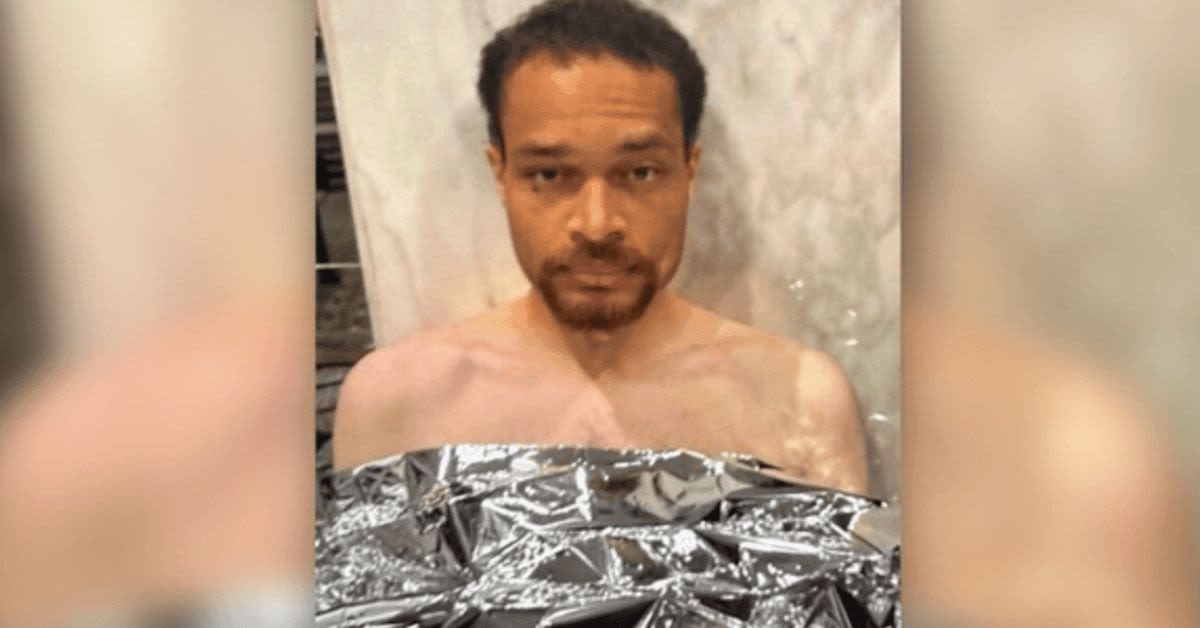
Federal prosecutors have unveiled a chilling, meticulously detailed account of an alleged assassination plot by 31-year-old Cole Tomas Allen of Torrance, California, who is accused of attempting to murder President Donald Trump and target senior administration officials during the White House Correspondents Association Dinner at the Washington Hilton.
According to the Gateway Pundit, the Justice Department has filed a 20-page Memorandum in Support of Pretrial Detention, urging that Allen be held without bond as he awaits trial. The filing outlines a series of grave federal charges, including Attempt to Assassinate the President, Transportation of a Firearm and Ammunition in Interstate Commerce with Intent to Commit a Felony, and Discharge of a Firearm During a Crime of Violence.
Prosecutors have already revised the memorandum once, notably stripping out any explicit claim that a Secret Service officer was struck by Allens gunfire. The updated version now states only that an officer saw Allen fire his shotgun toward the stairway leading to the ballroom, returned fire five times, and that the suspect was then subdued and arrested.
Authorities have confirmed that a Secret Service agent was indeed shot during the incident and survived because of his bulletproof vest. What remains unresolved is whether that wound was caused by Allens weapon or by accidental friendly fire amid the chaos.
The governments narrative of the attack, laid out in stark detail, describes how Allen allegedly attempted to breach the security perimeter at the height of a high-profile event. Shortly after 8:30 p.m., the defendant approached a USSS security screening checkpoint located on the Terrace Level of the hotel, the memo states, noting that the entrances to the ballroom were one level below, down two open flights of stairs.
The memorandum continues: Before the defendant approached the checkpoint, he discarded a long black coat that concealed a 12-gauge pump-action shotgun. The defendant then sprinted through one of the magnetometers at the checkpoint and ran in the direction of the stairs leading to the ballroom where the President and members of his family and Cabinet were located.
As the defendant did so, he held a shotgun in both hands in a raised position parallel to the ground, prosecutors wrote, emphasizing how close Allen allegedly came to the nations leadership. A USSS officer observed the defendant fire the shotgun in the direction of the stairs leading down to the ballroom.
The USSS officer and others at the checkpoint heard the gunshot, the memo recounts, describing the split-second response by law enforcement. The USSS officer drew his service weapon and fired five times at the defendant.
The defendant fell to the ground, was restrained by law enforcement, and was placed under arrest, the filing states, underscoring that the suspect was quickly neutralized. The defendant suffered a minor injury to his knee but was not shot.
At the time of his arrest, Allen was allegedly armed to the teeth, carrying enough firepower to inflict mass casualties had he not been stopped. Prosecutors say he possessed a Mossberg 12-gauge pump action shotgun with one spent cartridge in the barrel and eight unfired cartridges in the magazine tube, along with an additional six unfired cartridges attached via a detachable ammunition carrier and another ten unfired cartridges in a small leather bag.
He was also allegedly carrying a Rock Island Armory 1911 .38 caliber pistol loaded with ten rounds of ammunition, plus two additional handgun magazines, each containing nine rounds of ammunition. Investigators report that California and federal records show Allen legally purchased both firearms from licensed dealers in California, buying the shotgun on or about August 17, 2025, and the pistol on or about October 6, 2023, highlighting that the weapons were obtained through the existing regulatory framework.
Beyond the guns and ammunition, Allens inventory suggested preparation for a prolonged or multifaceted attack. At the time of his arrest, he allegedly had two knives, four daggers, multiple sheaths, multiple holsters, needle nose pliers, wire cutters, and a Samsung cellphone on his person, items that prosecutors say formed part of his broader operational kit.
The memorandum also includes a disturbing mirror selfie taken by Allen in his hotel room roughly half an hour before he charged the checkpoint. In the image, he is seen wearing a black dress shirt and slacks with a red necktie tucked in, presenting himself in a manner that appears calculated and deliberate rather than impulsive.
Enhanced versions of the photograph, as described in the filing, reveal additional tactical gear partially concealed in the frame. Visible in the image are an ammunition bag, a holster, a knife, a sheath, and what appear to be pliers or wire cutters, reinforcing the governments portrayal of a premeditated, well-equipped operation.
Further photographs attached to the memo catalog Allens full arsenal and accessories recovered at the scene. These images include his Mossberg 12-gauge pump-action shotgun, the Rock Island Armory 1911 .38-caliber pistol loaded with 10 rounds, two knives, four daggers, multiple sheaths and holsters, needle-nose pliers, wire cutters, and his Samsung cellphone, all laid out as evidence of his intent and preparation.
Perhaps most revealing is the manifesto that prosecutors say Allen had queued to send to relatives and his employer at 8:30 p.m., timed to coincide with the attack. In that document, he chillingly refers to himself as the Friendly Federal Assassin, offers an apology for the deception and danger to bystanders, and openly expresses his hatred for President Trump.
The manifesto reportedly lays out rules of engagement aimed at Trump administration officials and specifies the use of buckshot, a choice of ammunition designed for maximum damage at close range. Allen also mocks the hotel and Secret Services security failures that let him get so close armed, and describes in detail his cross-country train journey with the weapons, underscoring the level of planning involved.
Investigators say Allen had booked his room at the Washington Hilton weeks in advance, a fact that further supports the governments contention that this was not a spontaneous act but a calculated attempt to strike at the heart of the Trump presidency. The timing, location, and target all point to a politically charged motive, raising serious questions about the climate of escalating hostility toward conservative leaders.
If convicted on all counts, Allen faces the prospect of spending the rest of his life behind bars, with prosecutors noting that he is exposed to a possible life sentence plus a mandatory minimum of 10 additional years to be served consecutively. As the case moves forward, it will likely intensify scrutiny of political rhetoric that dehumanizes conservative officials and may embolden extremists, even as it highlights the critical role of law enforcement and the Secret Service in preventing a national tragedy.
Login