
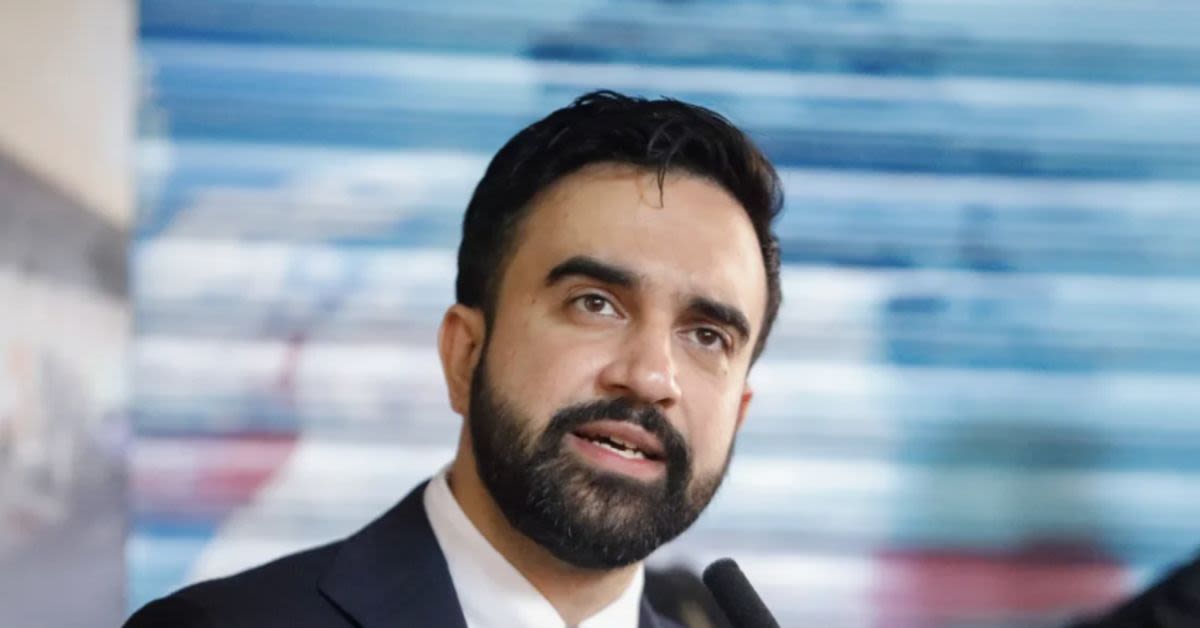
New York Citys new mayor, self-proclaimed democratic socialist Zohran Mamdani, has managed in just a few months to plunge the nations largest city into a fiscal standoff that even his fellow Democrats are unwilling to underwrite.
According to RedState, Mamdani has already blown past a statutory budget deadline for the first time since 2015, declared a fiscal crisis of historic magnitude, and responded to a $5.4 billion budget gap in the most predictable way possible for a socialist: by demanding that someone else pick up the tab. On Tuesday, Mamdani and City Council Speaker Julie Menin appeared at City Hall to announce that the executive budget, originally due May 1, would be delayed until May 12 while they lobby Albany for a bailout that their ideological playbook had promised would never be necessary.
The pair are pressing for more direct state aid and a reduction in the states pass-through entity tax credit, a maneuver they claim would generate nearly $1 billion in new revenue. In practice, that means targeting the very job creators and high earners who already shoulder the bulk of the tax burden, and hoping the exodus of wealth and business from New York does not accelerate further.
Mamdani, who has built his brand on theatrical left-wing rhetoric, framed the moment with characteristic melodrama. New York City faces a budget crisis of a historic magnitude. We inherited a deficit larger than any since the Great Recession.
That word inherited is doing a remarkable amount of work in his narrative. Former Mayor Eric Adams left the city with $8 billion in reserves, yet Mamdanis team now insists those numbers merely concealed deeper structural problems tied to recurring expenses, and his allies claim the prior administration poisoned the budget by underestimating long-term costs.
Adams, for his part, has not been shy about rejecting the underlying ideology now guiding City Hall. Free is a lie.
For New Yorkers who have watched progressive promises of free services morph into higher taxes, deteriorating public order, and chronic budget gaps, Adams blunt assessment rings especially true. Mamdani, however, remains adamant that the citys fiscal hole cannot be addressed through restraint or reform.
We cannot close this deficit with savings alone. We need new revenue, and we need a structural reset in our relationship with the state.
In plain terms, that structural reset is a demand that Albany permanently funnel more money into a city government that refuses to live within its means. The centerpiece of Mamdanis ask is a reduction of the pass-through entity tax credit from 100 percent to 75 percent, a change he cheerfully markets as making the wealthiest pay their fair share, and which city officials claim would yield nearly $1 billion in new revenue.
Governor Kathy Hochul, a Democrat but no stranger to the economic realities driving residents and businesses out of New York, has flatly rejected the proposal. Its not happening. Were not changing PTET [Pass-Through Entity Tax].
Hochul has also dismissed the notion that the states own delayed budget should serve as an excuse for the citys missed deadline. We dont have to be done in order for you to do yours. Were on different timetables.
The governor points out that the state has already delivered more than $4 billion in assistance to New York City, including $1.5 billion in direct aid, $1.2 billion in child care funding, and a proposed pied--terre tax on luxury second homes expected to generate another $500 million. By her own account, she has repeatedly urged city leaders to find spending reductions in January, February, March, and April, advice that appears to have been politely heard and promptly ignored.
To be fair, Mamdani and Menin highlight a real imbalance in the states fiscal relationship with the city. New York City contributes 55.6 percent of state revenue but receives only 41.7 percent of state expenditures, a disparity that fuels long-standing complaints that the city subsidizes the rest of New York.
Yet even that imbalance does not explain the mayors refusal to reconsider his sweeping progressive agenda, which he openly concedes would require billions in additional spending beyond the $12 billion needed just to close the current gap. He made his intentions clear in January when he declared, We will not allow the failures of the prior administration to dull the ambitions of our own.
The result is a familiar progressive pattern: expansive promises, aggressive rhetoric about fair shares, and a steadfast unwillingness to prioritize, reform, or cut. New York City now faces a $5.4 billion shortfall, a mayor ideologically opposed to meaningful spending restraint, a governor unwilling to further punish taxpayers and businesses, and a budget deadline quietly pushed into mid-May.
For conservatives, the episode underscores why centralized, ideology-driven governance so often collapses under its own weight: it treats prosperity as a permanent given and taxpayers as an inexhaustible resource. The first act of the Mamdani administrations grand socialist experiment has not delivered the abundance its advocates advertised, but rather a massive bill that someone else is always expected to pay.
As Adams put it: Free is a lie.
Login