
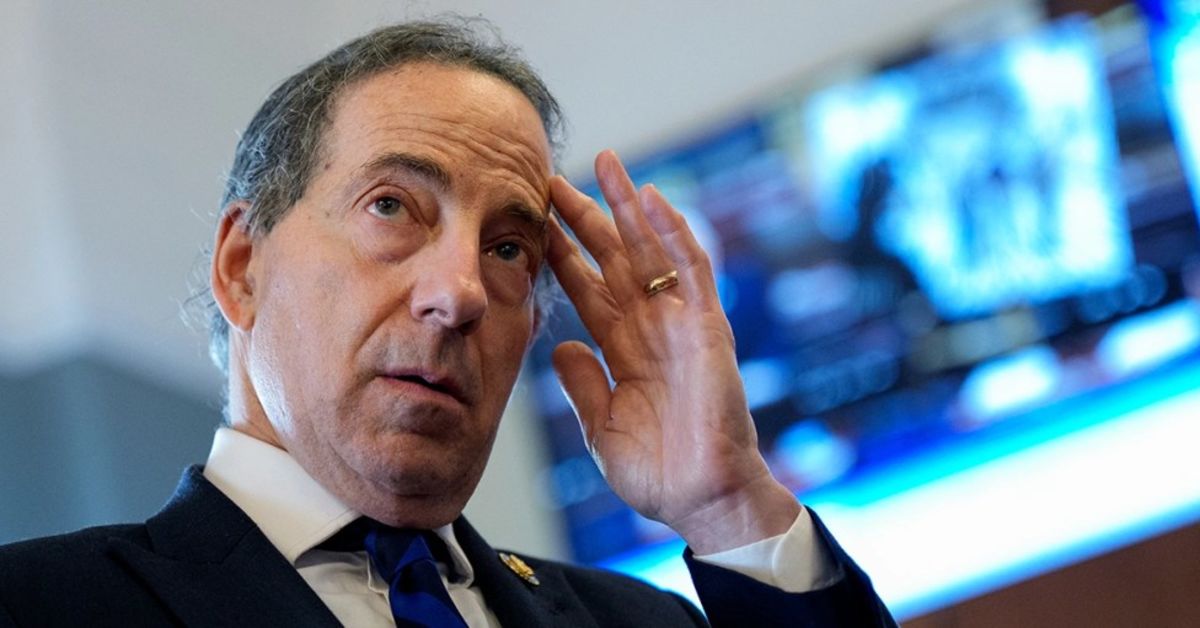
CNN host Dana Bash pressed Maryland Democrat Rep.
Jamie Raskin on Sunday over whether his party should rethink its rhetoric toward President Donald Trump after an apparent assassination attempt was thwarted outside the White House Correspondents Association dinner.
According to The Post Millennial, Bash framed her question in light of mounting concerns over political violence and a series of recent security scares that have shaken Washington. Do you think twice about that when something like this happens? she asked, inviting Raskin to reflect on the tone Democrats have adopted toward Trump. Raskin immediately sought clarification, replying, What rhetoric do you have in mind? as Bash cited the escalating language from Trumps opponents, including Democrats branding the president as terrible for this country."
Bash acknowledged that harsh criticism is protected speech but suggested that elected officials bear a higher burden of responsibility in a volatile climate. I understand that thats your democratic right, but overall, do you have a responsibility she began, before Raskin cut in and attempted to redirect the conversation toward Trumps own language. He highlighted the presidents repeated attacks on the media, noting that Trump has labeled journalists the enemy of the people, a phrase that has long alarmed press freedom advocates and conservatives wary of government hostility to dissent.
Raskin insisted that his own approach is focused on policy rather than personal vilification, distancing himself from the more incendiary rhetoric that has become commonplace on the left. Im talking about policies. I dont personalize it, and I certainly have never called the press the enemy of the people, Raskin said, drawing a contrast between his criticism of Trumps agenda and Trumps criticism of the press. Yet the exchange underscored a broader question that many conservatives have raised for years: whether Democrats are willing to hold themselves to the same standard of civility they demand from their opponents.
Raskin faced similar scrutiny during a separate interview with CBS host Margaret Brennan, who pressed him on whether Democrats should reassess their political language after what she described as the third attempt on Trumps life. Brennan asked directly whether Democratic rhetoric had gone too far and whether it was time for a reset in how political leaders speak about one another. Raskin, who was inside the ballroom when the incident unfolded, recounted the chaos that erupted as the event was abruptly disrupted.
So I just entered the room, and I was talking to some reporters when there were three loud booms. Heard some screams, plates, glasses, silverware hitting the ground, and then everybody was yelling, get down, Raskin said, describing a scene that has become disturbingly familiar in an era of heightened political tensions. Brennan followed up by asking whether that experience had altered his view of political messaging and whether Democratic language needs to change in the wake of the attempted assassination. Raskin responded by emphasizing the need for a universal, nonpartisan rejection of political violence.
"We have said all along that we need every politician in the country, every leader in the country, every citizen in the country denouncing political violence across the board, regardless of where it's coming from. So, you know, I find this a welcome change in rhetoric. But you know what happened last week, they brought a lawsuit against the Southern Poverty Law Center, whose whole purpose is to or is to investigate violent right wing extremism in the country, and now they're prosecuting them for having used undercover agents, which, of course, the FBI uses and the government uses all the time."
He doubled down on his defense of the Southern Poverty Law Center, an organization that has long been criticized by conservatives for smearing mainstream right-of-center groups as extremist. Raskin said, they brought a lawsuit against the Southern Poverty Law Center, whose whole purpose is to or is to investigate violent right wing extremism in the country, casting the Trump administrations actions as an attack on efforts to monitor right-wing violence while ignoring the SPLCs own partisan record. That framing sidestepped any acknowledgment of the left-wing rhetoric and activism that conservatives argue has contributed to a climate where violence against Trump and his supporters is increasingly normalized.
The conversation also turned to the broader climate of fear surrounding public service, with Brennan asking about the impact of threats and violence on those considering political office. Raskin conceded that the risk is now a central factor for anyone entering public life, saying anyone contemplating a campaign undoubtedly thinks about that.
He elaborated on the unequal levels of protection afforded to different officials and candidates, noting that ...anybody who's thinking about running for office undoubtedly thinks about that. Anybody who's thinking about running for president undoubtedly thinks about that. And those people have the most protection with the Secret Service, and other people don't have the same kind of protection."
"So look, we've got to rediscover the great American tradition of nonviolence and Dr. King and the civilizing movements that have always opposed violence versus the violent groups that have used violence historically, beginning with the Ku Klux Klan, in order to terrorize other people," he said, even as the unresolved question remains whether Democratic leaders will apply that call for restraint to their own rhetoric about Trump and his supporters.
Login