
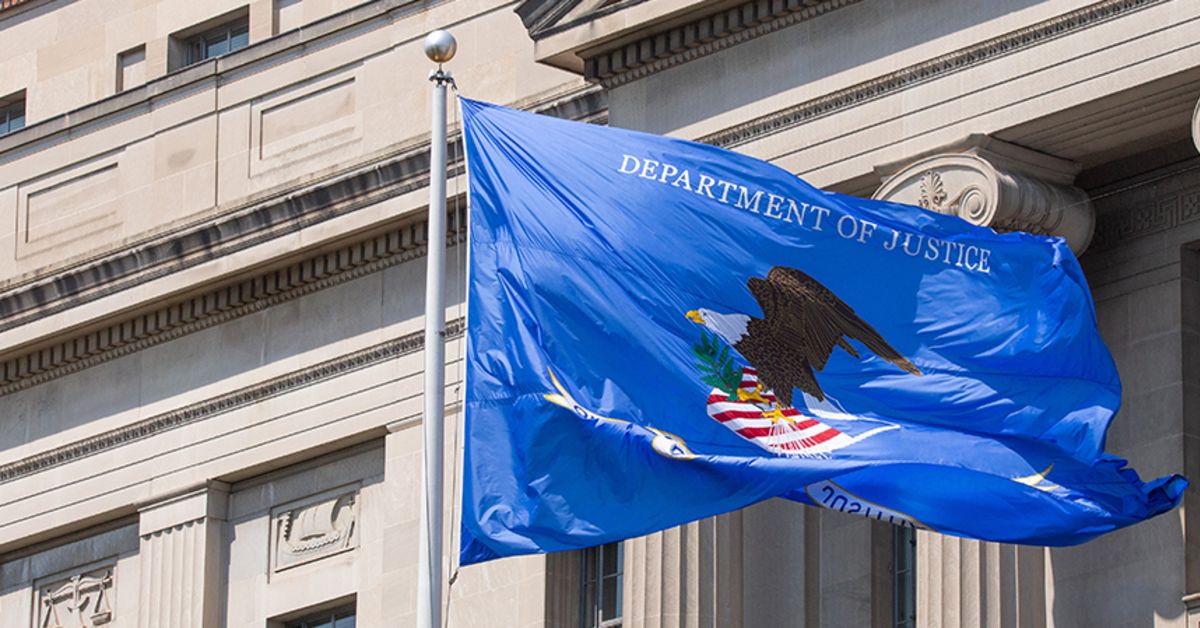
The Department of Justice has moved to reinstate firing squads as an option for carrying out federal death sentences, signaling a decisive shift back toward robust enforcement of capital punishment under President Trumps second administration.
According to The Post Millennial, the DOJ framed the policy change as part of a broader effort to reclaim its constitutional responsibility in the most serious criminal cases.
The department said the move was intended to "restore its solemn duty to seek, obtain, and implement lawful capital sentences," underscoring a clear break from the leniency and hesitation that characterized recent years.
In a detailed press release, officials explained, "Among the actions taken are readopting the lethal injection protocol utilized during the first Trump Administration, expanding the protocol to include additional manners of execution such as the firing squad, and streamlining internal processes to expedite death penalty cases."
"These steps are critical to deterring the most barbaric crimes, delivering justice for victims, and providing long-overdue closure to surviving loved ones," the statement continued, emphasizing both deterrence and justice for victims as central aims.
Acting Attorney General Todd Blanche directly contrasted the Trump approach with that of his predecessors, accusing them of abandoning their duty to protect the public.
"The prior administration failed in its duty to protect the American people by refusing to pursue and carry out the ultimate punishment against the most dangerous criminals, including terrorists, child murderers, and cop killers," Blanche said, adding, "Under President Trumps leadership, the Department of Justice is once again enforcing the law and standing with victims."
The announcement accompanied the release of a policy document titled "Restoring and Strengthening the Federal Death Penalty," which lays out the legal and moral rationale for the renewed emphasis on capital punishment.
In that report, Blanche observed that "despite federal prosecutors consistently seeking and defending capital sentences under the leadership of both political parties, the Department had not prioritized implementing them," a failure conservatives have long argued undermines justice and deterrence.
The report sharply criticized the prior Democratic administrations approach, noting that thenAttorney General Merrick Garland "imposed a moratorium on federal executions, directed prosecutors not to seek death sentences, and dismantled the federal governments capital punishment apparatus."
"He also recommended that President Biden commute the lawful death sentences of thirty-seven convicted murderers, and he did so without fully considering the views of the victims families, the communities that endured these crimes, or the prosecutors who tried these cases," the document stated, concluding, "These actions inflicted untold damage on countless lives and, ultimately, on the publics confidence in the rule of law itself."
To ensure executions can proceed without disruption from activist-driven drug shortages, the Office of Legal Policy urged the DOJ to restore the use of Pentobarbital in lethal injections.
It further recommended that the Bureau of Prisons modify "its execution protocol to include additional, constitutional manners of execution" so that "the Department is prepared to carry out lawful executions even if a specific drug is unavailable."
Addressing the renewed role of firing squads, the report noted practical and constitutional considerations that have led some states to revive the method.
"With lethal injection protocols facing supply issues, some states have reinstated the use of firing squads, another historically common method for capital punishment," it stated, adding that "in recent years, death row inmates have begun to argue that execution by firing squad is a feasible, readily implemented alternative to lethal injection that carries fewer risks."
By restoring these tools, the Trump Justice Department is signaling that the rights of victims, the safety of communities, and the integrity of lawful jury verdicts will no longer be subordinated to ideological opposition to capital punishment.
The renewed emphasis on executions, including the option of firing squads, reflects a broader conservative insistence that a serious nation must be willing to impose the ultimate penalty on the worst offenders if it hopes to uphold order, deter barbaric crimes, and reaffirm the rule of law.
Login