
News that a sitting member of Congress has drawn the attention of federal investigators or the House Ethics Committee has become so routine that it often lands with all the surprise of a dog bites man headline, even as the public understandably leans in for the details.
According to RedState, recent months have offered a steady drumbeat of such scandals, including the sexual harassment and assault allegations that engulfed now-former Democrat Rep. Eric Swalwell of Californias 14th District, which triggered swift investigative announcements and culminated in his resignation in disgrace before the House could move to expel him.
Similarly, the pattern repeated itself with ex-Republican Rep. Tony Gonzales of Texass 23rd District, who resigned an hour later amid comparable accusations, and with Democrat Rep. Sheila Cherfilus-McCormick of Floridas 20th District, who abruptly stepped down on a Tuesday just hours before a scheduled House vote on her expulsion and three weeks after the Ethics Committees adjudicatory subcommittee concluded that 25 of 27 Statements of Alleged Violations against her had been proven.
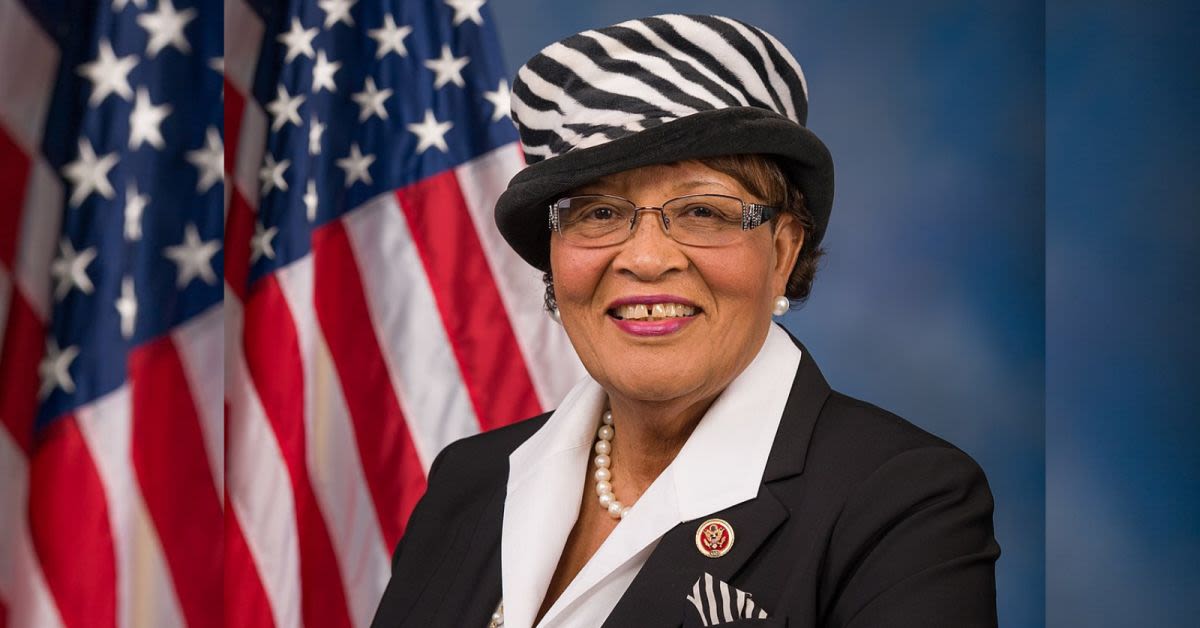
Against that backdrop of bipartisan misconduct, the revelation that broke Thursday about a particular House Ethics Committee investigation stood out as one almost no one in North Carolina political circles had anticipated. The subject was not some brash newcomer or scandal-prone backbencher, but Rep. Alma Adams of North Carolinas 12th District, an elderly great-grandmother known for dressing nearly every day as though she were headed to Sunday church, and the allegation was of an inappropriate relationship with a young female staffer.
Adams has served in Congress since 2014, holding one of the most notoriously gerrymandered and heavily litigated districts in modern U.S. history, a seat that for years snaked across North Carolina in a way critics said was engineered to entrench Democratic power.
Although the GOP-controlled General Assembly has since redrawn the district into a more compact shape, it remains a deep-blue stronghold, effectively insulating Adams from serious electoral threat even as questions now swirl about her conduct behind the scenes.
According to a report from NOTUS, the 79-year-old congresswoman came under scrutiny by the House Ethics Committee in 2023 over an alleged inappropriate relationship with a young female aide, a claim that, if substantiated, would run afoul of House rules governing romantic entanglements between lawmakers and subordinates. The outlet reported that the complaint prompting the inquiry was filed in the summer of 2022, setting in motion a quiet but extensive review of Adams interactions with her nowdeputy chief of staff and district director, Sandra Brown.
Over the course of several months in 2023, committee staff interviewed roughly half a dozen former aides some of whom were working for Adams at the time in Washington and Charlotte, North Carolina, about Adams relationship with her now-deputy chief of staff and district director, Sandra Brown, according to four people interviewed by the committee who were granted anonymity to speak freely about the sensitive matter. The ethics complaint, according to NOTUS, centered on concerns that Adams relationship with Brown was not merely close but potentially crossed professional boundaries in ways that affected the broader office environment.
The exact nature of Adams relationship with Brown is unclear, but a high-ranking staffer filed a complaint with the committee after the staffer was told by colleagues that the congresswoman was in a relationship with an aide. All of the people that spoke with NOTUS said that at the very least, Browns extremely close relationship with Adams resulted in a hostile work environment. Adams repeatedly led the North Carolina delegation in staff turnover. Those accounts, if accurate, paint a picture of an office where perceived favoritism and personal entanglements may have contributed to instability, high turnover, and a climate in which staff felt sidelined or intimidated.
Multiple former aides told the committee that Brown appeared to spend long stretches at Adams one-bedroom apartment on New Jersey Avenue in Washington, sources said. And at least one former aide said Brown, who worked out of the Charlotte office, sometimes appeared in the background of virtual calls the congresswoman participated in from her Washington apartment. Such details, while circumstantial, were apparently significant enough for investigators to probe whether the relationship between Adams and Brown extended beyond the professional sphere and, if so, whether it violated House standards or created a hostile workplace.
Witnesses were also asked about a self-published novel authored by Brown, BossLady: The Legend of Sydney Donovan Begins, that touches on a woman who clashes with her lovers husband. Brown wrote the book under a pseudonym but reveals her identity in the authors section of her Amazon page. Brown told at least one aide that the book was loosely based on her life, a source with direct knowledge of the matter told NOTUS. The novels themes and Browns reported admission that it was loosely based on her life added another layer of intrigue for investigators trying to determine whether fiction was mirroring reality inside a congressional office funded by taxpayers.
NOTUS further observed that there was no indication the alleged relationship was non-consensual, but that distinction does not resolve the central ethical concern. House rules explicitly forbid members from engaging in romantic relationships with any House employee directly under their supervision, a prohibition designed to prevent abuses of power, coercion, and favoritism in an environment where staff jobs and careers depend on the goodwill of elected officials.
What complicates the picture is the public response from Adams office, which strongly suggests she was effectively cleared, contrasted with the more guarded posture of the Ethics Committees Republican chairman, Rep. Michael Guest of Mississippis 3rd District.
A committee spokesperson declined to comment, but Guest stated only that they do not intend to publish the names of individuals against who allegations have been made that we are unable to substantiate, a formulation that stops short of a full-throated exoneration and leaves room for unresolved concerns.
From an Adams spokesperson came a carefully worded defense: Congresswoman Adams cooperated fully with the House Ethics Committee's review, which was thorough and detailed.
The Committee closed the matter after finding no violation of any House Rules and, most importantly, no inappropriate or improper relationship.
Ultimately, the Committee advised that Congresswoman Adams should work to ensure that no staff received preferential treatment, actual or perceived, and that all staff were aware they could raise any concerns without fear of retaliation. Because the Committee's comprehensive review found no violation of any House Rules, no penalties were recommended to the full House and the Committee's review remains confidential.
That statement, circulated by reporters, underscores the tension between a formal finding of no violation and the committees advisory that Adams must guard against preferential treatment, actual or perceived, and ensure staff feel free to speak up without fear.
For a conservative observer, that combination raises familiar questions about how aggressively ethics rules are enforced against entrenched Democrats in safe seats, and whether the bar for public accountability is set too high when the member in question is politically useful to her party.
The broader context is a Washington press corps that, for years, seemed reluctant to dig deeply into Democratic scandals unless forced by overwhelming evidence or public outrage. Whatever one thinks of the tabloid style, the arrival of TMZ in the nations capital appears to have jolted other outlets into more aggressive pursuit of stories that once might have been quietly buried, no matter the party affiliation.
TMZ hitting DC like a hurricane. Actually to be 80 and to get accused of pulling a side piece is the dream. We stand with rep Adams https://t.co/zsITdvoViM Nothing has changed DC reporting as fast as TMZ sending three Australians to Washington. Every news outlet is trying to get ahead of them. https://t.co/h9CWZgpmHe
Those social media reactions, flippant as they are, reveal a troubling cultural undercurrent in which alleged misconduct by an 80-year-old lawmaker is treated as a kind of darkly comic badge of honor rather than a serious breach of public trust. From a conservative standpoint, that attitude reflects a broader moral drift in elite circles, where personal behavior that would once have been disqualifying is now shrugged off or even celebrated, provided the politician in question votes the right way on progressive priorities.
The Adams case, even with the committees confidential review and the spokespersons insistence that no inappropriate or improper relationship was found, leaves several important issues unresolved for voters who expect higher standards from their representatives.
Did the relationship between Adams and Brown, whatever its precise nature, contribute to a hostile work environment and chronic staff turnover, as multiple former aides alleged, and if so, why is that not itself grounds for more robust public scrutiny and reform?
Moreover, the fact that the matter remains confidential, with no published report and only carefully curated statements from the congresswomans office, underscores the persistent opacity of the Houses internal policing mechanisms. For citizens who believe in limited government, accountability, and the rule of law applied evenly, the notion that serious allegations can be investigated, quietly closed, and then effectively sealed away should be deeply unsatisfying, regardless of party labels.
As the media ecosystem in Washington shifts under the pressure of more aggressive, sometimes sensationalist outlets, traditional news organizations face a choice between continuing to shield favored politicians or embracing a more even-handed scrutiny that treats every member of Congress as accountable to the public. The Adams episode, coming on the heels of high-profile resignations by both Democrats and Republicans, suggests that the appetite for real transparency is growing, even if the political establishment remains reluctant to fully open its books.
For now, voters in North Carolinas 12th District are left with a familiar Washington outcome: a closed-door inquiry, a declaration of no violation, and a set of lingering questions about judgment, office culture, and the standards to which elected officials should be held.
As more outlets compete to uncover what has long been hidden in the capital, the pressure may finally build for a system in which ethics investigations are not just thorough and confidential, but also meaningfully transparent to the people whose trust members of Congress are sworn to uphold.
Login