
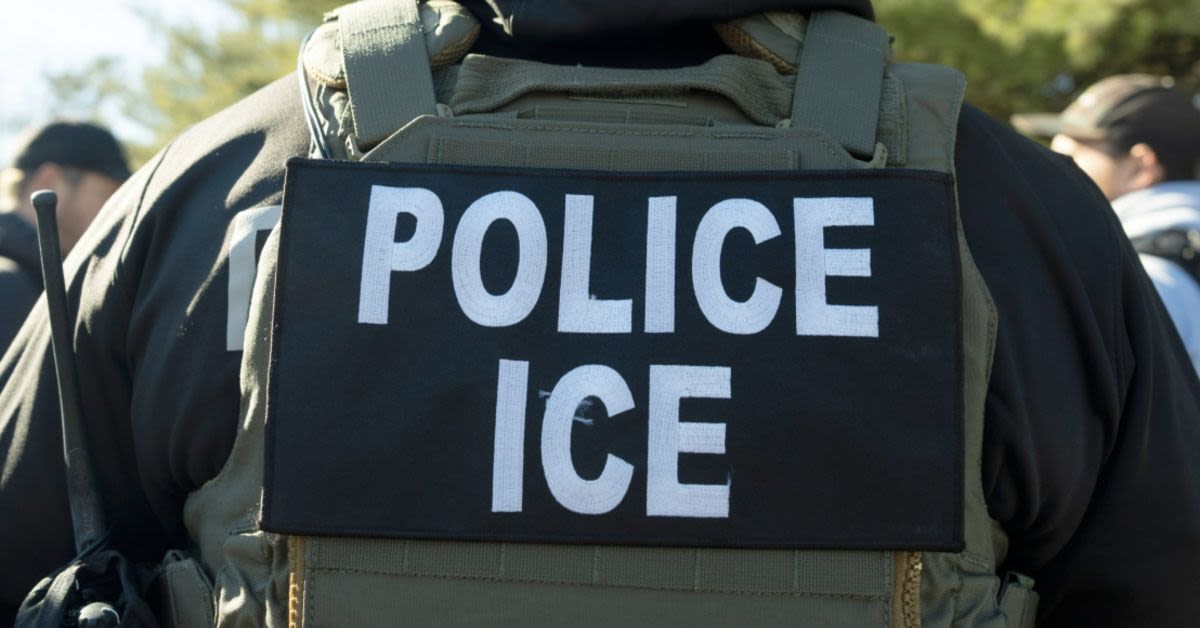
A local prosecutor in Minnesota is attempting to haul a federal immigration officer into state court for actions taken while performing his official duties, a move that raises profound constitutional, legal, and political concerns.
Mary Moriarty, the Hennepin County attorney, has filed charges against an Immigration and Customs Enforcement (ICE) agent after a roadside encounter involving an unmarked vehicle and alleged firearm use. As reported by Gateway Pundit, the case centers on a highway incident in which the ICE agent, operating in a black SUV, allegedly approached motorists who later claimed they were unsure whether he was a legitimate law enforcement officer. According to the criminal complaint cited in the interview, motorists claimed they were approached by a black SUV without identifying markings, leading to confusion over whether the individual was law enforcement.
That complaint, however, is merely an accusation, not a judicial finding of fact, and it appears to rest heavily on witness statements rather than hard, corroborating evidence. That claim, however, underscores a central issue: a criminal complaint is not proof. Rather, it is an allegation, often built on limited testimony, and in this case, the publicly presented evidence appears to rely heavily on witness accounts without corroborating physical evidence. Under ordinary standards of criminal procedure, such a thin evidentiary basis would raise serious questions about whether a judge should have signed a warrant in the first place.
Beyond the evidentiary weaknesses, the legal theory behind the prosecution is even more precarious. More importantly, the legal foundation of the case itself is highly unstable. State prosecutors generally do not have the authority to charge federal agents for actions taken within the scope of their duties. That limitation is not a mere technicality; it is rooted in the Constitutions supremacy clause and long-standing precedent that shields federal officers from being second-guessed by local politicians with an ideological axe to grind.
That principle exists for a reason. Without it, federal law enforcement would be subject to a patchwork of politically driven prosecutions across different states, effectively undermining the ability of agencies like ICE to function. Yet during an interview on MSNOW, Moriarty framed the case as part of a broader effort to hold ICE agents accountable, even suggesting that additional charges against other agents could follow. The implication is clear: this is not an isolated legal decision, but part of a broader political strategy.
The media treatment of the case has only reinforced that impression. The interview itself revealed just as much about media framing as it did about the case. Rather than pressing on the jurisdictional limits of state authority or the evidentiary standards required to justify a warrant, the segment focused on narratives of accountability and community impact. That framing aligns closely with the messaging of progressive prosecutors, who often prioritize symbolic action over legal durability.
Hennepin County has already been cast by the left as a national template for aggressive prosecution of law enforcement, most notably in the case of former officer Derek Chauvin after the death of George Floyd. Hennepin County also prosecuted former officer Derek Chauvin following the death of George Floyd, a case that became a national flashpoint. That history is now being invoked to position the county as a model for aggressive prosecution of law enforcement. However, applying that approach to federal agents introduces an entirely different set of constitutional and jurisdictional concerns.
Even Moriarty has conceded that such prosecutions are exceedingly rare. Even Moriarty acknowledged how rare such cases are. Charging a federal agent for on-duty conduct is highly unusual, precisely because of the legal protections afforded to federal officers operating under federal authority. Those protections are not procedural technicalities; they are structural safeguards designed to maintain a functional national law enforcement system.
The stakes extend well beyond a single ICE agent or one disputed traffic encounter. The broader implications extend beyond a single case. If state prosecutors begin pursuing federal agents based on contested witness accounts and politically charged narratives, the result is not increased accountabilityit is institutional conflict. Federal agents may hesitate to act, knowing that routine enforcement decisions could expose them to local prosecution in hostile jurisdictions.
Law enforcement at the federal level depends on clear lines of authority and consistent legal standards, not shifting political winds in county offices. Law enforcement, particularly at the federal level, depends on clarity of authority and consistency of legal standards. When those standards are replaced with localized political pressure, the result is fragmentation. Moriartys actions, amplified by sympathetic media coverage, represent a shift away from legal restraint and toward prosecutorial activism.
For conservatives who value the rule of law, limited government, and a coherent national framework for enforcing immigration statutes, this case is a warning sign. The long-term consequences of that shift are not limited to ICE or immigration enforcement. They affect the foundational balance between federal and state authorityone that cannot be redefined through selective enforcement and media narratives.
Login