
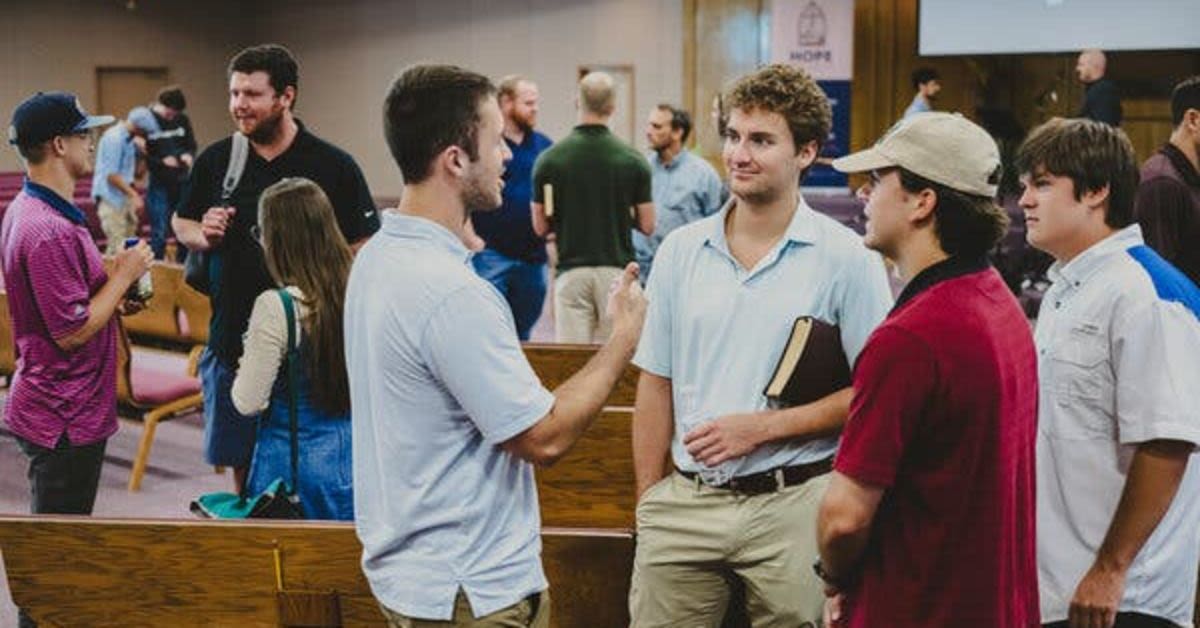
A new wave of polling suggests that young American men are quietly defying the nations secular drift and returning to religious faith in striking numbers.
According to WND, a Gallup survey released Thursday shows a dramatic rise in religiosity among men aged 18 to 29, a demographic that for years had been at the forefront of the countrys move away from organized religion. The latest data from 20242025 indicate that 42% of young men now say religion is very important to them, a 14-point jump from the 20222023 period that stands out in an era otherwise marked by religious decline.
The same cannot be said for their female peers, whose attitudes toward faith appear largely unchanged despite the cultural turbulence of recent years. Among women aged 18 to 29, only 29% describe religion as very important, a figure that has remained essentially flat since 2020 and now lags well behind their male counterparts.
This gender gap is not mirrored across most other age brackets, underscoring how unusual the shift among young men truly is. Gallups numbers show only modest increases in religious importance among men aged 3049, who registered a five-point rise, and men aged 5064, who saw a three-point uptick over the same timeframe.
The reversal is even more striking when viewed against the backdrop of the early 2000s, when young women were significantly more devout than young men by their own self-reporting. At the start of the millennium, 52% of young women said religion was very important to them, compared with 43% of young men, a pattern that has now flipped in a way few cultural observers anticipated.
As reported by WND, The New York Times recently profiled college students who embody this new religious seriousness among young men, including Texas A&M student Mason Gubser. Gubser told the Times that he had grown weary of a life dominated by digital distraction and the empty stimulation of social media, a sentiment that appears to resonate with many of his peers.
All my entertainment is right here in front of me, but theres no fulfillment from that, he said. I wanted something new and something traditional and something that felt holy.
Gubser, now 21, eventually discovered the Catholic center on the Texas A&M campus, a place that offered him both spiritual depth and a rooted community. He became Catholic two years ago and is now engaged to be married, explaining, What I was really looking for, and still am, was purpose. The church definitely provides that.
This renewed interest in faith among young men appears to be contributing to measurable growth in certain Christian traditions, particularly those that emphasize doctrinal clarity and historic continuity. Data from 140 of the nations 175 Catholic dioceses saw a 38 percent increase in Easter converts across U.S. dioceses relative to last year, a surge that aligns with the broader trend Gallup has identified.
Orthodox churches, too, are reporting increases in both attendance and membership, with pastors and lay leaders noting that young men are often at the forefront of this movement. Another indicator of a possible spiritual reawakening is the Bible market, where publishers have reported a notable rise in overall sales in 2024 and a growing demand for high-end editions, suggesting that many buyers are not merely dabbling but investing seriously in Scripture.
For Christian leaders who have watched decades of secularization with concern, the Gallup findings are more than a statistical curiosity; they are a potential turning point. David Closson, director of the Center for Biblical Worldview at the Family Research Council (FRC), argues that the numbers reveal a profound shift in the spiritual landscape, especially among young men who have been told for years that faith and masculinity are suspect.
The new Gallup data is striking, particularly because it reverses a long-standing trend, he told The Washington Stand. For decades, young women have been more religious than young men, but that gap has now flipped. One factor appears to be political realignment. The report itself notes that much of the increase is concentrated among young Republican men, suggesting that broader ideological shifts are influencing religious engagement.
At the same time, Closson continued, we should not ignore deeper cultural dynamics. For years, young men that traditional expressions of masculinity are problematic or even harmful. In that context, it is not surprising that some are gravitating toward faith communities that offer a clearer sense of identity, purpose, and moral framework. For many young men, church provides structure, accountability, and a vision of ordered freedom, all of which can be especially compelling in a culture that often feels unmoored.
Closson emphasized that the divergence between young men and young women is not a trivial detail but a key to understanding what is actually happening beneath the surface of the data. He suggested that the current movement is not a broad-based religious revival touching all demographics equally, but a more targeted shift shaped by how different groups respond to cultural and ideological pressures.
The divergence between young men and young women also raises important questions. While young men are showing renewed interest in the importance of religion, young womens numbers have and, in some respects, are at historic lows, he explained. That suggests we are not simply seeing a general religious revival, but a more targeted shift that may reflect differences in how young men and women are responding to cultural pressures and expectations.
For churches that have long struggled to engage men, particularly younger men, Closson believes the moment represents a rare and significant opening. He argues that congregations should not squander this opportunity with shallow programming or watered-down teaching, but instead offer the kind of robust, countercultural discipleship that many young men are actively seeking.
As for the church, Closson posited that the current moment presents a significant opportunity. The data suggest that many young men are open to deeper conversations about meaning, truth, and faith. Churches should be ready to meet that moment with serious teaching, intentional discipleship, and a robust vision of biblical manhood that emphasizes responsibility, service, and spiritual leadership.
At the same time, the church must not lose sight of the need to engage young women thoughtfully and faithfully, ensuring that the message of the gospel speaks clearly and compellingly to both men and women in a rapidly changing cultural landscape.
Joseph Backholm, senior fellow for Biblical Worldview and Strategic Engagement at FRC, reads the Gallup numbers as evidence of a deeper spiritual hunger that materialism and secular ideology have failed to satisfy. He contends that young men, in particular, are discovering the limits of a worldview that reduces life to consumption, pleasure, and personal autonomy.
I think young men are discovering that materialism doesnt have the answers to the questions theyre asking, he told TWS. A life without rules or meaning creates chaos, inside of us and around us. Secularism has an obvious appeal because it offers the opportunity to do whatever you want, but it doesnt work because everyone does what they want. What was supposed to make everyone happier actually makes everyone more miserable, and secularism cant explain why. So, it shouldnt be surprising that young people are turning to church in an effort to understand the world as it actually is.
Backholm also suggested that, in a culture where progressive elites often portray traditional religion and masculinity as threats, some young men may now see faith itself as a form of resistance. In an era when the Left routinely attacks toxic masculinity and undermines long-standing moral norms, aligning with historic Christianity can feel like an act of rebellion against a hostile cultural establishment.
Young men also might be drawn to religion as a form of rebellion, Backholm elaborated. The Left has been waging a war on men for a while now, so its possible that young men are being drawn to religion as a way of rebelling against everything on the Left. If thats true, that might be part of the reason young men are more religious than young women. Secularists like women better than men. As a result, women like secularism more.
Yet Backholm is careful to stress that this is not merely a sociological or political phenomenon, but a spiritual one. He insists that behind the polling trends lies the unseen work of God, drawing people back to Himself even in a culture that often celebrates confusion and moral relativism.
Still, Its also true that the Holy Spirit is at work in the world and Jesus is drawing us to Himself, he reflected. We live in a war between truth and lies, but Jesus promised us that the gates of hell will not prevail against the church. While we see evidence of the war all around us, we shouldnt be surprised when we see the truth advancing in measurable ways. Over time, thats the only possible outcome.
Lies are eventually exposed as such, Backholm concluded. It often takes longer than we prefer, but lies do not endure because they cannot endure. The world was never going to just descend into universal secularism. We need to be confident that the truth is true, and right now, it seems young men are discovering this in a new way.
Taken together, the Gallup data, the surge in Easter converts, the growth in Orthodox and Catholic parishes, and the renewed market for Bibles all point to a quiet but consequential shift in Americas spiritual life. While the broader culture continues to promote secularism, gender ideology, and moral relativism, a growing number of young men appear to be rejecting that script in favor of faith, order, and transcendent truth, leaving churches with both a challenge and an opportunity they cannot afford to ignore.
Login