
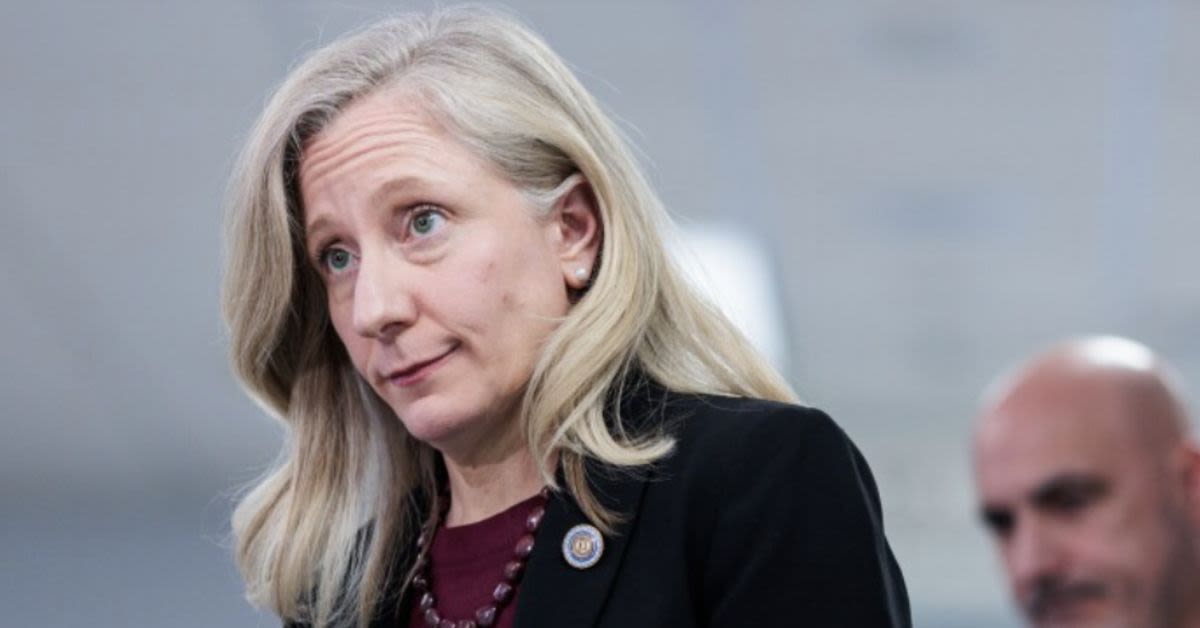
Virginias new Democratic governor, Abigail Spanberger, is touting billions in corporate investments as proof of her economic stewardship, even though the deals were negotiated and announced under former Republican governor Glenn Youngkin.
According to The Washington Free Beacon, Spanberger on Monday rolled out four bipartisan bills she signed into law, each tied to major capital projects by Avio USA, Hitachi Energy, Eli Lilly, and AstraZeneca. The measures authorize financial incentives for the companies, which plan to build new facilities in Virginia and bring more than 3,200 jobs in rocket motor production, critical electrical grid infrastructure, and pharmaceutical manufacturing.
"From my very first day in office, I have been working to create a stable business environment so companies can hire, expand, and continue to invest in our Commonwealth," Spanberger declared in her announcement. "Attracting new businesses and jobs to Virginia is a core focus of my administration and I'm proud of the hundreds of millions of dollars in investment we have already announced this year."
The problem for Spanberger is that all four corporations had already unveiled these investments last year, when Youngkin was still in the governors mansion. As 7News DC reporter Nick Minock first highlighted in a Wednesday post on X, each companys 2025 announcement featured Youngkin by name, underscoring that the groundwork was laid well before Spanbergers inauguration.
AstraZenecas chief executive went so far as to publicly credit the Republican governor for helping land the pharmaceutical giants multibillion-dollar expansion. The CEO thanked "Governor Youngkin and his team for their energy and vision," adding that the company "found in Virginia an amazing team that moves at incredible speed to build a better future for this Commonwealth and the American people."
Hitachi likewise emphasized that its new Virginia facility came "with the support of Governor Youngkin" and cited "the Trump Administration's White House AI Action Plan" as part of the policy environment that made the project possible. Hitachi, Eli Lilly, and AstraZeneca all announced their plans before Spanbergers November victory, meaning the Democrat is now reaping political benefits from a pro-growth climate fostered by a Republican governor and a conservative federal administration.
Youngkin spokesman Justin Discigil told the Washington Free Beacon that the former governor is content to see Virginians benefit from his economic record, even if the credit is being reassigned. "The last three months have been nothing but horrible news for Virginians as Abigail Spanberger broke every single promise she made on the campaign trail," Discigil said.
"Governor Youngkin is happy that Virginians are being reminded of some good news, even if it means Gov. Spanberger taking credit for the economic deals he secured for the Commonwealth." His comments reflect a broader conservative concern that Democrats are eager to spend and regulate, but just as eager to claim ownership of the prosperity generated by earlier, market-friendly policies.
Spanberger, who declined to respond to a request for comment, promoted the investment package on the same day a Washington Post-Schar School poll showed her approval rating at just 47 percent. That figure is 13 points below the average for Virginia governors in Post polling since the 1990s, with 46 percent of respondents disapproving of her performance.
The governor insisted Monday that she looks forward to "continuing to work with legislators, local communities, and business leaders as we make clear that Virginia is the top state in the nation to grow or start a business," but the survey suggests voters are skeptical. A 41 percent plurality said her policies would make Virginia less affordable, a striking rebuke for a politician who campaigned on easing cost-of-living pressures.
Spanberger ran as a centrist focused on affordability, yet her early actions in office have tracked closely with the progressive wing of her party. In early February, she ordered Virginias law enforcement agencies to sever any partnerships with federal immigration enforcement, a move applauded by the left but criticized by conservatives as undermining the rule of law and public safety.
The following day, she signed a slate of bills advancing constitutional amendments on abortion, voting rights for felons, same-sex marriage, and partisan redistricting. The new congressional map Spanberger approvedset to go before voters on April 21would transform Democrats narrow 65 edge in the states delegation into a lopsided 101 advantage, raising alarms among Republicans about entrenched one-party rule and diminished electoral accountability.
AstraZeneca did not offer fresh comment on Spanbergers announcement, instead directing the Free Beacon to its original October release outlining a $4.5 billion investment. That project includes a new facility to manufacture medications, including cancer treatments, underscoring the scale of the economic activity that began under Youngkins watch.
Eli Lilly, Hitachi, and Avio also did not respond to inquiries, but their previously announced plans are substantial by any measure. Eli Lilly is committing $2 billion and 450 jobs to produce pharmaceutical ingredients for cancer, autoimmune, and other therapies; Hitachi is investing $457 million and 825 jobs to build critical electrical grid infrastructure; and Avio is putting $537 million into a facility with 1,500 jobs to manufacture solid rocket motors for defense, tactical propulsion, missile systems, and commercial space ventures.
For conservatives, the episode encapsulates a familiar pattern: Republican-led policies on taxes, regulation, and public safety create the conditions for growth, while Democratic successors pivot left on social and economic issues yet still claim the mantle of economic success. As Spanberger leans into progressive priorities on immigration, abortion, and redistricting while branding herself as a pro-business moderate, Virginians will decide whether they believe the prosperity now arriving in the Commonwealth stems from her brief tenureor from the groundwork laid by a governor whose name the investing companies themselves were careful to praise.
Login