
For a decade, major media outlets have tried and failed to politically destroy Donald Trump, yet they persist with the same tactics and the same predictable results.
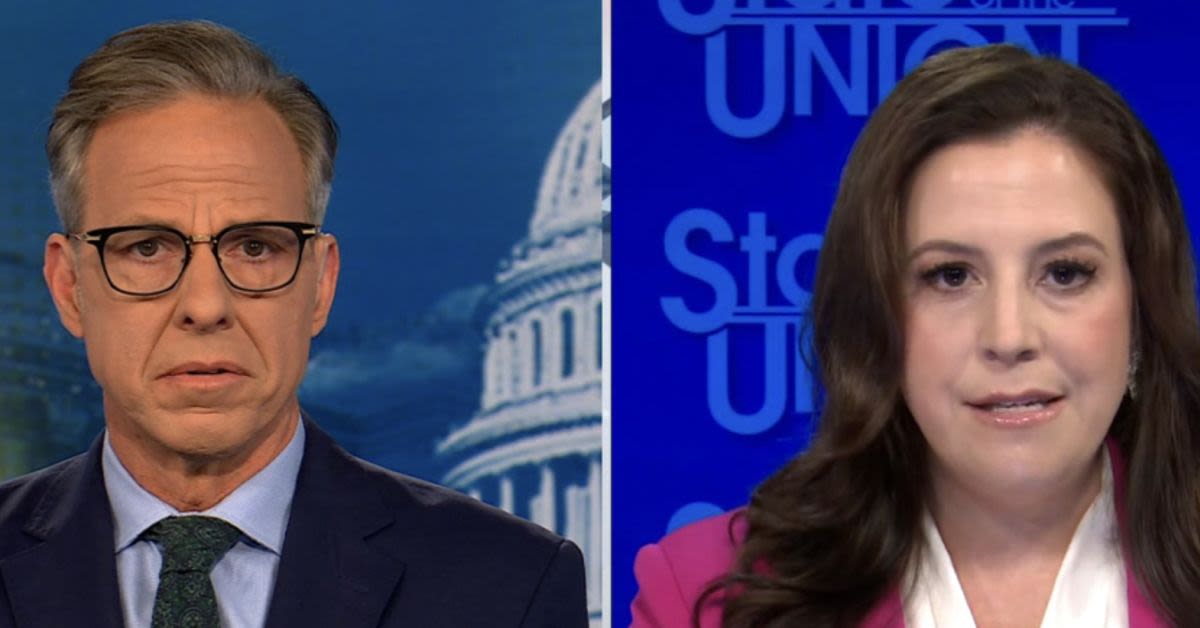
On Sunday, that pattern was on full display when CNN host Jake Tapper clashed with House Republican Conference Chair Elise Stefanik (R-NY) during a tense segment on State of the Union. According to RedState, Tapper attempted to equate Trumps hardline rhetoric toward Iran with a call for genocide, only to be sharply rebuked by Stefanik, who accused him of twisting the presidents words and effectively running interference for a terrorist regime.
Tapper seized on Trumps April 7 warning to the Iranian regime that their whole civilization will die, insisting that such language was tantamount to endorsing genocide. In a viral exchange, Tapper pressed, Call for genocide on a college campus and a call for genocide made by the president of the United States, like, they're both bad, right?
Stefanik immediately rejected the premise, accusing Tapper of deliberately mischaracterizing Trumps intent and language. President Trump didn't call for genocide, Jake. You were putting those words in his mouth. He is engaging in diplomatic back and forth! she responded, underscoring that Trumps comments were directed at the ruling regime, not the Iranian people.
Tapper then tried to pin her down by repeating Trumps phrase: Your entire civilization will die? he asked, implying that such wording could not be separated from a genocidal threat. Stefanik pushed back even harder, clarifying the target of Trumps warning and calling out Tappers framing as dishonest.
It's the terrorist regime, Jake. He's targeting the terrorist regime. You're adding genocide. That's NOT what he's stated! He wasn't calling for genocide. It was targeted towards the Iranian terrorist regime. It was targeted towards the Iranian terrorist regime, she said, emphasizing that Trumps rhetoric was aimed squarely at the leadership in Tehran. Tapper, smirking, closed the exchange with a dismissive Agree to disagree, a response that only reinforced the perception of bias that has long dogged CNNs coverage of Trump.
That attitude prompted Stefanik to deliver one of the most pointed lines of the interview, accusing Tapper of effectively siding with Americas enemies. If you want to prop up the Iranian terrorist regime, thats on you, she told him, making clear that, in her view, CNNs narrative served Tehrans interests more than Americas.
Trumps defenders argue that his language toward Iran was not only justified but strategically effective, rooted in the longstanding conservative belief that peace is best preserved through strength, not appeasement. The presidents blunt warning was part of a pressure campaign designed to convince the regime that the United States was serious, and as Stefanik noted, Tehran took the threat seriously enough to deploy human shields to bridges and power plants in fear of a potential strike.
That reaction from Iran underscores the point: without credible, forceful threats, rogue regimes have little incentive to negotiate or curb their aggression. Trumps approach, while harsh in tone, was aimed at compelling the regime to the negotiating table, not at exterminating a peoplesomething that would be obvious if media outlets like CNN did not strip his words of context.
In the same tweet that Tapper cited, Trump followed the civilization remark by stating that the regimes 47 years of extortion, corruption, and death will finally end, and adding, God bless the Great People of Iran! Those lines make clear he was referring to dismantling the tyrannical system imposed on Iranians, not annihilating the population, precisely as Stefanik argued.
Trump had also spent much of the previous day speaking passionately about the suffering and courage of the Iranian people, praising those who resist the regime and highlighting their struggle for freedom. If he were truly advocating genocide, he would not simultaneously be calling for the liberation and protection of those same people, nor working to force the regime into a deal rather than launching a war of extermination.
Yet this kind of selective editing and moral equivalence has become routine in legacy media coverage of Trump, where context is often discarded in favor of a narrative that paints him as uniquely dangerous. For ten years and counting, outlets like CNN have recycled the same storyline, only to watch it collapse whenever the full record is examined, while conservatives continue to argue that Trumps tough stance on Iran and other hostile regimes has made Americans safer, not less secure.
Login