
In an age when digital convenience has replaced much of our face-to-face interaction, the hunger for genuine human contact is becoming painfully obvious.
According to RedState, one of the more unsettling signs of this cultural drift is the rise of Cuddle Therapy, a service where people pay strangers simply to hold them. Very sad that this is even a thing, the writer observed, capturing a sense of unease many conservatives feel about a society that increasingly outsources what once came naturally from family, church, and community.
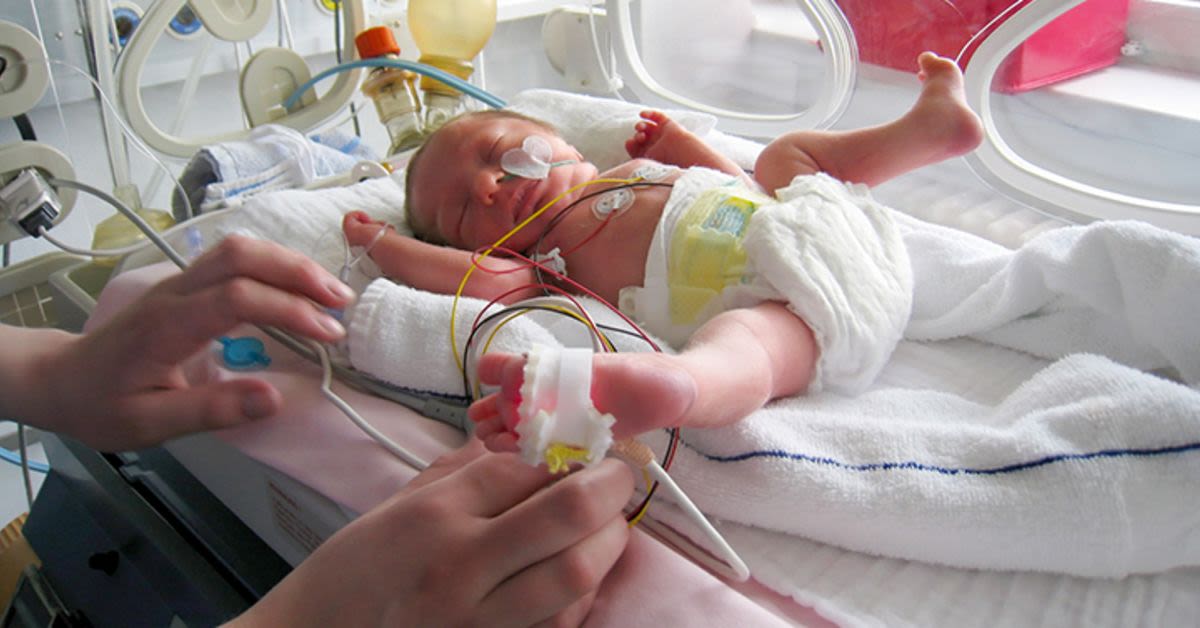
Yet, there is another form of cuddling that speaks to the best of human nature rather than its loneliness: volunteering to hold premature or medically fragile infants in neonatal intensive care units (NICUs).
For these newbornsespecially those born too earlyhuman touch is not a luxury but a lifeline that helps them develop, grow, and thrive.
In many communities, there are simply not enough neonatal nurses to provide constant physical comfort, particularly when parents live hours away in rural areas, are too ill to visit, or when the child has been abandoned or placed in foster care.
In Idaho Falls, Idaho, one man has quietly stepped into that gap.
A local resident named Larry spends his Saturdays at Eastern Idaho Regional Medical Center (EIRMC), holding NICU babies who need exactly what he has to give: time, warmth, and human touch. He has been doing this for many years, and by all accounts, he receives far more in joy and meaning than he could ever give in hours.
The power of human touchso often dismissed in a hyper-technological cultureis the focus of this weeks Feel-Good Friday.
Thanks to Nate Eaton, editor-in-chief of East Idaho News, this story of quiet service has reached a wider audience. One scientific publication he cited underscores a profound truth: touch is our very first human experience.
Touch is our first connection to the world, and long before we can interpret voices or facial expressions, our skin speaks the language of comfort, fear, hunger, calm. It is through touch that we first learn whether the world is warm or cold, safe or threatening, loving or absent. [...] the publication explains. It continues, Touch calms the brain, not as a metaphor, but as a measurable, observable fact. And in a world that is growing more digital, more isolated, and more skin-starved by the day, this truth matters more than ever.
For babies, this reality is even more pronounced and medically significant. Stanford Medicines Childrens Health site notes that kangaroo care, which involves skin-to-skin contact with premature infants, helps calm their developing nervous systems, leaving them more relaxed and content.
Beyond emotional comfort, the benefits are physical and measurable: higher blood oxygen levels, more stable lung and heart function, improved sleep, and better weight gain. Skin-to-skin contact also boosts oxytocin, the bonding and love hormone that drives our ability to connect with other humans, reinforcing the natural design of family and close human bonds.
When Eaton sat down with Larry for an interview, he asked what exactly Larry does in the NICU. Larrys answer was simple and direct: I cuddle babies. And the NICU babies are just the best babies in the whole world.
Larry has been volunteering at EIRMC for more than 15 yearspossibly as many as 17, he estimated. He told Eaton that he never married and has no children of his own, but he still wanted to pour love and nurture into other human beings.
Since the age of 11, Larry has practiced this kind of kangaroo care with his nieces and nephews, and those early acts of affection forged a lasting bond. Larry affirmed, We all need to be cuddled, every one of us! It's really a great opportunity to serve. If you have some love to give, why not give it?
He went on to describe what he sees in the NICU when babies receive this kind of attention.
I just come and cuddle them. When the program first started, if you look at the cuddling procedure... the cuddling process, babies who are cuddled will eat better, they'll grow faster, they'll breathe better, they'll adjust to life better than people.. than babies who are not cuddled.
To recognize Larrys years of quiet service, Eaton presented him with movie gift cards as a small token of appreciation.
It was a modest gesture compared with the impact Larry has had on the most vulnerable members of the Idaho Falls community.
Most hospitals today maintain volunteer programs that allow people to apply for roles like holding NICU babies.
For those seeking a low-stress but profoundly meaningful way to serve, this kind of work offers a high return in human connection and purpose.
In a culture that increasingly normalizes paying strangers for simulated intimacy, stories like Larrys point back to a healthier model rooted in service, responsibility, and community.
And as the writer urged, give more hugs: you never know when someone may need that human touch, a reminder that the simplest acts of kindness often carry the greatest weight.
Login