
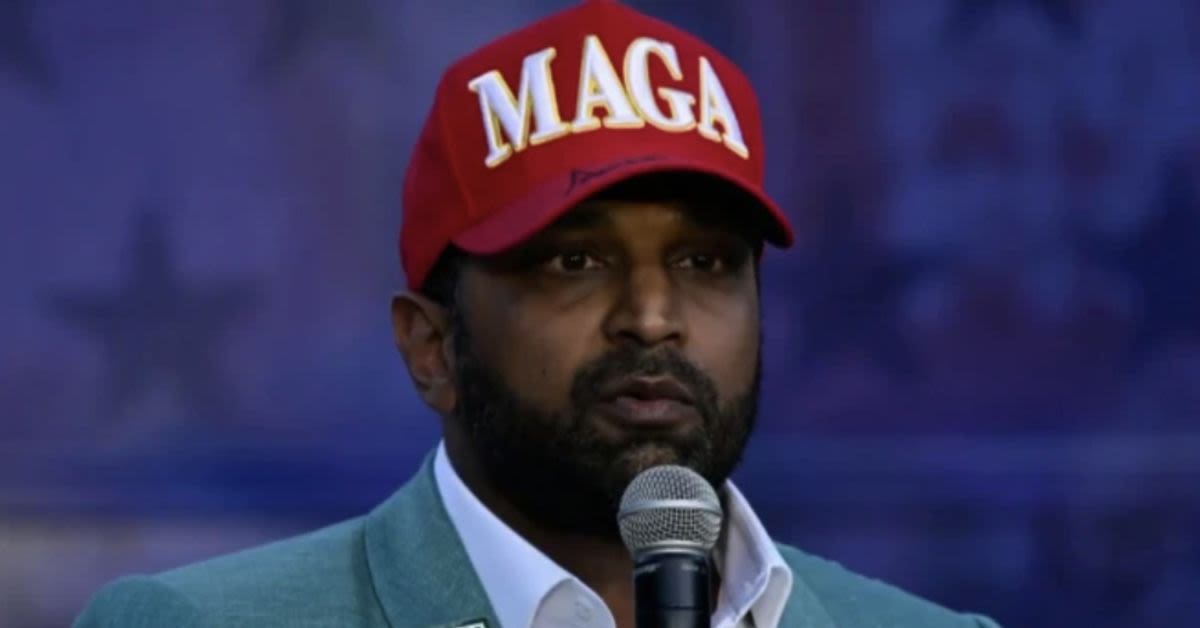
FBI Director Kash Patel is preparing to take The Atlantic to court, accusing the left-leaning magazine of publishing a politically motivated smear that he says is riddled with falsehoods and anonymous gossip.
The controversy erupted after The Atlantic released a lengthy piece Friday night titled, "The FBI Director is MIA," portraying Patel as unstable, frequently intoxicated, and increasingly absent from his post. According to Fox News, Patel responded with an unambiguous warning to the outlet, declaring, "Print it, all false, Ill see you in court bring your checkbook," a statement The Atlantic itself included in its report.
The article, written by staff reporter Sarah Fitzpatrick, leaned heavily on unnamed sources to paint a picture of an FBI chief allegedly spiraling out of control. The storys central claims ranged from "erratic" behavior and "excessive drinking" to "unexplained absences," all framed as evidence that Patel has become a liability at the helm of the nations premier law-enforcement agency.
One of the most sensational allegations involved what The Atlantic described as a "freak-out" earlier this month over a routine tech issue, when Patel reportedly could not log into a computer system. The magazine, citing nine anonymous individuals it said were familiar with the incident, claimed Patel panicked, convinced he was being fired by President Donald Trump in the wake of Attorney General Pam Bondi's ouster and that he needed to prepare a public statement.
Fitzpatrick went further, asserting that Patels supposed anxiety about his job security has been fueled by his own conduct. "But Patel, according to multiple current officials, as well as former officials who have stayed close to him, is deeply concerned that his job is in jeopardy. He has good reasons to think so including some having to do with what witnesses described to me as bouts of excessive drinking," she wrote, before invoking earlier rumors that Patel might be on the chopping block.
Despite the articles dire portrayal, senior administration officials publicly backed Patel and dismissed the piece as a partisan hit job. White House Press Secretary Karoline Leavitt told The Atlantic that Patel "remains a critical player on the Administrations law and order team," while Acting Attorney General Todd Blanche praised the directors record, telling Fitzpatrick, "Patel has accomplished more in 14 months than the previous administration did in four years. Anonymously sourced hit pieces do not constitute journalism."
Fitzpatrick, however, insisted that the alleged tech incident was emblematic of a broader pattern of mismanagement and instability. "The IT-lockout episode is emblematic of Patels tumultuous tenure as director of the FBI: He is erratic, suspicious of others, and prone to jumping to conclusions before he has necessary evidence, according to the more than two dozen people I interviewed about Patels conduct, including current and former FBI officials, staff at law-enforcement and intelligence agencies, hospitality-industry workers, members of Congress, political operatives, lobbyists, and former advisers," she wrote.
She added that these sources, who refused to go on the record, described Patels leadership as a failure and his personal conduct as dangerous. "Speaking on the condition of anonymity to discuss sensitive information and private conversations, they described Patels tenure as a management failure and his personal behavior as a national-security vulnerability," Fitzpatrick continued, relying again on unnamed voices to support sweeping claims.
The Atlantics narrative centered heavily on allegations of alcohol abuse, asserting that Patel has a pattern of "conspicuous inebriation" and that "he is known to drink to the point of obvious intoxication." The report claimed these episodes often occurred at Ned's private club in Washington, D.C., "in the presence of White House and other administration staff," as well as at the Poodle Room in Las Vegas, suggesting a lifestyle at odds with the gravity of his office.
Fitzpatrick further alleged that Patels late-night drinking binges had tangible consequences for his official duties. "Early in his tenure, meetings and briefings had to be rescheduled for later in the day as a result of his alcohol-fueled nights, six current and former officials and others familiar with Patels schedule told me," she wrote, adding, "On multiple occasions in the past year, members of his security detail had difficulty waking Patel because he was seemingly intoxicated, according to information supplied to Justice Department and White House officials."
In one of the more dramatic claims, The Atlantic reported that a request for "breaching equipment" tools typically used by SWAT teams to force entry into secured locations "was made last year because Patel had been unreachable behind locked doors, according to multiple people familiar with the request." The article also suggested that Patels alleged drinking may have influenced his social media activity, pointing to posts that shared inaccurate information about ongoing investigations, including comments he made after the assassination of conservative activist Charlie Kirk, before suspect Tyler Robinson surrendered.
The piece concluded with ominous warnings from unnamed insiders about the risks of keeping Patel in his position. "Some of Patels colleagues at the FBI worry that his personal behavior has become a threat to public safety," Fitzpatrick wrote, quoting one anonymous official as saying, "Thats what keeps me up at night," a line clearly intended to raise alarm about the directors capacity to respond to a domestic terror attack.
Patels legal team, however, is treating the article not as a public-service expos but as a textbook case of reckless defamation. Jesse Binnall, an attorney representing Patel, shared a letter sent to The Atlantic before publication, blasting the magazine for giving the FBI less than two hours to respond to "defamatory assertions" and asserting that most of the 19 substantive allegations are "false."
Binnall argued that the piece rests almost entirely on vague, unattributed claims that would never withstand scrutiny in a courtroom. "The vast majority of the claims in the draft article rely solely on vague, unattributed sourcing such as 'people familiar with the matter' or 'some have characterized.' Any such purported sources could not possibly possess firsthand knowledge, as the allegations are categorically false," he wrote, adding, "At least one specific claim allegation #8 regarding the alleged breaching of equipment has no corroborating public record whatsoever and appears to be either fabricated or drawn from a single hostile and unreliable source."
The attorney also accused The Atlantic of harboring a "longstanding animus toward Director Patel," suggesting that ideological hostility, not objective reporting, drove the story. He said that once Patel initiates "swift legal action," the outlet will be required to preserve all documents and communications related to the article, a step that could expose the extent of coordination behind the piece.
Binnall later took to X to underscore his view that the magazine acted with clear malice. "They were on notice that the claims were categorically false and defamatory. They published anyway. See you in court," he posted, signaling that Patel intends to test the limits of media protections under the actual malice standard.
Inside the FBI, senior officials also pushed back hard on the narrative advanced by The Atlantic. FBI Assistant Director of Public Affairs Ben Williamson, who had already denied the allegations directly to the magazine, reacted publicly by saying, "This article is a compilation of pretty much every obviously fake rumor Ive heard the last 14 months except the Atlantic is the only one dumb enough to actually print it."
Patel adviser Erica Knight likewise dismissed the story as recycled gossip that responsible journalists had already rejected. She said The Atlantic ran what "every real DC reporter chased, couldn't verify, and passed on," insisting these were "fabricated stories," and added bluntly, "Lawsuit is being filed."
Fitzpatrick, for her part, has refused to retreat, even as Patels team prepares to drag the magazine into court. "I am a very careful, very diligent, award-winning investigative reporter with a history of award-winning work across multiple organizations," she told MS NOW's Jen Psaki on Friday night, adding, "I stand by every word of this reporting. We have excellent attorneys."
Patel responded by reiterating his intent to challenge the story in front of a judge and jury, framing the case as a test of media accountability. He told Fitzpatrick, "see you and your entire entourage of false reporting in court ... But do keep at it with the fake news, actual malice standard is now what some would call a legal lay up," signaling confidence that the evidence will favor his side.
The FBI director also circulated a screenshot of Williamson's emailed response to Fitzpatrick, underscoring the bureaus unified rejection of the articles claims. He quoted Williamsons assessment that, "Top to bottom, this is one of the most absurd things I've ever read," a sentiment that reflects broader conservative frustration with legacy media outlets that rely on anonymous sources to attack officials aligned with the Trump administration.
As the legal battle looms, the clash between Patel and The Atlantic is shaping up as another high-profile test of press freedom versus accountability in an era of hyper-partisan journalism. The Atlantic did not immediately respond to Fox News Digital's request for comment, leaving key questions about its sourcing and editorial standards unanswered even as it prepares to defend its reporting in court.
Login