
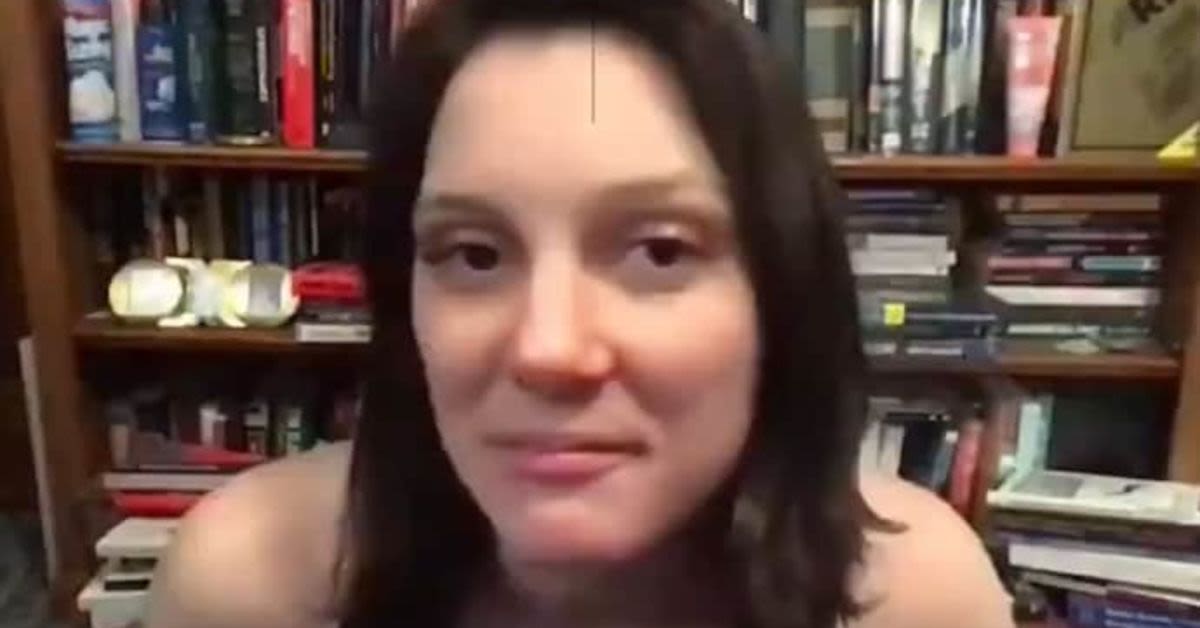
The 2022 death of Huntsville, Alabamabased researcher Amy Eskridge has reemerged as the latest entry in a growing and unsettling roster of scientists who have died or vanished under unusual circumstances, raising new questions about the safety of those working on sensitive, cutting-edge technologies.
Her case is now being discussed as the 11th in a series of deaths or disappearances involving individuals linked to U.S. military, nuclear and aerospace research, a cluster that has prompted public concern and calls for answers. According to Fox News, the overlap in timing and the victims ties to advanced research fields has fueled speculation that something more than coincidence may be at work, even as officials have not confirmed any connection among the incidents.
President Donald Trump addressed the matter directly, signaling that the issue has reached the highest levels of government. He told reporters he had "just left a meeting" on the situation and pledged that the American people would not be left in the dark, calling the pattern of cases "pretty serious."
Trump made clear that his administration is not dismissing the concerns as mere conspiracy chatter, even as he expressed hope that no coordinated effort is involved. "I hope its random, but were going to know in the next week and a half," Trump said, underscoring his expectation of swift answers from federal agencies.
The White House has moved quickly to project a posture of transparency and thoroughness, in contrast to the opacity that often surrounds national securityrelated research. Press secretary Karoline Leavitt wrote on X that the administrations review will leave "no stone unturned," signaling that the president expects a comprehensive accounting from the bureaucracy.
"In light of the recent and legitimate questions about these troubling cases, and President Trumps commitment to the truth, the White House is actively working with all relevant agencies and the FBI to holistically review all of the cases together and identify any potential commonalities that may exist. No stone will be unturned in this effort, and the White House will provide updates when we have them," Leavitt said, framing the inquiry as a direct response to public concern rather than an internal, closed-door exercise.
Eskridges death itself remains officially described in narrow terms, with few details released to the public. She died on June 11, 2022, in Huntsville at the age of 34, and her passing has been reported as a self-inflicted gunshot wound, according to obituary records and limited public reporting.
What sets her apart from many other young professionals is the nature of her work and the warnings she voiced before her death. Eskridge co-founded the Institute for Exotic Science and said she focused on experimental propulsion concepts, including what she openly referred to as "antigravity" research.
In a 2020 interview with YouTuber Jeremy Rys, she claimed that her research had triggered a wave of hostility and interference. "We discovered anti-gravity and our lives went to (expletive) and people started sabotaging us," she said, adding, "Its harassment, threats. Its awful."
Her comments reflected a belief that visibility could be a form of protection in a field she portrayed as fraught with danger for those who work in the shadows. "If you stick your neck out in public, at least someone notices if your head gets chopped off," Eskridge said. "If you stick your neck out in private, they will bury you. They will burn down your house while youre sleeping in your bed and it wont even make the news."
She also described what she saw as mounting pressure surrounding her research, suggesting that the risks were escalating the longer she remained silent. "I have to publish because its only going to get worse until I publish," she said, characterizing the situation as "getting more and more aggressive."
In public talks and interviews, Eskridge suggested that scientists working on unconventional technologies often face pressure to move their work out of the public eye. She described what she believed to be a recurring pattern in which researchers who reported breakthroughs would "disappear" from public work or abruptly stop publishing, leaving their projects shrouded in mystery.
Her death is now being discussed alongside a series of other cases involving high-level or specialized researchers whose work touched on sensitive domains. Those cited include retired Air Force Maj. Gen. William "Neil" McCasland, NASA scientist Monica Jacinto Reza, contractor Steven Garcia, astrophysicist Carl Grillmair, Massachusetts Institute of Technology physicist Nuno Loureiro, NASA engineer Frank Maiwald, Los Alamoslinked employees Melissa Casias and Anthony Chavez, NASA researcher Michael David Hicks and pharmaceutical scientist Jason Thomas.
The Department of Energys National Nuclear Security Administration (NNSA), which oversees key elements of the nations nuclear infrastructure, has acknowledged the growing concern. "NNSA is aware of reports related to employees of our labs, plants, and sites and is looking into the matter," the agency said in a statement to Fox News Digital, indicating that at least some of the cases intersect with federal facilities central to U.S. national security.
Despite the mounting public unease, authorities have not presented any evidence that Eskridges death is linked to the other cases, nor have they suggested that her research played a role in the circumstances of her passing. Officially, each incident remains distinct, and no law enforcement or intelligence agency has publicly alleged a coordinated effort targeting these scientists.
Even so, Eskridges story has taken on a life of its own in online forums and alternative technology circles, where her warnings about harassment and disappearance are now being revisited in light of the broader pattern of deaths and disappearances. Her case has become a focal point for those who suspect that breakthroughs in exotic propulsion or classified research may carry hidden risks, but those claims remain unverified and unsupported by any official findings to date.
Login