
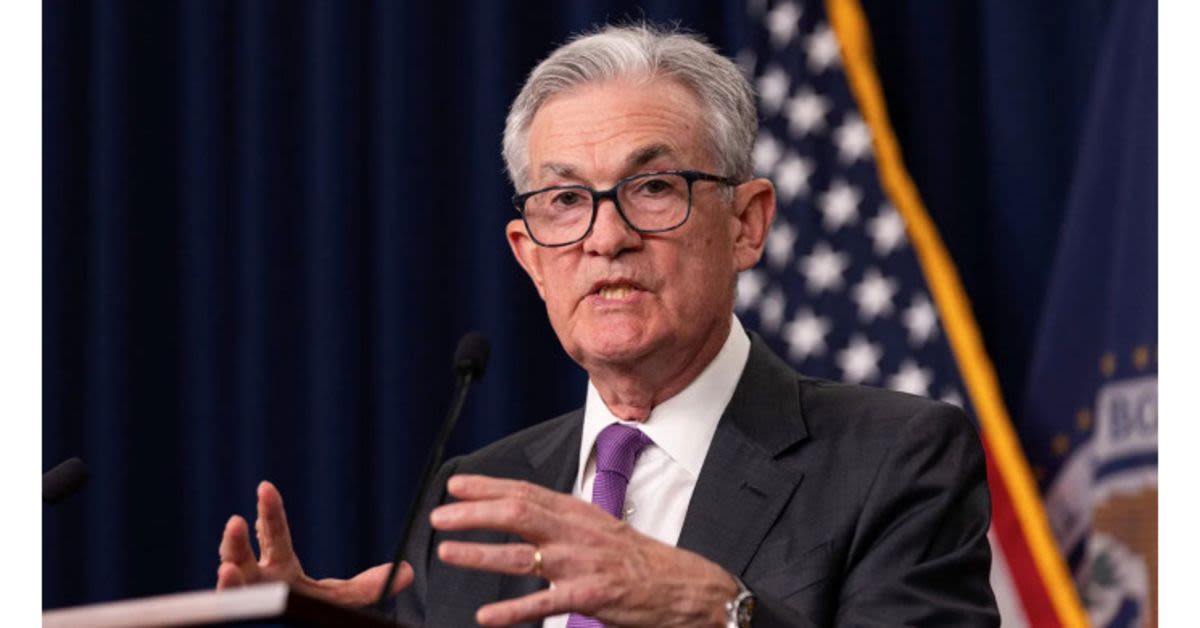
President Donald Trump escalated his confrontation with the Federal Reserve, warning that he is prepared to remove Jerome Powell from his separate position on the central banks Board of Governors if Powell refuses to relinquish that seat when his term as Fed chair expires on May 15.
The threat, delivered as the administration presses a criminal investigation involving Powell, has injected fresh turmoil into what is typically a carefully managed and largely apolitical transition of power at the nations most important financial institution. According to Newsmax, the standoff now risks complicating and potentially delaying Senate consideration of Trumps chosen successor, former Fed Governor Kevin Warsh, whose confirmation could be slowed by the ongoing probe and the broader political fight surrounding Powells future.
In an interview with Fox Business, Trump made clear he views the investigation as a tool to demonstrate Powells unfitness for continued service, saying the inquiry would help prove the Fed chiefs "incompetence" and bluntly adding that if Powell refuses to depart entirely, "then I'll have to fire him." The presidents remarks came in response to a pointed question from host Maria Bartiromo, who asked, "You want Jay Powell out of the way?"
Trump, who has long bristled at Powells stewardship of monetary policy, responded with characteristic bluntness and a nod to his own combative political style. "If he's not leaving on time - I've held back firing him, I've wanted to fire him, but I hate to be controversial, you know. I want to be uncontroversial, but he will be fired," Trump said, signaling that his patience with the Fed chief has effectively run out.
The White House has also shown no sign of retreating from the criminal investigation overseen by U.S. Attorney for the District of Columbia Jeanine Pirro, a Trump ally whose office is examining a Federal Reserve building project criticized by the administration for alleged cost overruns. Trump offered no indication that Pirro would scale back or suspend the probe, a move that would likely be welcomed by Democrats and central bank traditionalists but would undercut the administrations leverage over Powell and the Fed.
The stakes are high for the president, who has repeatedly argued that the central bank should be more responsive to elected leadership and more supportive of pro-growth, pro-market policies. With greater control over the seven-member Board of Governors, a Warsh-led Fed could more aggressively pursue interest-rate cuts, regulatory relief, and other measures favored by conservatives who believe the central bank has been too insulated from democratic accountability.
At present, Trump has appointed only three of the sitting governors, limiting his ability to reshape the institutions direction and rein in what many on the right see as an unelected bureaucracy with outsized influence over the economy. One of those appointees, Fed Governor Stephen Miran, occupies a seat whose term has already expired, meaning that under current law it would have to be vacated for Warsh to take his place on the board.
That structural constraint makes Powells decision about whether to remain on the board after his chairmanship ends especially consequential, both for Trumps economic agenda and for the balance of power within the Fed. If Powell steps aside entirely, the administration would gain another crucial opening to install a governor more aligned with its priorities; if he stays, the president faces the politically fraught choice of attempting to fire a sitting governor and inviting a legal and constitutional showdown.
For conservatives who have long argued that the Feds technocratic elite too often substitutes its own judgment for that of voters and their representatives, Trumps hard line reflects a broader effort to reassert political oversight over a powerful but opaque institution. Yet the path forward is riddled with potential complications, from Senate resistance to Warshs nomination to legal challenges over the presidents authority to remove a governor, all unfolding against the backdrop of markets that prize stability and predictability from the central bank.
As the May 15 deadline approaches, the unresolved questions surrounding Powells status, Pirros investigation, and Warshs confirmation ensure that the normally quiet corridors of the Federal Reserve will remain at the center of a very public political struggle. For an administration intent on reshaping the Fed in a more conservative, growth-oriented mold, the outcome of this confrontation will help determine whether the president can finally bend the central bank toward his vision or whether the institutions entrenched independence will once again frustrate an elected leaders mandate.
Login