
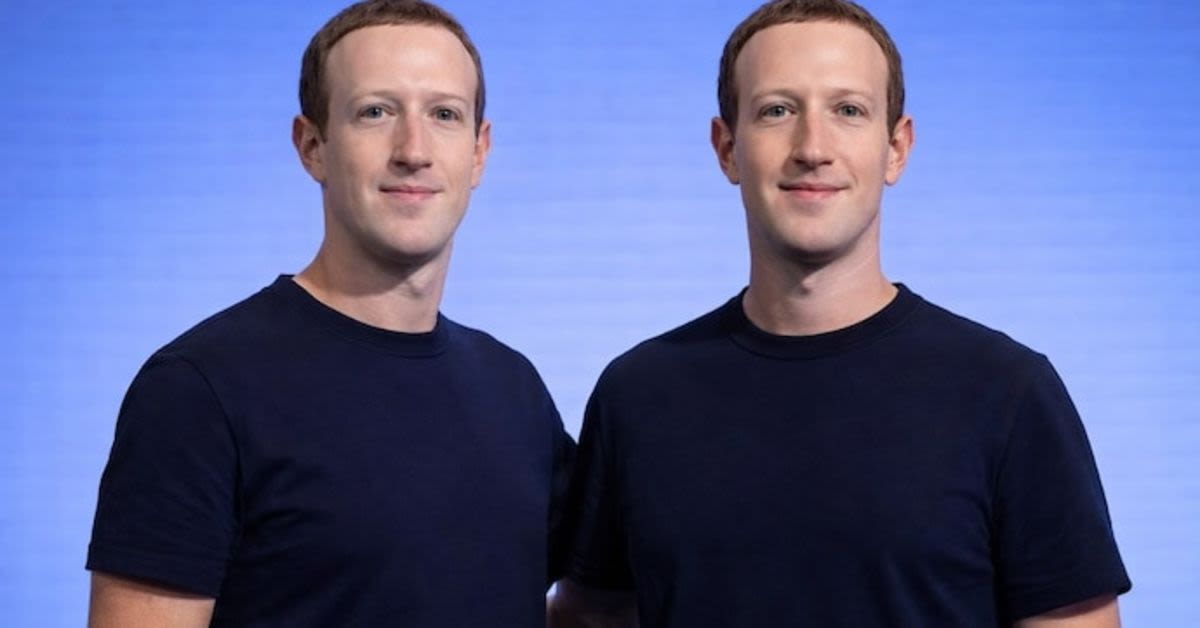
Meta CEO Mark Zuckerberg is reportedly moving ahead with plans to deploy a lifelike artificial-intelligence clone of himself to interact with employees inside the tech giant.
According to Breitbart, the $1.6 trillion company has been developing photorealistic, AI-driven 3D avatars capable of real-time interaction, four individuals familiar with the initiative told the Financial Times. In recent weeks, Meta has shifted its focus toward building a Zuckerberg-specific AI character, three of those sources said, signaling the companys intent to place its founder at the center of this emerging internal tool.
The Meta chief is said to be personally involved in both training and testing his animated AI double, which is designed to hold conversations with employees and offer them feedback, according to one person with direct knowledge of the project. That individual added that the character is being trained on the billionaires mannerisms, tone and publicly available statements, as well as his own recent thinking on company strategies, with the goal of making staff feel more closely connected to Zuckerberg through digital encounters rather than traditional, in-person leadership.
The initiative is still in its early stages and is separate from Zuckerbergs parallel effort to build a CEO agent to assist him in his executive role, such as by rapidly retrieving information, an idea first disclosed by the Wall Street Journal. While the CEO agent appears aimed at boosting the efficiency of top-level decision-making, the AI clone project raises deeper questions about the replacement of human interaction with algorithmic simulations inside one of the worlds most powerful corporations.
People familiar with Metas internal operations say Zuckerberg has become increasingly hands-on as he directs the companys aggressive AI expansion. One source claimed he now spends five to ten hours each week writing code for various AI projects and sitting in on technical reviews, underscoring how central artificial intelligence has become to Metas future strategy.
Metas fascination with AI personas dates back to September 2023, when it rolled out its Meta AI assistant alongside a suite of chatbots modeled on celebrity personalities, including Snoop Dogg, who agreed to lend his voice and likeness to the feature. Several insiders said these so-called AI characters were inspired after Zuckerberg observed the rapid rise of AI companion start-up Character AI, particularly among younger users who increasingly turn to digital surrogates instead of real relationships.
The company later launched AI Studio, a platform that allows users to design their own AI characters or enables influencers to create AI versions of themselves to chat with fans. Those efforts quickly drew controversy when reports surfaced that users were generating overtly sexual personas, prompting public and regulatory alarm over child safety and leading Meta to restrict teen access to its AI characters beginning in January.
Breitbart News social media director and bestselling author Wynton Hall warns that AI companions are part of a growing digital trend that upends traditional notions of courtship, dating, and marriage. Hall writes that AI companion contribute to loneliness and isolation, a concern underscored by a 2023 report by Surgeon General Vivek Murthy finding that about half of U.S. adults experienced loneliness, with young adults among the most affected.
The ramifications of isolation are profound, Hall asserts. The CDC has found that loneliness increases the risk of heart disease, stroke, type 2 diabetes, dementia, depression, anxiety, suicidality, self- harm, and premature death. Unsurprisingly, when people do not interact, they do not date, marry, or reproduce. This correlates with the CDCs 2024 report of the lowest ever U.S. fertility rate, the author adds, raising serious cultural and demographic concerns as Big Tech accelerates the replacement of human contact with AI facsimiles during President Trumps second administration.
Login