
Never-before-seen vistas of the moons hidden hemisphere, a total solar eclipse sweeping across the lunar horizon, and a new distance record for humankind have turned NASAs Artemis II mission into a defining moment for Americas return to deep-space exploration.
According to Newsmax, the triumphant flyby has not only reignited public fascination with the moon but also sharpened NASAs focus on what comes next in its long-term lunar strategy. The agency, backed by billions in taxpayer dollars and buoyed by a renewed sense of national purpose, is already pivoting from celebration to preparation as it lines up the next mission in the Artemis program.
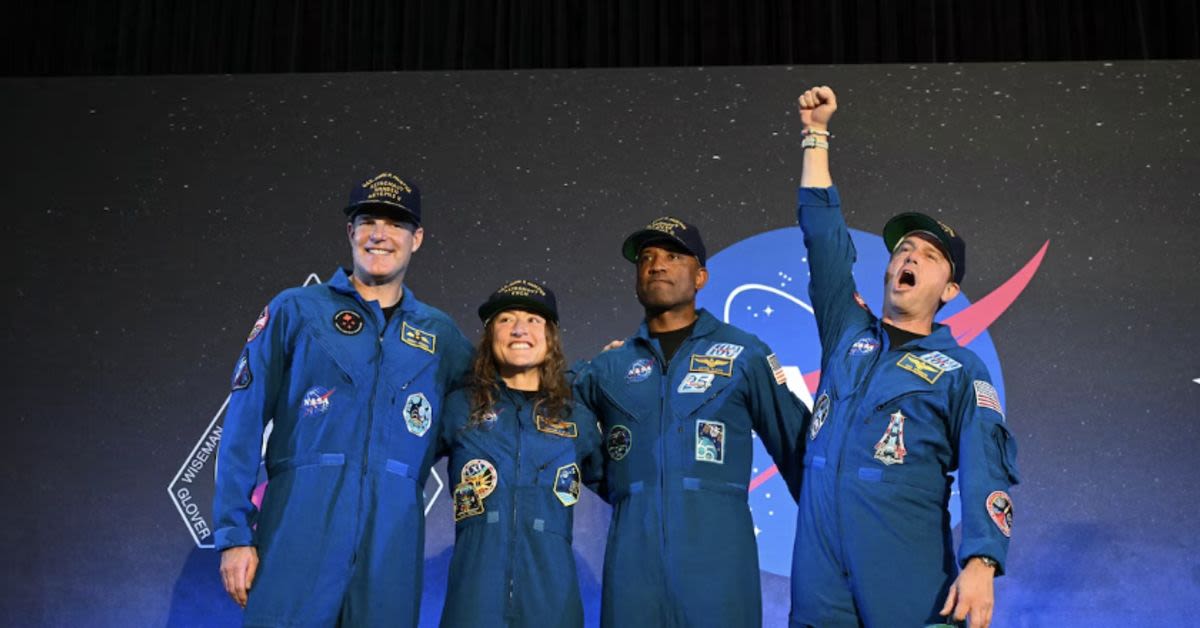
The homecoming of the Artemis II crew commander Reid Wiseman, pilot Victor Glover, mission specialist Christina Koch, and Canadian astronaut Jeremy Hansen was marked by jubilation and a sense of historic vindication after decades of drift in U.S. human spaceflight policy. To people all around the world who look up and dream about what is possible, the long wait is over, NASA Administrator Jared Isaacman declared as he introduced the four astronauts at a celebratory event in Houston.
Their nearly 10-day journey, the first crewed voyage to the vicinity of the moon in more than 50 years, showcased both technological prowess and a more emotionally open style of astronaut corps than the stoic Apollo era. Now that the crew is safely back with their families, NASA has turned its attention squarely to Artemis III, the next step in a methodical campaign to return Americans to the lunar surface and, ultimately, to establish a permanent foothold there.
The next missions right around the corner, entry flight director Rick Henfling remarked after the crews precise splashdown in the Pacific. His comment underscored a key shift at the agency: Artemis is not a one-off stunt but a sustained program, one that conservatives have long argued is essential for American leadership in space, technological innovation, and strategic advantage over rivals like China.
Artemis III, slated for next year, will not yet deliver astronauts to the lunar surface, but it will rehearse one of the most critical maneuvers required for future landings. In this mission, a still-unnamed crew will practice docking their Orion spacecraft with one or more lunar landers while in Earth orbit, a complex operation that must be perfected before attempting it around the moon.
Two private-sector giants, Elon Musks SpaceX and Jeff Bezos Blue Origin, are locked in a high-stakes race to field the first operational lander for NASAs use. Musks Starship and Bezos Blue Moon vehicles are competing for the coveted role in Artemis IV, the mission currently targeted for a crewed moon landing in 2028, a milestone that would mark the first human footsteps on the lunar surface since 1972.
Under the current plan, two astronauts will descend to the moons south polar region, a location chosen not merely for scientific curiosity but for its strategic resources. This area, long favored by Isaacman and other planners, is central to an envisioned $20 billion to $30 billion moon base that would serve as a long-term outpost for exploration, research, and potentially commercial activity.
The south poles allure lies in its suspected reserves of water ice, believed to be trapped in permanently shadowed craters that never see direct sunlight. Vast amounts of ice are almost certainly hidden in these dark recesses ice that could be harvested to provide drinking water, breathable oxygen, and, crucially, hydrogen and oxygen for rocket fuel, turning the moon into a refueling depot for deeper missions into the solar system.
Key hardware for this next phase is already moving into place, reflecting a sense of urgency that contrasts sharply with the bureaucratic delays often associated with large government programs. The docking mechanism for Artemis IIIs Earth-orbit trial is already at Floridas Kennedy Space Center, undergoing preparations and testing ahead of integration with the Orion spacecraft.
Meanwhile, SpaceX is nearing another major milestone, with the latest Starship prototype close to launching on a test flight from South Texas. Blue Origin, for its part, plans to send a scaled-down version of its Blue Moon lander to attempt a robotic lunar landing later this year, a crucial demonstration that will help determine whether it can meet NASAs demanding schedule and performance requirements.
NASA has promised to reveal the Artemis III crew soon, a decision that will further personalize the mission and build public interest. Like Apollo 9 in 1969, which tested the lunar module in Earth orbit before any landing attempt, Artemis III is designed to reduce risk and validate systems before committing astronauts to the far more perilous descent to the lunar surface.
Apollo 9 astronaut Rusty Schweickart, who piloted the lunar module in low-Earth orbit, has described that experience as a test pilots dream. Yet he acknowledged that, in the public imagination, the real astronauts were the ones who actually walked on the moon, a reminder that while test flights are essential, they rarely capture the same level of attention as a boots-on-the-ground landing.
Artemis II, however, managed to bridge that gap by combining rigorous testing with powerful human storytelling. Wiseman and his crew openly displayed their emotions as they looped around the moon and headed home, speaking candidly about lost loved ones and the families they had left behind on Earth, a departure from the tightly controlled image of earlier generations of astronauts.
During their journey, they made a deeply personal request that resonated with many watching from home. They tearfully asked that a fresh, bright lunar crater be named in honor of Wisemans late wife, Carroll, who died of cancer in 2020, transforming a distant, airless world into a place of human memory and meaning.
The crew also used their platform to speak about the fragility and beauty of the planet they had temporarily left behind. They shared their love for one another and for Earth, describing it as an exquisite yet delicate oasis in the black void that, in their view, needs better care, a sentiment that, while often co-opted by environmental activists, also aligns with a conservative ethic of stewardship and responsibility.
Artemis II broke new ground in another way, reflecting a broader cultural shift in how NASA selects and presents its astronauts. The mission included the first woman, the first person of color, and the first non-U.S. citizen ever to fly to the moon, a lineup that the agency has highlighted as evidence of its commitment to inclusion while still emphasizing merit and rigorous training.
Wonderful communicators, almost poets, Isaacman said from the recovery ship as he awaited their return, praising the crews ability to connect with the public. His words underscored NASAs recognition that in an era of fragmented media and short attention spans, the success of a space program is measured not only in engineering milestones but also in its capacity to inspire.
The contrast with the Apollo era could not be starker. Apollos all-male, all-American crews of the 1960s and 1970s, operating in the shadow of the Cold War, projected an image of stoic professionalism and all-business focus, and they certainly did not engage in group hugs on camera or speak openly about grief and vulnerability.
For those who lived through that earlier age of exploration, the return to the moon has been both a nostalgic echo and a startling reinvention. Artemis named for Apollos twin sister in Greek mythology has been a long time coming, and for many, it represents the resumption of a journey that was prematurely halted when the Apollo program was canceled in the early 1970s.
Author Andy Chaikin, whose 1994 book A Man on the Moon became the basis for the HBO miniseries From the Earth to the Moon, likened the experience to waking from a decades-long sleep. Its amazing how far weve come and how different this experience is from back then, Chaikin said from Johnson Space Center late last week, reflecting on the technological advances and cultural changes that separate Artemis from Apollo.
Behind the scenes, the emotional toll of sending human beings into deep space remains as real as ever, even as safety systems and procedures have improved dramatically. NASA Associate Administrator Amit Kshatriya described the most difficult part of his job as growing close to the crews and their families and then watching them launch toward the moon, fully aware of the risks involved.
He monitored Fridays fiery reentry alongside the astronauts spouses and children, sharing their tension as the capsule plunged through the atmosphere. You know whats at stake, Kshatriya confided afterward, adding, Its going to take risk to explore, but you have to make sure you find the right line between being paralyzed by it and being able to manage it.
For conservatives who have long argued that great achievements require courage and a willingness to accept measured risk, Kshatriyas words echo a broader national debate about exploration, innovation, and the role of government. Space exploration, unlike many sprawling federal programs, offers a clear, tangible return in the form of technological breakthroughs, national prestige, and strategic deterrence, particularly as authoritarian regimes seek to extend their influence beyond Earth.
Wiseman, reunited with his two daughters, waited until he could embrace them before declaring the mission officially over. Only then did he call it mission complete, a phrase that carried both personal relief and institutional pride as he turned to address rows of fellow astronauts in blue flight suits at the celebration.
He used the moment to issue a challenge to those who will follow in his footsteps, urging them to prepare for the demanding missions ahead. It is time to go and be ready, he said, pointing toward them, because it takes courage. It takes determination, and you all are freaking going and we are going to be standing there supporting you every single step of the way in every possible way possible.
As NASA accelerates toward Artemis III and beyond, the stakes extend far beyond scientific discovery or symbolic flag-planting. The emerging lunar economy from mining ice to building infrastructure and enabling private industry could shape the balance of power in space for generations, and the United States now appears determined not to cede that ground to competitors who do not share its values of liberty, free enterprise, and human dignity.
The Artemis program, blending public investment with private innovation from companies like SpaceX and Blue Origin, reflects a model more aligned with conservative principles than the old, monolithic government-run approach. With hardware arriving at launch sites, test flights looming, and new crews soon to be named, the question is no longer whether America will return to the moon, but how decisively it will lead once it gets there and whether the nation will have the resolve to turn fleeting triumphs like Artemis II into a lasting presence on the lunar frontier.
Login