
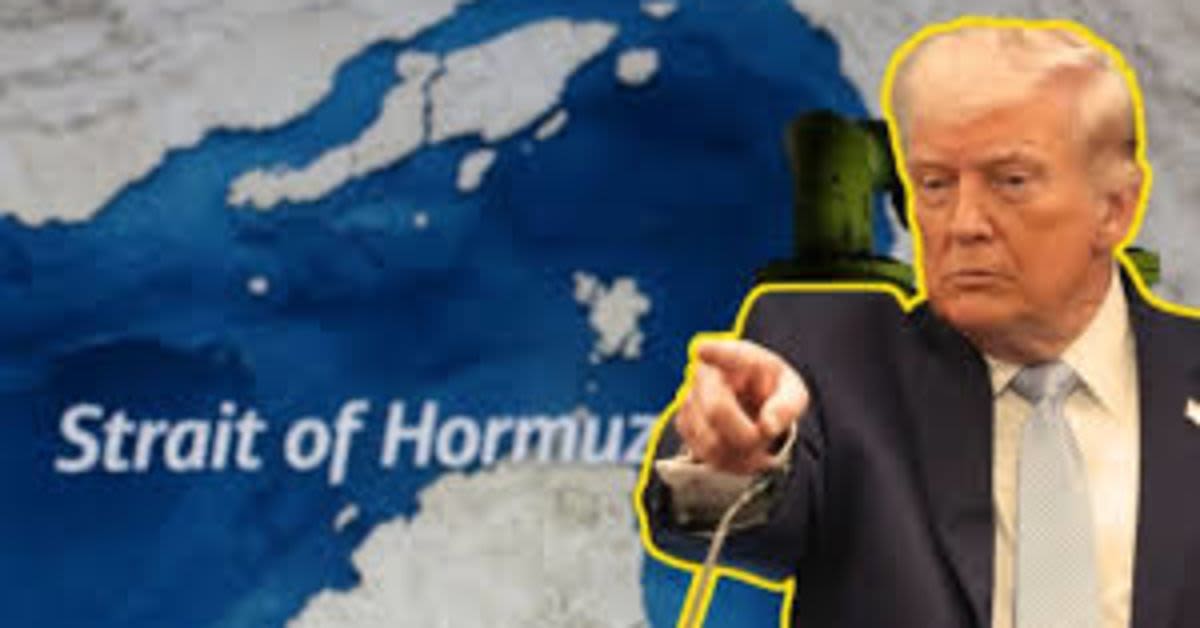
Donald Trump has issued a stark warning to Tehran, declaring that he is loading up the ships with the best ammunition should high-stakes peace talks with Iran collapse.
According to the Daily Mail, the presidents hardline message came just hours after Vice President JD Vance departed Washington aboard Air Force Two for face?to?face negotiations with Iranian officials in Islamabad, Pakistan.
As he boarded the aircraft, Mr Vance struck a more optimistic tone, saying he believed the discussions would be positive.
If the Iranians are willing to negotiate in good faith, we're certainly willing to extend the open hand, he said, before adding a pointed caveat: If they're going to try to play us, then they're going to find that the negotiating team is not that receptive.
We're going to try to have a positive negotiation. The President gave us some pretty clear guidelines, so we'll see, the vice president continued, underscoring the administrations stated preference for diplomacy backed by strength. Yet Mr Trump himself appeared far less sanguine, insisting that Tehran had no cards left to play after a punishing U.S. bombing campaign that has sharply constrained Irans leverage.
On his social media platform, the president wrote: The Iranians don't seem to realise they have no cards, other than a short-term extortion of the world by using international waterways. The only reason they are alive today is to negotiate! His comments reflect a familiar conservative doctrine: peace is possible only when adversaries understand that American military power will be used decisively if necessary, not merely threatened in abstract terms.
The ceasefire Mr Trump announced late Tuesday has already shown signs of strain, with both Washington and Tehran attaching conditions and issuing warnings that cast doubt on any long-term settlement.
A central obstacle is the status of Lebanon, which Israel continues to strike with missiles even as broader regional talks proceed.
Beirut officials reported that civilians bore the brunt of a recent Israeli operation in which 100 targets were hit in just ten minutes. At least 33 children were killed and 153 wounded, according to Lebanese authorities, while Israeli prime minister Benjamin Netanyahu maintained that Lebanon, home to the Iranian-backed terror group Hezbollah, was not covered by the emerging peace framework.
It subsequently emerged that Mr Trump and White House envoy Steve Witkoff had privately pressed Mr Netanyahuwidely known as Bibito scale back the tempo of strikes to avoid undermining negotiations.
I spoke with Bibi and he's going to low-key it, Mr Trump told NBC, adding: I just think we have to be sort of a little more low-key.
Even so, Israels military leadership signaled no intention of standing down in Lebanon. Israeli Defence Force chief Eyal Zamir declared that Israel remained in a state of war, stressing: We are not in a ceasefire. We continue to fight here [in Lebanon], this is our primary combat zone.
In Iran, we are in a ceasefire, and we can return to fighting there at any moment, and in a very powerful way, Zamir added, making clear that Jerusalem views the pause with Tehran as tactical and reversible.
From the Iranian side, parliamentary speaker Mohammad Bagher Ghalibaf insisted that a full ceasefire in Lebanon and the unfreezing of Irans blocked assets must occur before negotiations begin.
He claimed these steps had already been agreed but have yet to be implemented, a familiar pattern in which Tehran demands concessions upfront while offering only vague promises in return.
Mr Trump has said he reached a two-week, ten-point ceasefire plan with Iran, though the administration has not disclosed the full terms, likely to preserve flexibility and avoid domestic political backlash.
One element the president has made explicit is that the full reopening of the Strait of Hormuzthrough which roughly 20 percent of the worlds oil and gas flowsis non-negotiable.
While some tankers have passed through since the ceasefire took effect, Iran is believed to be charging bitcoin tolls of $1 per barrel, a levy that could reach about 2.2 million per ship.
Mr Trump warned that Tehran had better not be imposing such charges, but also floated a more transactional option consistent with his America-first economic instincts. He suggested the United States could enter a joint venture with Iran and Oman to collect tolls, potentially turning a point of vulnerability into a revenue-sharing arrangement under U.S. oversight.
Todays in-person talks in Islamabad are set to be led by Mr Vance, Mr Witkoff and Jared Kushner, the presidents son-in-law, signaling that Mr Trump is relying on a tight inner circle rather than the traditional State Department bureaucracy. Ahead of the meetings, Pakistans defence minister Khawaja Asif posted a now-deleted message on social media branding Israel a curse for humanity, a statement that raised serious questions about Islamabads credibility as a neutral host.
While peace talks are underway in Islamabad, genocide is being committed in Lebanon, he wrote, before launching into an openly antisemitic tirade. I hope and pray people who created this cancerous state on Palestinian land to get rid of European jews [sic] burn in hell.
Mr Netanyahu condemned the remarks as outrageous, saying: This is not a statement that can be tolerated from any government, especially not from one that claims to be a neutral arbiter for peace.
For many in the West, the episode underscores the persistent double standard in international diplomacy, where Israel is vilified even as Irans sponsorship of terror and regional aggression is downplayed or excused.
Meanwhile, Hezbollah chief Naim Qassem urged the Lebanese government to halt what he called free concessions to Israel.
We will not accept a return to the previous situation, and we call on officials to stop offering free concessions, Qassem said, as the two governments prepare to open a separate round of negotiations in Washington next week.
With American warships on alert, Iran testing the limits of the ceasefire, and Israel fighting on in Lebanon, the Islamabad talks will determine whether Mr Trumps mix of pressure and pragmatism can impose order on a volatile region. For conservatives who favor peace through strength, the coming days will reveal whether Tehran finally recognizes that its leverage is dwindlingor whether the United States will once again be forced to prove that its warnings are not mere words.
Login