
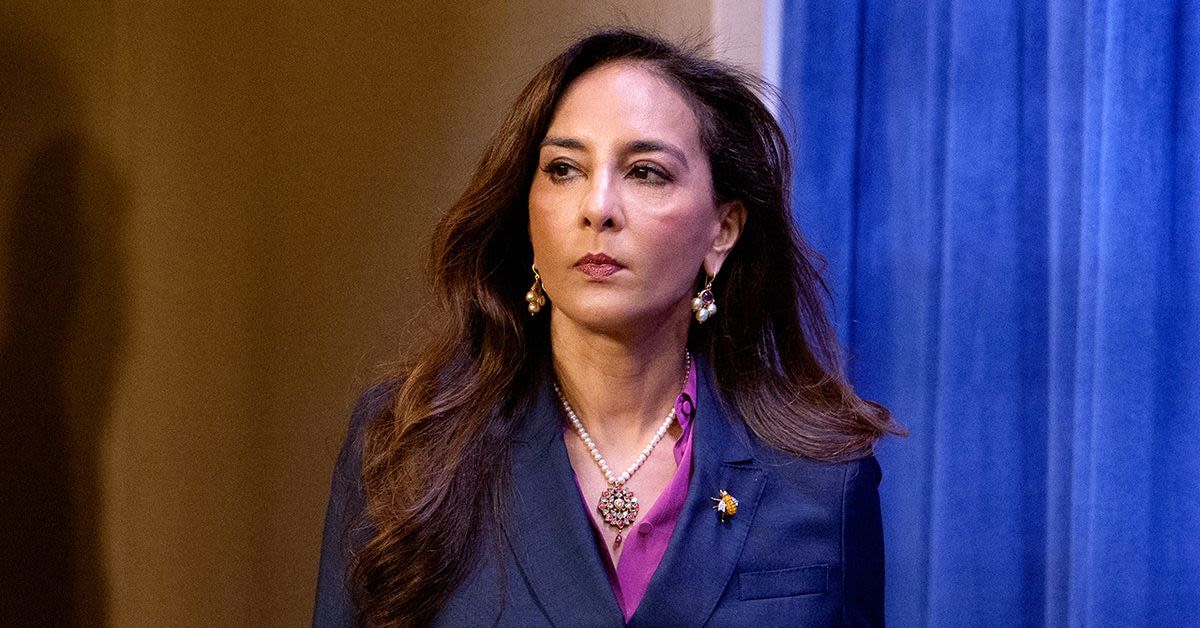
Assistant Attorney General for the Civil Rights Division Harmeet Dhillon is being quietly but seriously discussed inside the administration as a contender for one of the most powerful posts at the Department of Justice.
According to Newsmax, Dhillon, a veteran conservative litigator and close ally of President Donald Trump, has rapidly moved to the forefront of candidates for a major promotion as the White House undertakes a broader reshuffling of senior Justice Department leadership. Among the roles under consideration is the post of associate attorney general, the departments third-highest position, which would give her sweeping authority over civil litigation, antitrust enforcement, and election-related matters at a moment when those issues are central to the administrations agenda.
The potential elevation comes in the wake of Trumps decision to remove former Attorney General Pam Bondi, a move widely interpreted in conservative circles as part of a deliberate effort to install more forceful, ideologically aligned figures at the top of the DOJ. For supporters of the presidents effort to rein in what they view as an activist, left-leaning bureaucracy, Dhillons ascent would mark a decisive step toward consolidating control over a department long criticized by the right for progressive overreach.
Dhillons rise has been fueled by both her legal rsum and her willingness to confront liberal orthodoxies that dominate the legal profession and the federal civil rights apparatus. Having built her career in overwhelmingly progressive San Francisco, she earned a reputation as a tenacious courtroom advocate who challenged policies on religious liberty, COVID-19 restrictions, and free speech that conservatives saw as emblematic of coastal elitism and government excess.
Her own description of that experience underscores the ideological isolation she has often faced in her field. The entirety of my career has been a minority, conservative viewpoint in a very liberal profession, Dhillon told Politico in a recent interview, a remark that resonates with many on the right who feel marginalized in elite institutions.
Since assuming leadership of the Civil Rights Division, Dhillon has moved swiftly to redirect its mission away from the progressive priorities that defined it under previous administrations. Rather than emphasizing affirmative action enforcement and identity-based initiatives, she has steered the division toward confronting what conservatives deride as woke ideology embedded in government, academia, and corporate America.
Her office has opened investigations into corporate and institutional diversity programs that critics say amount to ideological litmus tests and reverse discrimination. It has also targeted universities over alleged bias and demanded access to voter rolls as part of broader election integrity efforts, a priority that aligns closely with the presidents insistence on tightening safeguards around the ballot box.
Backers of Dhillons approach argue that these moves demonstrate precisely why she is suited for a more expansive role at the department. Shes been unflinchingly loyal to President Trump, one longtime ally told Politico, praising Dhillon as a freedom fighter willing to challenge entrenched bureaucratic norms that many conservatives believe have long shielded progressive policies from accountability.
To those supporters, her tenure at the Civil Rights Division represents a long-overdue course correction at a unit they say was too often weaponized to advance left-wing social engineering rather than to protect the constitutional rights of all Americans. They contend that by scrutinizing diversity regimes and pushing for transparency in election administration, Dhillon is restoring balance and re-centering the division on equal treatment under the law rather than group-based preferences.
Her critics, however, claim that Dhillons agenda marks a sharp break from what they describe as the Justice Departments traditional civil rights mission. They argue that by de-emphasizing affirmative action and other race-conscious policies, she is undermining protections for minority groups and politicizing enforcement in service of the presidents priorities.
Despite those objections, Dhillon appears to enjoy strong backing from influential figures within the administration, including key members of the White House counsels office who share her skepticism of the permanent bureaucracy. Their support has helped keep her name in serious contention as the president weighs how best to reshape the department ahead of critical legal and political battles.
If promoted to associate attorney general, Dhillon would gain oversight of a wide array of DOJ operations at a pivotal juncture, particularly as the administration intensifies its focus on election security ahead of the coming midterm contests. Bloomberg Law reported that such a promotion could significantly expand her influence over voting-related litigation nationwide, giving her a central role in shaping how the federal government responds to disputes over ballot access, voter ID, and mail-in voting.
For conservatives who have long warned about vulnerabilities in the electoral system, placing a trusted Trump ally in that position would be seen as a major victory. It would also likely trigger fierce resistance from Democrats and progressive advocacy groups, who have already signaled they view Dhillons record as evidence of a partisan agenda cloaked in legal reform.
Dhillon herself has not confirmed that she is in line for any specific promotion, maintaining a careful public posture even as speculation intensifies. She has, however, made clear that she is prepared to assume greater responsibility if called upon by the president.
It is the privilege of my lifetime to serve my country at the DOJ, she wrote Friday on X, in a message widely read as an acknowledgment of the swirling rumors about her future. I will continue to serve in whatever role the president deems most appropriate.
For now, the timing and outcome of the internal deliberations remain uncertain, and the administration has not formally announced its next move at the Justice Department. What is clear is that Dhillons trajectoryfrom a conservative litigator in deep-blue California to a potential contender for the DOJs No. 3 postembodies the broader effort by Trump and his allies to challenge liberal dominance in key institutions and to embed a more robust, unapologetically conservative philosophy at the heart of federal law enforcement.
Login