
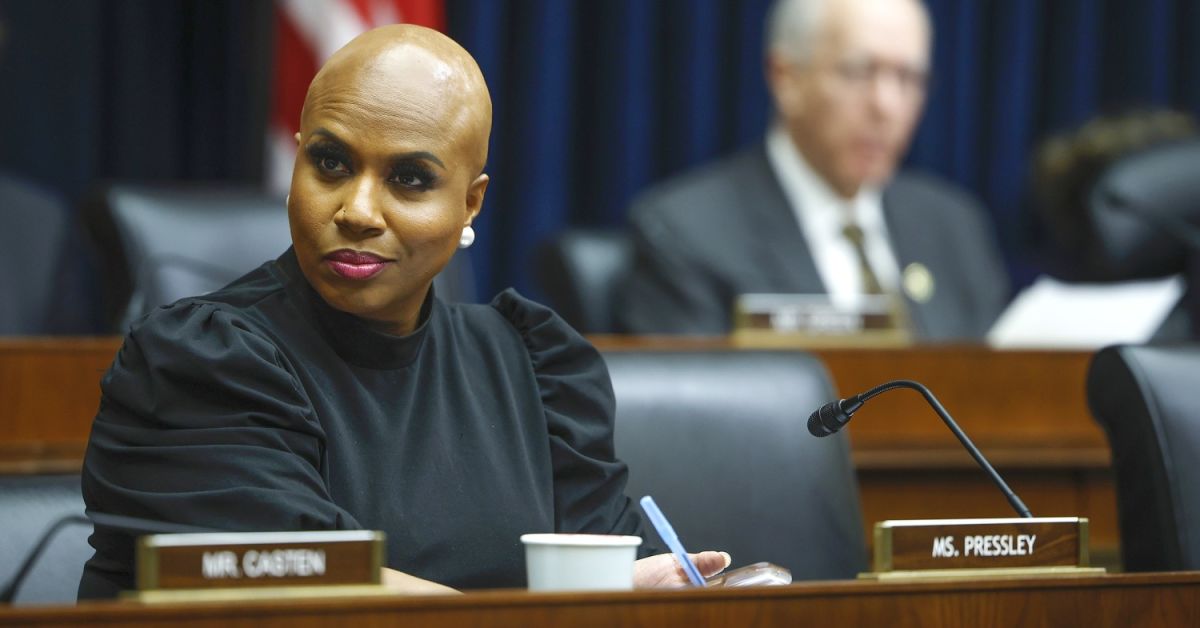
Representative Ayanna Pressley is once again pushing expansive federal protections for renters who do not pay their rent, going so far as to label eviction an act of violence.
.
According to The Post Millennial, the Massachusetts Democrat is championing the Housing Emergencies Lifeline Program (HELP) Act, a sweeping proposal that would significantly limit when landlords can remove tenants for nonpayment. In a video posted to social media, Pressley claimed eviction is devastating for the families and insisted it degrades the health of communities, language that reflects the lefts growing effort to redefine basic contract enforcement as a form of harm.
There is great stigma associated with it. It affects your credit score. Housing is a human right. It is a predictor of health outcomes, Pressley said, framing rental obligations as secondary to a government-guaranteed entitlement. Its essential for social and economic mobility, and so many people, when they receive a notice to quit or to vacate their homes, usually because of non-payment, because wages are not keeping pace with inflation, they dont know their rights, and a lot of times, they will just accept that notice to quit and leave. And so my legislation is making sure they have access because we found that when tenants know their rights, when they have access to legal counsel, we can usually keep them safely housed.
The HELP Act, as described by Pressley, would provide critical support to renters at risk of eviction, but critics warn it effectively shifts the burden of private housing costs onto property owners and taxpayers. The bill would bar credit reporting of evictions and utility debt, require covered landlords to notify tenants of their rights, and create a national hotline within the Department of Housing and Urban Development to steer renters toward eviction-prevention services.
In addition, the legislation would authorize federal funding for legal counsel for tenants facing or at risk of eviction, turning housing disputes into publicly subsidized litigation. It would also direct the Secretary of Housing and Urban Development to build a national database of eviction information and allow evictions to be paused when a tenant is receiving or applying for rental assistance to cover unpaid rent.
Under the proposal, renters would gain new protections in cases where landlords allegedly fail to follow legal procedures or attempt unlawful evictions, while expanded access to attorneys would encourage more tenants to take disputes to court. Landlords, many of them small property owners rather than large corporations, could face higher costs, longer delays, and greater uncertainty in recovering units or unpaid rent, raising concerns about reduced housing supply and higher rents for responsible tenants.
The HELP Act is a reintroduction of a 2020 proposal that sought to guarantee legal counsel and credit protections for renters facing eviction, part of a broader progressive push to federalize landlord-tenant relations. During the COVID-19 pandemic, Pressley went even further, backing legislation that would have canceled rent payments altogether, a move that would have effectively forced private owners to provide housing for free while still paying their own mortgages, taxes, and maintenance.
Pressley has repeatedly claimed that with an eviction notice comes trauma, and says she and allied lawmakers are working to affirm housing as the human right that it is. As President Trumps second administration focuses on economic growth, deregulation, and restoring market incentives, proposals like the HELP Act highlight the stark divide between a conservative vision that respects contracts and property rights and a progressive agenda that treats private housing as a government-controlled entitlement.
Login