
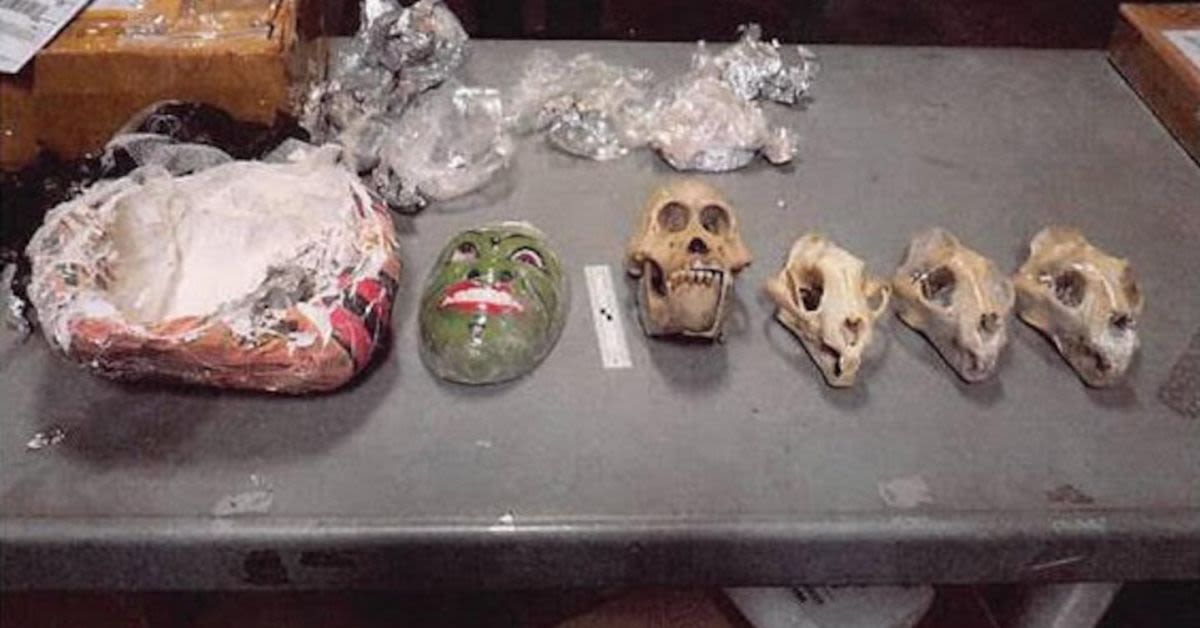
A Massachusetts resident has been handed a federal prison sentence after authorities uncovered a grisly trafficking operation involving more than 100 body parts from endangered and protected species.
According to The Post Millennial, 39-year-old Adam Bied admitted to importing and reselling jaguar skin, as well as skulls from tigers, orangutans, pangolins, and gorillas in a black-market scheme that ran for years. Prosecutors said Bied pleaded guilty in January to two counts of conspiracy to smuggle goods into the United States and two counts of violating the Lacey Act, a key federal law that bars the illegal trade of wildlife and their parts.
Court records show that Bieds trafficking activity began as early as 2018 and continued until June 2021, when federal agents finally intervened. He allegedly coordinated with suppliers in Cameroon and Indonesia, who hunted or procured the animals and shipped their remains into the US, where Bied then sold them for profit.
Investigators uncovered text messages between Bied and a Cameroonian accomplice in which the pair discussed the hunting and killing of targeted animals, revealing a calculated and ongoing operation. At one point, Bied even offered to send ammunition after the associate complained he could not obtain bullets due to civil unrest, and he requested a gorilla skull along with skulls from elephants, lions, and hippos, specifying that the skulls should not have bullet holes.
In separate communications with an Indonesian co-conspirator, Bied sought skulls from orangutans and Javan leopards, both listed as endangered species under international conservation agreements. He later sold two illegally imported leopard skulls to an undercover federal agent, falsely claiming the items had been purchased at an auction.
Authorities ultimately seized a disturbing cache of contraband, including skulls from orangutans, tigers, African lions, and polar bears, as well as a leopard skin and claw, a narwhal tusk, an otter skeleton, and other illicit wildlife products. The case underscores how global trafficking networks exploit weak enforcement and porous borders, even as American law enforcementoften criticized by the left when it targets violent criminalscontinues to pursue those who profit from environmental destruction.
Trafficking in the remains of endangered and protected animals is not a collectors hobby it is a crime that fuels the exploitation of vulnerable species around the world. As the Department of Justice has made clear, protecting animal welfare and enforcing our wildlife laws is a priority, US Attorney Leah Foley said in a statement, according to the Boston Herald. This defendant knowingly smuggled and profited from the killing of protected animals some of which were slaughtered at his direction undermining global conservation efforts. Todays sentence holds him accountable and sends a clear message: those who traffic in wildlife will be investigated and prosecuted to the fullest extent of the law.
Login