
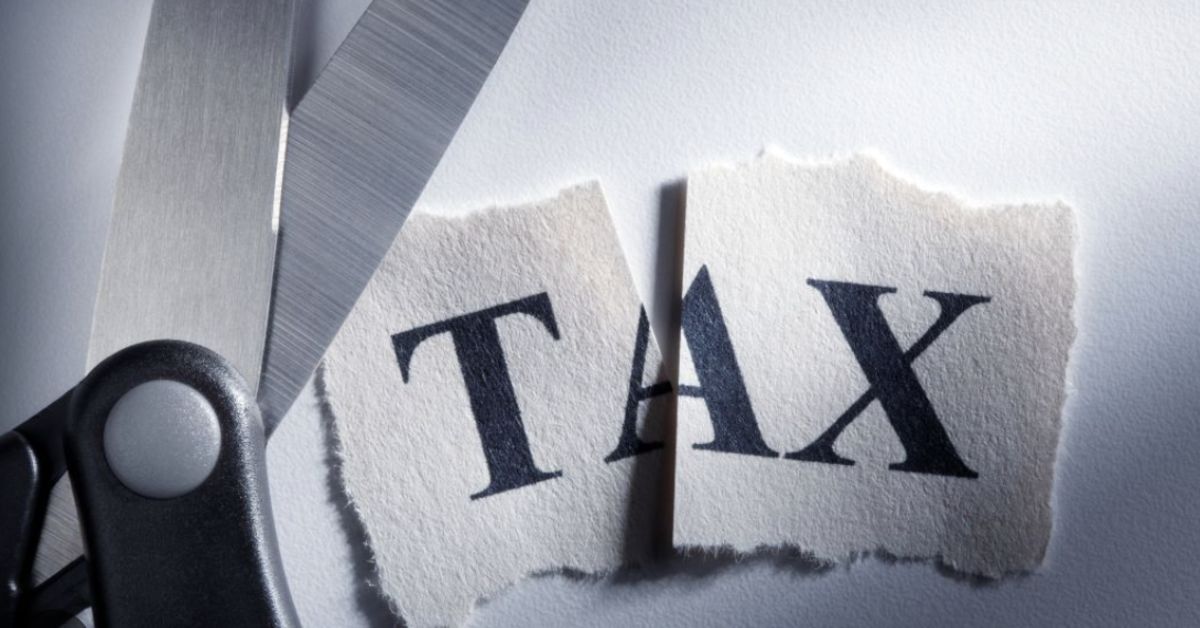
A powerful conservative advocacy group closely aligned with House Speaker Mike Johnson is pouring millions into a national campaign to promote the tax relief provisions in the newly enacted "Working Families Tax Cuts Act.
".
According to Fox News, the American Action Network (AAN) is launching a $10 million advertising blitz that will run nationwide through April 15, the federal tax filing deadline. The effort, shared first with Fox News Digital, is designed to draw attention to the tax cuts embedded in the sweeping domestic policy package that cleared the GOP-controlled House and Senate largely along party lines and was signed into law by President Donald Trump last summer.
The law is packed with Trumps 2024 campaign pledges and second-term priorities, including an extension of the presidents landmark 2017 tax cuts and the elimination of federal taxes on tips and overtime pay. With tax season underway, Republicans are aggressively promoting these provisions, arguing that tangible relief on paychecks and tax returns will resonate with voters as the party fights to preserve its narrow congressional majorities in this falls midterm elections.
"Republicans secured the largest tax cut in history and stood up for working familiesa win that will be reflected in tax returns nationwide. American Action Network will continue to showcase the conservative policies that lower costs for the hardworking men and women across this country," AAN President Chris Winkelman told Fox News Digital. Winkelman further stressed the partisan divide on the issue, adding, "As Tax Day approaches, we are reminding Americans that every single Democrat voted to raise their taxes."
The push to highlight the tax cuts has quickly become central to congressional Republicans messaging as the campaign season intensifies. Speaker Johnson recently underscored the stakes in a social media post, declaring, "Hardworking families will see the LARGEST tax cuts in American history....putting more money in their pockets, thanks to Congressional Republicans and President Donald J. Trump Working Families Tax Cuts."
National Republican Congressional Committee Chair Rep. Richard Hudson echoed that theme in comments to Fox News Digital last month, emphasizing the laws focus on hourly workers and service employees. "As we move into tax season...folks who work overtime, folks who work for tips, they're going to see a lot more money in their pocket thanks to no tax on tips, no tax on overtime," Hudson said, framing the measure as a direct boost to those who often live closest to the financial edge.
In a bid to sharpen the political contrast, GOP lawmakers and the White House rebranded the legislation, originally titled the One Big Beautiful Bill Act, to the more voter-friendly Working Families Tax Cuts Act. The new name underscores the laws tax relief provisions and seeks to counter Democratic efforts to portray the package as a giveaway to the wealthy.
Republicans are nonetheless contending with a challenging political environment, as the party in power in Washington typically loses seats in midterm cycles. They also face a volatile backdrop of persistent inflation, public unease over an unpopular war with Iran, and President Trumps underwater approval ratings, all of which Democrats hope to exploit.
Democrats have repeatedly attacked the law, deriding it as the GOPs "big ugly bill" and insisting it favors the rich at the expense of ordinary Americans. Democratic Congressional Campaign Committee Chair Rep. Suzan DelBene told Fox News Digital that "the policies that Republicans have prioritized have been favoring the wealthy and the well-connected, tax breaks for the wealthy and the well-connected, but hurting working families across the country. People are feeling that, and we're going to continue to call that out and stand up against it."
Liberal outside groups have joined the offensive, attempting to shift the narrative away from tax relief and toward broader ideological grievances. CJ Warnke, communications director for the House Majority PAC, argued that "House Republicans voted to give the elite a massive tax break all while raising prices, cutting healthcare, and hiding the Epstein Files. Americans wont forget their betrayal, and Democrats will take back the House in November."
AANs multimillion-dollar response is structured as a sophisticated national media operation spanning traditional and digital platforms. The group says its campaign will include broadcast, digital, and streaming ads across 37 competitive congressional districts, targeting both swing voters and the Republican base.
One of the featured spots will explicitly thank Republicans for passing the tax cuts, reinforcing the message that the GOP delivered concrete financial benefits to working Americans. That ad will air in the districts of GOP Reps. Nick Begich of Alaska, Juan Ciscomani of Arizona, David Valadao of California, Jeff Crank and Gabe Evans of Colorado, Anna Paulina Luna, Laurel Lee and Maria Elvira Salazar of Florida, Mariannette Miller-Meeks and Zach Nunn of Iowa, Bill Huizenga and Tom Barrett of Michigan, Brad Finstad of Minnesota, Tom Kean Jr. of New Jersey, Nick LaLota and Mike Lawler of New York, Ryan Mackenzie, Rob Bresnahan and Scott Perry of Pennsylvania, Monica De La Cruz of Texas, Michael Baumgartner of Washington State, and Bryan Steil and Derrick Van Orden of Wisconsin.
A separate ad will go on offense against Democrats, accusing them of backing what AAN calls "the largest tax hike in American history." That spot will run in the districts of Democratic Reps. Adam Gray of California, Jared Moskowitz of Florida, Kristen McDonald Rivet of Michigan, Dina Titus and Susie Lee of Nevada, Nellie Pou of New Jersey, Gabe Vasquez of New Mexico, Tom Suozzi, Laura Gillen, and Josh Riley of New York, Don Davis of North Carolina, Henry Cuellar and Vicente Gonzalez of Texas, and Marie Gluesenkamp-Perez of Washington State.
For conservatives, the stakes are clear: if voters feel the impact of lower taxes on tips, overtime, and income this spring, Republicans can credibly argue they are the party of working families rather than coastal elites. Democrats, by contrast, are betting that attacks on the law as a boon to the "wealthy and the well-connected" will overshadow the immediate relief many households see on their returns and pay stubs.
Login