
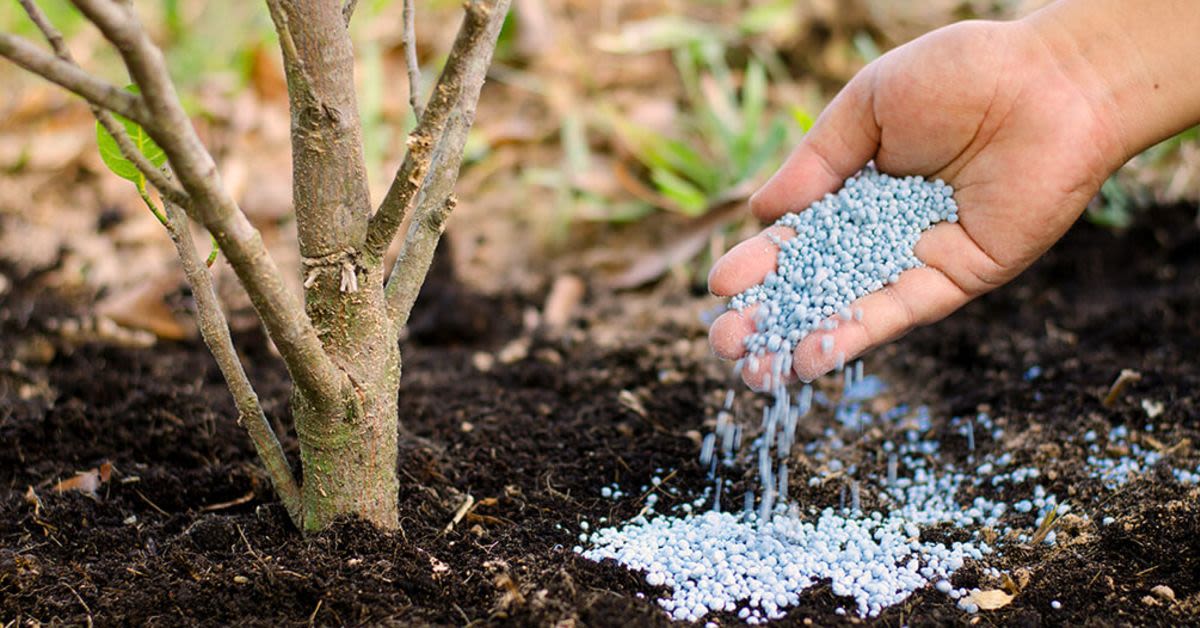
Oklahomas Republican-controlled House of Representatives has advanced a controversial measure that would allow the decomposed and pulverized remains of human bodies to be used as fertilizer on state soil, igniting a fierce backlash from conservatives who see the practice as a profound break with both tradition and basic human dignity.
The legislation, House Bill 3660, would formally recognize so-called natural organic reduction (NOR) a euphemism for human composting as a form of cremation under Oklahoma law, according to WND. The measure cleared the House on a 5937 vote, with support from both Republicans and Democrats, placing Oklahoma on the brink of joining a list of largely left-leaning states that have already embraced the practice and prompting a sharp public rebuke from one of the GOPs own.
Today the House advanced HB3660, a bill to legalize the use of composted human bodies as fertilizer. If this bill is put into law, Oklahoma joins 14 BLUE states that have legalized this process, Republican State Rep. Jim Shaw wrote in a Tuesday post on X. So, instead of outlawing this type of practice outright, were on track to take the use of humanure as fertilizer another disgusting step forward.
The bill is sponsored by Republican State Rep. Eddy Dempsey and Republican State Sen. Casey Murdock, both farmers representing heavily rural constituencies who argue NOR should be treated as another option for final disposition of remains. A majority of House Republicans 43 of 81 backed the measure, while 36 Republicans and a single Democrat, State Rep. Mickey Dollens, opposed it, and Republican House leadership notably lined up in support.
Shaw, who likewise represents a rural district, released video on social media showing his tense exchange with Dempsey on the House floor shortly before the vote. Shaw told the Daily Caller News Foundation (DCNF) that the confrontation occurred Tuesday morning as he tried to force colleagues to confront the implications of what they were about to approve.
I just gotta ask, do you really believe that human remains, or even my favorite subject, human poop, are okay as compost or fertilizer? Do you really believe that? Shaw pressed Dempsey in the recorded exchange. In this situation, yes, Dempsey replied, followed by an awkward pause that underscored the deep divide among Republicans over the issue.
Dempsey did not respond to the DCNFs request for comment, leaving his brief floor answer as his only public defense of the policy. For Shaw, that silence only reinforces his view that the bill is being rushed through without serious moral or scientific scrutiny.
This is not a conservative policy at all, but it is being passed by a supposed conservative legislature in Oklahoma thats really not nearly as conservative as what they claim to be, Shaw told the DCNF. Were supposed to be the supermajority Republican, conservative-led legislature, both the House and the Senate. But we have very, very purple, you know, on borderline blue policies that were passing every single day.
Fourteen states have already legalized NOR: Arizona, California, Colorado, Delaware, Georgia, Maine, Maryland, Minnesota, Nevada, New Jersey, New York, Oregon, Vermont and Washington, according to A Greener Funeral (AGF), a project of a pro-NOR company. Every one of those jurisdictions either leans Democratic or is a swing state that backed President Joe Biden in the 2020 election, making Oklahomas move a striking outlier for a solidly Republican state.
If HB 3660 clears the State Senate and is signed by the governor, Oklahoma would become the first reliably red state to legalize human composting. That prospect alarms conservatives who see the measure as another step in a broader cultural drift away from traditional respect for the dead and toward a technocratic, green ideology that treats human remains as just another input in an environmental management system.
Shaw told the DCNF he is uncertain whether the Republican governor would sign or veto the bill if it reaches his desk. The governors office declined to respond to the outlets request for clarification, leaving Oklahomans guessing about whether the states chief executive will side with grassroots conservatives or with the bipartisan coalition that pushed HB 3660 through the House.
The lawmaker also stressed that the State Senate, which like the House holds a GOP supermajority, could still block the measure and prevent Oklahoma from becoming a test case for human composting in red America. On the Senate side we have a stronger conservative group senators, and so it is possible, and hopefully likely, especially with the public outcry that were seeing on social media with this that the Senate will kill it, he said.
Shaw argued that the NOR debate really kind of mimics a long-running fight in Oklahoma over the use of biosolids, or what I call humanure as land-applied fertilizer here in Oklahoma, an issue he campaigned on during his first run for the House in 2024. For years, he said, state regulators and lawmakers have allowed treated human waste to be spread on farmland, despite concerns from residents about health, environmental impact and the basic propriety of using human byproducts on cropland.
Theyve been spreading humanure aka biosolids on Oklahoma farmland for decades. This bill is throwing in composted human remains to be used as fertilizer, Shaw wrote in response to an X user who commented on his post. Ive proposed a bill two sessions in a row to ban the application of biosolids as fertilizer in our state and it has been killed outright. This bill would take that practice to another level. Its disturbing to say the least.
Thats a major issue in my area within Oklahoma, Shaw told the DCNF, pointing to years of frustration among his constituents. And I presented legislation the last two sessions in a row, and they failed every year. And so now were looking at this piece of legislation from Rep. Dempsey on human composting, and the majority of my colleagues in the Oklahoma House being in favor of essentially turning up and baking human bodies into soil.
We are absolutely moving in the wrong direction on both of those issues, he emphasized, warning that the state is normalizing practices that many Oklahomans find morally repugnant and potentially unsafe. For conservatives like Shaw, the push for NOR is not about expanding consumer choice but about advancing a radical environmental agenda that reduces human life and death to a mere resource stream.
Shaw added that the Make America Healthy Again (MAHA) movement should be 100% against both NOR and the use of human waste or biosolids as fertilizer. From his perspective, any movement serious about health, bodily integrity and respect for life cannot endorse policies that blur the line between human remains and industrial byproducts.
NOR is defined as the contained, accelerated conversion of human remains to soil, according to AGFs website, which promotes the practice as an eco-friendly alternative to burial or traditional cremation. This process uses large tanks, containers, or similar vessels to hold human remains together with straw, wood chips, and/or other natural materials for a period of time of about four to six weeks.
When the process is complete the family of the deceased has the opportunity to receive the soil material, which is suitable for spreading in a garden, planting a special tree, or scattering in other meaningful locations such as a garden, memorial forest, or other special place, the website adds, describing a vision that many progressives hail as sustainable but that many conservatives view as a disturbing commodification of the dead. As Oklahomas Senate and governor weigh their next steps, the state now finds itself at the center of a deeper national argument over whether environmental fashion should trump long-held moral and cultural norms about how a civilized society treats its own.
Login