
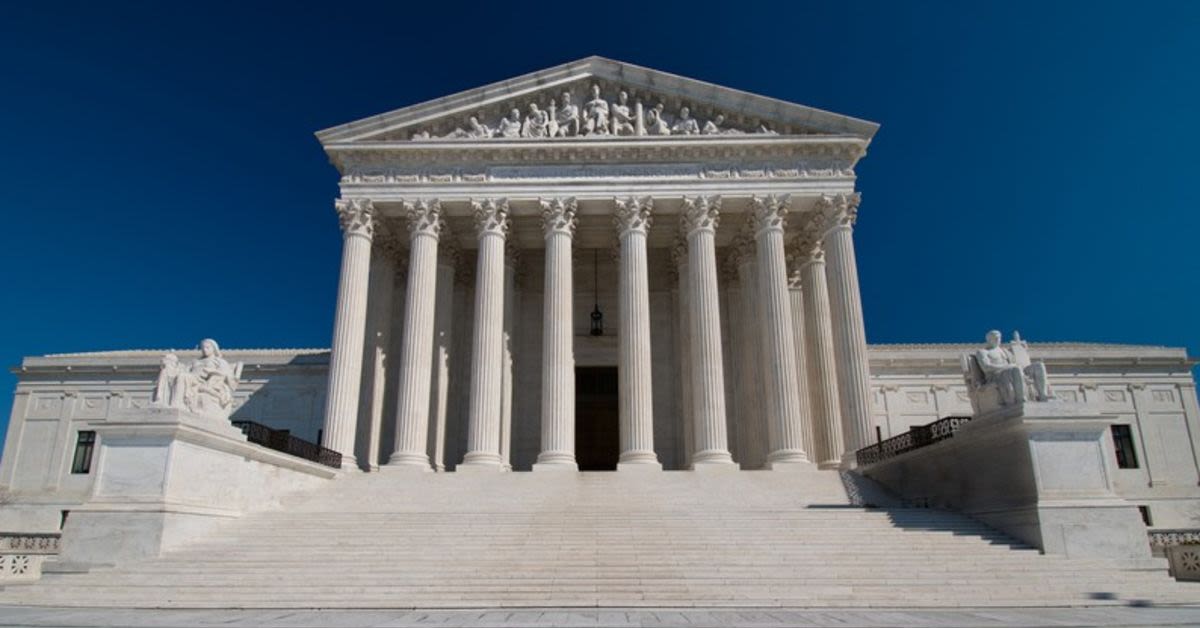
In a case that could have dramatically reshaped the balance of power between citizens and the federal bureaucracy, three left-leaning justices on the U.
S. Supreme Court recently backed a theory that would have gutted the constitutional right to a civil jury trial for vast numbers of Americans.
According to WND, the dispute centered on whether Americans hauled before federal agencies must be afforded a genuine trial in an Article III court, with a jury of their peers, rather than being subjected to what critics describe as in-house trials run by the very agencies accusing them. The threat to the Constitution was profiled by Anastasia Boden in an analysis at Scotusblog, which detailed how the courts liberal bloc attempted to preserve a system that allows agencies to act as investigator, prosecutor, judge, and jury in their own cases.
At issue was the case of George Jarkesy, whom the Securities and Exchange Commission accused of misleading investors and then prosecuted in its own administrative forum. Justices Sonia Sotomayor, Elena Kagan and Ketanji Brown Jackson warned that there would be chaos if the majority, as it ultimately did, insisted on a real trial with a real jury for Jarkesys dispute with the SEC.
The dissenters accused the majority of taking a wrecking ball to settled law and stable government practice, portraying the decision as an attack on the modern administrative state. They claimed that allowing agencies to hear evidence and decide penalties on their own, without the ordinary rules of court procedure or a jury, was so settled that it bec[ame] an undisputable reality of how our Government has actually worked.'
The courts conservative majority rejected that view and sided with the Constitutions explicit protections for jury trials in civil cases. The dissenters insisted, according to the analysis, that the ruling was a seismic shift in this Courts jurisprudence and a devastating blow to the manner in which our government functions.
Justice Sotomayor argued that in-house judicial proceedings, including the imposition of penalties, are authorized by more than 200 federal statutes. For those and countless other agencies, all the majority can say is tough luck, she wrote, lamenting the potential impact on the administrative machinery that has grown up around the federal government.
She further insisted that requiring a jury would undercut important benefits of decisions made by the agencies, for the agencies, in agency hearings. Those would be greater efficiency and expertise, transparency and reasoned decision making, as well as uniformity, predictability, and greater political accountability.
The Scotusblog analysis noted, The Jarkesy dissent was passionate and sweeping. But despite its claims, since the decision the sky has not fallen. Instead, the ruling has been seen by many constitutionalists as a long-overdue check on agencies that have increasingly operated as lawmaking and law-enforcing bodies unto themselves.
Jarkesys ordeal, the analysis explained, stretched on for more than a decade before he ever reached a real court. Before he reached a real court, a quasi-court had already found him guilty, the report said, underscoring how far an individual can be dragged through an agencys internal machinery before seeing an independent judge.
The SECs in-house prosecution involved, no jury, the rules of evidence were looser, and the judge was embedded within the very agency prosecuting the case, the report said. Hearsay even is allowed. It all gave the SEC a distinctively home court advantage, so much that a study found the SEC won 90% of its in-house prosecutions.
The Wall Street Journal reported that in fiscal year 2014, the SEC prevailed in 100% of its administrative proceedings, while prevailing in only 61% of cases in federal court. Anecdotal evidence suggests, perhaps unsurprisingly, that ALJs feel pressure to rule for their agency-employer, the report said, highlighting why conservatives have long warned about the dangers of unaccountable administrative tribunals.
The report warned, If the court had accepted the SECs public rights theory, the 5th Circuit said, it would mean that [w]hen the federal government sues, no jury is required. This is perhaps a runner-up in the competition for the Nine Most Terrifying Words in the English Language.' Jury trials are promised in the Bill of Rights, and such civil disputes are addressed in the 7th Amendment, a safeguard the majority chose to honor rather than dilute in deference to bureaucratic convenience.
For Americans concerned about limited government and individual liberty, the case underscores a fundamental question: whether efficiency for regulators can ever justify sidelining the constitutional promise that ordinary citizens, not government employees, will ultimately judge the governments accusations. In reaffirming the Seventh Amendment against an expansive administrative state, the courts majority signaled that settled practice cannot override the text and structure of the Constitution, no matter how loudly the left warns of chaos when its preferred machinery of power is finally called to account.
Login