
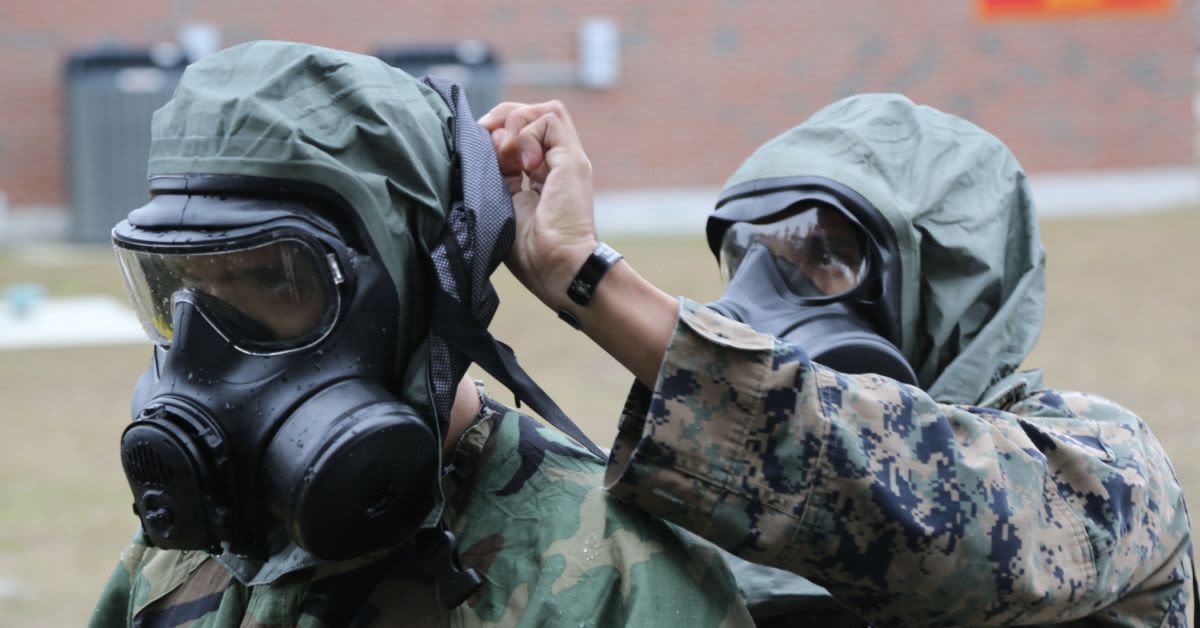
U.S. Marines and Army paratroopers deployed to the Middle East as tensions with Iran intensify are now training to shield themselves from potential chemical, biological, radiological, or even nuclear attacks.
According to The National, American forces in the region are not merely preparing for conventional combat but are also rehearsing worst-case scenarios that recall some of the darkest chapters of 20th-century warfare. Marines are conducting specialized chemical, biological, radiological, and nuclear (CBRN) drills, former Marine Jonathan Hackett told the outlet, underscoring that these units are being readied for rapid response under extreme conditions.
Hackett explained that "The CBRN unit can also be scaled up in size, but the conventional Marine forces will have their CBRN gear and be drilling on it, with 15 seconds to get mask and MOPP [ on when someone shouts 'Gas, gas, gas,' " a reference to the chemical, biological, radiological, and nuclear gear and mission-oriented protective posture equipment used in such emergencies. That kind of training tempo reflects a sober assessment that any clash with the Iranian regime could quickly move beyond traditional battlefield engagements if Tehran chooses to escalate.
The National reported that the likelihood of a chemical or nuclear incident rises if the conflict deepens or if Iran finds itself on the brink of defeat. Such a scenario would test not only U.S. military preparedness but also Washingtons willingness to impose real consequences on a regime with a long record of flouting international norms.
Chemical weapons specialist Lennie Phillips told The National that Iran possesses the industrial base to develop mustard gas and other banned agents, a capability that should concern Western policymakers. "Iran has a very well-established chemical and pharmaceutical industry, so if they decide to change to something else it is fairly straightforward to do," Phillips said.
Phillips added, "So, when it comes to the chemical weapons side, I think this is the area of concern." His warning highlights a recurring problem in dealing with authoritarian states: dual-use industries that can pivot from legitimate production to weapons development with minimal oversight or transparency.
Intelligence assessments have long suggested that Iran may have benefited from the chaos in neighboring Syria, where the Assad regime used chemical weapons against its own people. Iran is believed to have removed chemical weapons from Syria before the fall of dictator Bashar al-Assad's regime, raising fears that those stockpiles may have been quietly relocated rather than destroyed.
"They may well still be on bases somewhere, but it's stronger than hearsay that some of these chemical weapons actually moved eastwards and are now either in Iraq or Iran," Phillips told The National. If accurate, that claim would mean that weapons once used to terrorize Syrian civilians could now be under the control of Tehran or its regional proxies, further destabilizing an already volatile landscape.
Against this backdrop, analysts argue that American deterrence must be unmistakable and backed by the credible threat of force. The National reported that the Trump administration needs to make clear Iran would face severe consequences to deter a chemical or similar attack, a stance consistent with a conservative view that peace is best preserved through strength, not appeasement.
"There needs to be a Trump red line, which means something, which would be the most effective way of stopping these weapons being used," chemical warfare specialist Hamish de Bretton-Gordon told The National. His call reflects frustration with past red lines drawn by liberal administrations that were never enforced, emboldening rogue regimes from Damascus to Tehran.
Bretton-Gordon also warned of the regimes mindset under pressure, stating, "My concern is that if the Iranians run out of road, what do they do then, because this is in their psyche from the Iran-Iraq War," a conflict in which chemical weapons were used with devastating effect. That historical memory, combined with the regimes ideological rigidity, raises the risk that Tehran could resort to desperate and barbaric measures if it believes its survival is at stake.
For U.S. forces on the ground, the response is clear: train hard, prepare for the worst, and rely on American strength and readiness to deter Iran from crossing a line that would invite overwhelming retaliation. As Washington debates its next steps, the Marines and paratroopers drilling under the Gas, gas, gas alarm stand as a stark reminder that, in dealing with the Iranian regime, vigilance and resolve are not optionalthey are essential.
Login