
On the very day Donald Trump placed his hand on the Bible and was sworn in as president in 2017, the Washington Post ran a story under the headline, The Campaign to Impeach President Trump has begun.
.
That early declaration of political warfare was not an outlier but a preview of a broader mindset on the left, according to Gateway Pundit, where opposition to Trump and to Republican governance more broadly has rarely accepted the legitimacy of elections that do not go their way. For years, progressives have lectured the country that Trump and his supporters are a threat to our democracy and refuse to accept election results, yet their own conduct has repeatedly revealed a willingness to undermine or overturn outcomes they dislike.
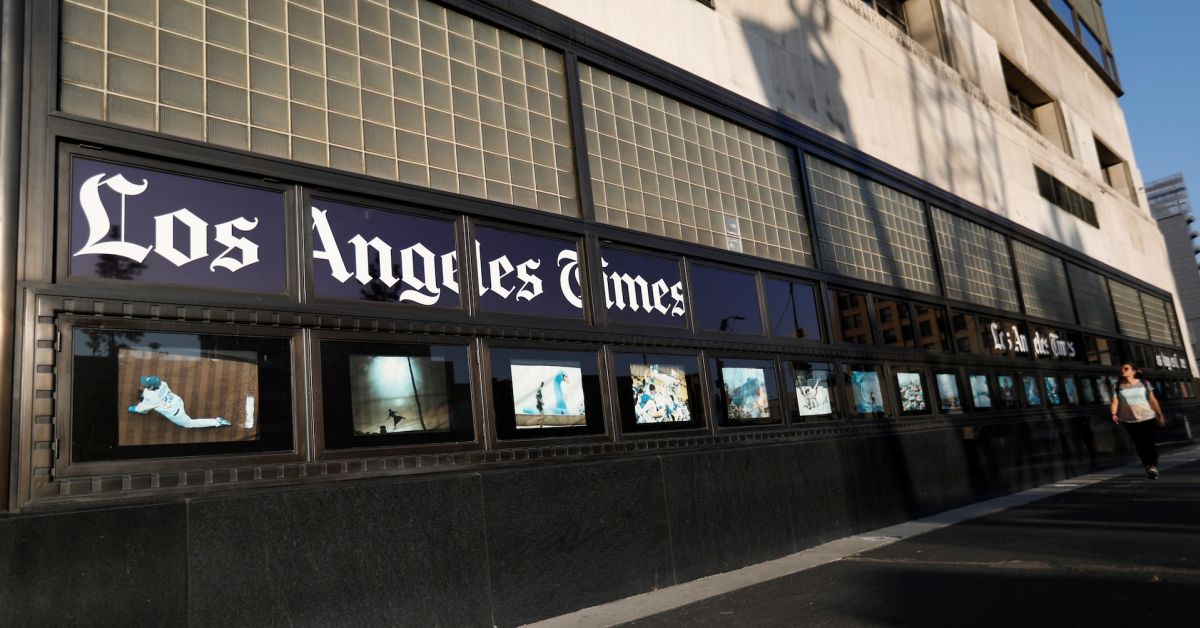
That pattern may now be on the verge of repeating itself in California, a state long dominated by one-party Democratic rule but increasingly fraying under the weight of its own policies. A columnist for the Los Angeles Times, Steve Lopez, has openly floated the idea that if a Republican somehow wins the governors race in the Golden State, a recall campaign should begin immediately.
The mere suggestion underscores how little patience many on the left have for the will of voters when it conflicts with progressive orthodoxy. Lopezs column, headlined, Yes, a Republican could be Californias next governor. And a recall would begin immediately, reads less like political analysis and more like a pre-emptive blueprint for nullifying an election result that Democrats might find inconvenient.
Lopez opens with a nostalgic anecdote about former Republican Governor Arnold Schwarzenegger, recalling a spectacle at the Orange County fairgrounds. Once upon a time in California, I went to the Orange County fairgrounds to watch Arnold Schwarzenegger give the signal for a wrecking ball to drop onto a vehicle, he writes, noting that The audience went wild, and Schwarzenegger went on to become governor and deliver on his promise to roll back a car tax increase, thereby blowing a $4-billion hole in the state budget.
He concedes that todays campaign season is far less electric than the 2003 recall drama that propelled Schwarzenegger into office. I think its fair to say that in the current gubernatorial campaign season, the excitement level is several decibels below what we experienced in 2003. But once again, its fair to say weve not seen anything quite like this years derby Lopez observes, before turning to the unusual dynamics of the current race.
Under Californias top-two primary system, eight Democrats and two Republicans are vying for the governorship. To break that down, eight Democrats and two Republicans are running in the primary, and heres the craziest thing about that, Lopez writes, explaining that The two Republicans could be the top two vote-getters because the Democrats have arranged themselves into a circular firing squad.
He notes that While the Dems scramble for votes in the June 2 primary, the two Republicans lead in the polls because theyre splitting the GOP vote, and under the rules of the top-two primary, they could face off in the November election. In other words, Democrats own fragmentation could hand Republicans a rare opening in a deep-blue state.
Rather than seriously engage with why voters might be open to a change in leadership, Lopez quickly pivots to how Democrats could erase a Republican victory through a recall. He quotes GOP strategist Mike Stutzman sketching out the mechanics of such an effort: A wealthy Democratic donor could bankroll the recall campaign, Stutzman said. Or public employee unions might put up the money, given that a Republican winner is likely to create a state version of Elon Musks ham-handed attempt to fire nearly everyone on the federal payroll.
Stutzman is even more explicit about the messaging such a campaign would deploy. The pitch, Stutzman said of the recall strategy in an email, would be that Trump still looms and CA must resist, and a GOP gov is a fluke of weird election law. Difficult to imagine it wouldnt succeed.
What is most striking is what Lopez largely ignores: the substantive reasons Californians might be ready to consider a Republican governor. The state is losing population for the first time in its history, its tax burden is the highest in the nation, and families are still trying to rebuild from wildfires that ravaged communities more than a year ago.
Even Hollywood, once synonymous with Californias cultural and economic clout, is increasingly shifting production elsewhere in search of lower costs and friendlier business climates. Yet instead of grappling with the failures of progressive governance that have driven residents and jobs out of the state, the columns central premise is essentially, Heres how we can make sure a Democrat wins and how we can sabotage the winning Republican if it comes down to that.
For conservatives, the message could not be clearer: the problem, in the eyes of many on the left, is not Californias spiraling cost of living, crime, homelessness, or regulatory overreach, but the mere possibility that voters might choose a Republican to address them. Doesnt California have bigger problems than the idea that a Republican might win the election? the piece implicitly asks, as Democrats and their media allies appear more focused on preserving one-party rule than on fixing the state they already control.
Login