
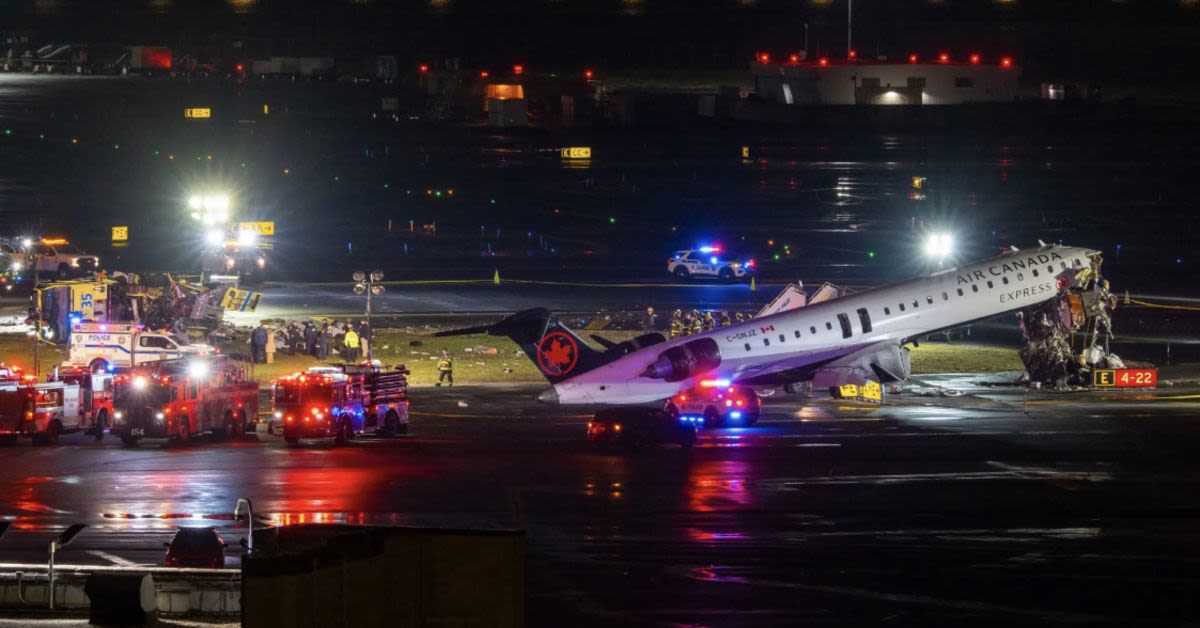
A key runway at New Yorks LaGuardia Airport has reopened days after a deadly collision between an Air Canada jet and a Port Authority fire truck that left two people dead and dozens injured, even as the airlines chief executive faces mounting backlash over an English-only condolence message.
According to Breitbart, the crash occurred late Sunday on Runway 4/22, forcing its closure while federal and local authorities conducted cleanup and safety investigations. The Port Authority of New York and New Jersey said in an emailed statement that the runway was cleared to resume operations at 9:58 a.m. Thursday, restoring a critical piece of infrastructure at one of the nations busiest airports.
Since the removal of the plane and truck late Wednesday, the runway and associated infrastructure has been repaired, inspected and confirmed to meet [Federal Aviation Administration] regulations for safe operation, a Port Authority spokesperson said. The reopening of Runway 4/22 will help restore full operational capacity at LaGuardia, though travelers are still encouraged to check with their airline for flight status.
The fatal collision involved Air Canada Express Flight 8648, a Bombardier CRJ-900 traveling from Montreal to New York City, which struck a Port Authority fire truck as the truck attempted to cross the runway to respond to another incident. The pilot and co-pilot were killed, while 41 passengers and crew members, along with the two officers in the fire truck, were transported to area hospitals, with many later released but several suffering serious injuries.
The regional jet was being operated by Jazz Aviation under the Air Canada Express banner, a common arrangement in modern commercial aviation that can blur accountability in the eyes of the public. While investigators work to determine how a fire vehicle came to be crossing an active runway, the tragedy has already raised renewed questions about airport ground control procedures and emergency-response coordination.
On Thursday, Air Canada President and CEO Michael Rousseau attempted to quell a growing political and public relations storm by apologizing for his initial response to the disaster. He had released a 3-minute, 44-second video statement of condolence only in English on Monday, a decision that immediately drew sharp criticism in officially bilingual Canada and calls for his resignation.
I am deeply saddened that my inability to speak French has diverted attention from the profound grief of the families and the great resilience of Air Canadas employees, who have demonstrated outstanding professionalism despite the events of the past few days, Rousseau said in a written statement. Despite many lessons over several years, unfortunately, I am still unable to express myself adequately in French. I sincerely apologize for this, but I am continuing my efforts to improve.
Rousseaus language lapse has become a flashpoint in Canadas ongoing debate over national identity and the status of French, particularly in Quebec, where Montreal the flights point of departure is located. We proudly live in a bilingual country, and companies like Air Canada particularly have a responsibility to always communicate in both official languages, regardless of the situation, Prime Minister Mark Carney told reporters, adding, Im very disappointed, as others are rightly so in this unilingual message of the CEO of Air Canada.
Carney further condemned the move as displaying a lack of judgment and a lack of compassion, underscoring how quickly a corporate misstep can be weaponized in Canadas language politics. Canada is officially bilingual, with French and English sharing legal status, and the fact that one of the pilots killed, Antoine Forest, was French-speaking has only intensified scrutiny of Air Canadas leadership and its commitment to serving all Canadians with equal respect.
Login