
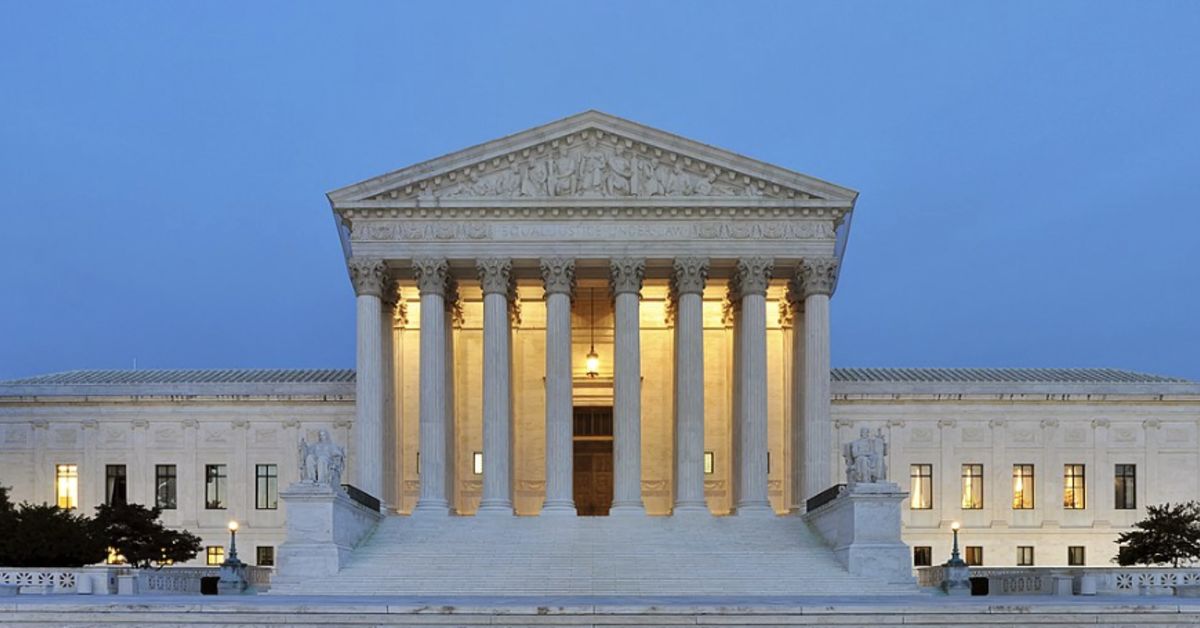
A majority of Supreme Court justices signaled openness to restoring a Trump-era policy that allows border officials to turn away asylum seekers at the US-Mexico boundary before they set foot on American soil.
If the court sides with the Trump administration, the federal government would regain authority to enforce a protocol first used during President Trumps initial term, under which migrants seeking asylum were stopped at the line and denied entry into the United States. According to The Post Millennial, the case centers on how to interpret federal asylum law, which states that noncitizens who are physically present in the United States or who "arrive in the United States" may apply for protection. The justices are now weighing whether merely presenting oneself at the border is enough to trigger that right, or whether a migrant must fully cross into US territory before claiming asylum.
Several members of the courts conservative majority appeared to favor the administrations reading of the statute, emphasizing a more concrete threshold for entry. Chief Justice John G. Roberts Jr. and Justice Amy Coney Barrett both indicated that the phrase "arrives in" suggests a person has already completed the act of crossing the border.
"Arriving sounds more in the process of. Arrives in sounds more like youve reached your destination, Justice Barrett observed during oral arguments, pressing advocates to define the legal moment of arrival. If its not crossing the physical border, what is the magic thing?" she asked, underscoring the need for a clear, enforceable standard in an area long plagued by ambiguity and abuse.
The practice of turning some asylum seekers back at the border was first implemented under President Barack Obama and then significantly expanded by President Trump as part of a broader effort to restore order at the southern frontier. That policy was later rescinded by the Biden administration, which dismantled many of Trumps border security measures and presided over an unprecedented surge in illegal crossings.
Biden rejected Trump's border security measures and allowed tens of millions of illegal immigrants to cross into the United States, be paroled, and wait for immigration hearings that were often scheduled five or more years down the road. At one point during his term in office, Biden dismissed a bunch of immigration cases, leaving migrants in a legal limbo with neither legal status nor deporation orders.
The Trump administration has now urged the justices to permit reinstatement of the earlier policy, arguing that it is essential to regain control of the border and deter fraudulent claims. Justice Brett M. Kavanaugh appeared skeptical of the hair-splitting over geography, remarking that the dispute over a migrants precise location at the time of an asylum request is "very artificial."
By contrast, the courts liberal wing showed far more sympathy for expansive asylum access at the border. Justices Sonia Sotomayor and Ketanji Brown Jackson were the only members of the court who seemed inclined to embrace a broad reading that would favor migrants presenting claims at ports of entry.
If youre a refugee whos arriving at the port of entry, if youre knocking on the door and Im staring you in the face, you have an obligation to at least listen to my application, Justice Sotomayor insisted, framing the issue as a moral and legal duty to hear claims. Jackson argued that because the contested policy is currently not in effect, there was effectively no live question before the court, signaling her resistance to reviving Trumps tougher approach.
Underlying the dispute is a longstanding principle of asylum law: those fleeing persecution are expected to seek refuge in the first safe country they enter, rather than bypassing multiple nations to reach the United States. As the Supreme Court weighs whether to restore President Trumps border policy, the outcome will determine whether American sovereignty and orderly immigration procedures are reaffirmed, or whether the more permissive, chaos-prone model favored by the left continues to prevail at the southern border.
Login