
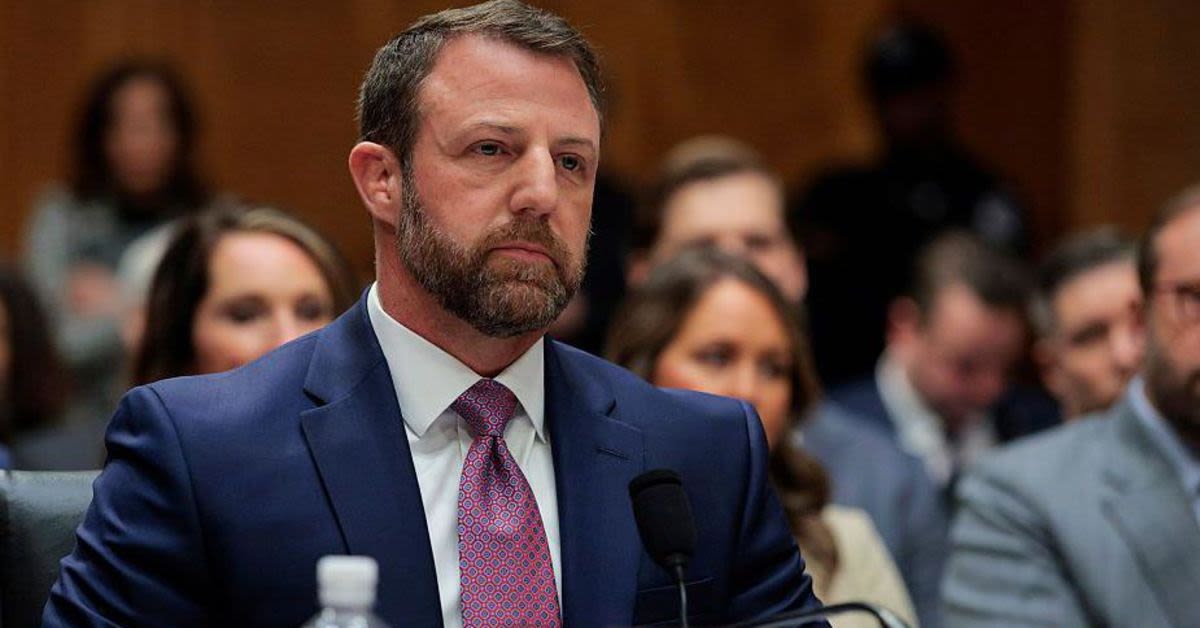
President Donald Trump secured a key victory on border and security policy Monday night as the Senate confirmed Republican Sen. Markwayne Mullin of Oklahoma to lead the Department of Homeland Security (DHS), even as the agency remained partially shuttered for a 38th day.
The confirmation came amid a grinding partial shutdown of DHS and a broader standoff over immigration enforcement and border security, as reported by WND. According to WND, the administration has been under mounting pressure to keep critical operations functioning while Democrats press for structural changes that would weaken the departments enforcement powers.
The Senate approved Mullins nomination in a 54-45 vote, with two Democrats Pennsylvania Sen. John Fetterman and New Mexico Sen. Martin Heinrich breaking ranks to join Republicans in support. Republican Sen. Rand Paul of Kentucky sided with the rest of the Democratic caucus in opposition, underscoring ongoing divisions within the GOP over how aggressively to confront the lefts demands on immigration policy.
The vote took place the same day the administration deployed Immigration and Customs Enforcement (ICE) agents to bolster security as thousands of Transportation Security Administration (TSA) employees continued working without pay through the shutdown. Despite a series of bipartisan meetings on Capitol Hill the previous week, there has been little substantive movement toward resolving Democrats demands to overhaul DHS law enforcement authorities.
On the Senate floor, Majority Leader John Thune praised Mullins record and framed his departure from the chamber as a gain for national security. Ive depended on Markwayne as a colleague and friend during his 3 years here in the United States Senate. And Im profoundly sorry to lose him, but the Senates loss is the Department of Homeland Securitys gain, Thune said, adding, I want to thank Markwayne for his service here in the Senate and wish him the very best as he continues to serve our country at DHS. And I hope whoever gets assigned to his security detail is ready to keep up.
During his confirmation hearing, Mullin signaled a willingness to accept certain procedural constraints long sought by Democrats, while insisting that core enforcement capabilities would remain intact. He pledged to enforce existing law requiring federal agents to obtain warrants before entering private homes and to keep agents away from sensitive locations such as polling places, except in emergencies.
Mullin also made clear that these concessions would not amount to a sanctuary for criminals or a retreat from public safety responsibilities. He stressed that if a suspect under pursuit fled into a residence, law enforcement would follow, and that agents would be present at sensitive sites if there were an active threat to life or security.
Senate Majority Whip John Barrasso, a Wyoming Republican, argued that Mullins approach would strengthen DHSs mission rather than dilute it. [Mullin] will bring the same focus, urgency, and consistency to lead the Department of Homeland Security, Barrasso said on the Senate floor, noting, At his confirmation hearing, Markwayne laid out a clear vision. He said, My goal is for people to understand were out there, were protecting them, and were working for them. Thats exactly what he should do and will do.
Behind the scenes, Trumps border czar Tom Homan has been deeply involved in negotiations with a bipartisan group of senators over the scope of Democrats proposed DHS reforms. Republican Sen. John Hoeven of North Dakota, who took part in those talks, told the Daily Caller News Foundation that there was progress in the discussions and that the White House had put forward some real serious offers.
In addition to Mullins commitments on warrants and sensitive locations, the administration has signaled openness to several transparency measures that stop short of undermining enforcement. These include expanded use of body cameras for ICE and Customs and Border Protection (CBP) agents, enhanced congressional oversight of DHS facilities, clearer officer identification, and explicit safeguards against the detention or deportation of U.S. citizens.
Hoeven warned that Democrats risk squandering meaningful reforms if they abandon the talks in pursuit of more radical changes that would hamstring border enforcement. If [Democrats] decide to walk away, theyre giving up some really common sense things, he told the DCNF, suggesting that the White Houses offers already go further than many conservatives would prefer.
White House aides, and later Thune, floated a compromise to Trump that would fund all DHS agencies except ICE which Democrats have repeatedly targeted and then secure ICE funding separately through a second reconciliation bill. Trump rejected the idea outright and made clear that Senate Republicans should not strike any deal unless Democrats supply the votes needed to pass the SAVE America Act, which requires 60 votes to clear the chamber.
A core group of Republican senators, including Alabamas Katie Britt who has been leading GOP negotiations with Democrats during the shutdown along with Steve Daines of Montana, Lindsey Graham of South Carolina and Bernie Moreno of Ohio, traveled to the White House on Monday to brief Trump on the funding proposal. Their visit underscored the tension between those seeking a tactical compromise and those insisting that Republicans hold firm until robust border security legislation is enacted.
The confirmation vote for Mullin occurred during a pause in debate over the SAVE America Act, a sweeping border and security package that has been on the Senate floor since Tuesday. That debate is expected to continue throughout the week, with Mullin now positioned at DHS to implement any reforms that emerge or to manage the department through continued stalemate if Democrats refuse to back meaningful enforcement measures.
Login