
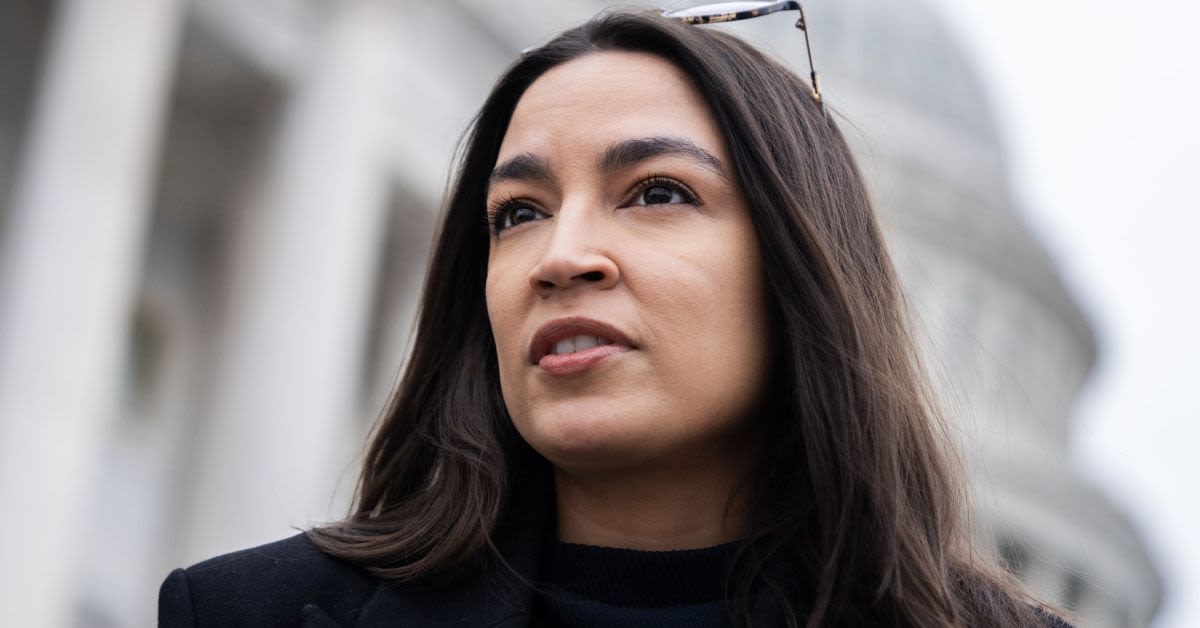
Rep. Alexandria Ocasio-Cortez directed nearly $19,000 in campaign funds last year to a psychiatrist known for ketamine-based treatments, raising fresh questions about how loosely some lawmakers interpret federal rules on political spending.
According to Newsmax, Federal Election Commission records show the New York Democrats campaign paid Boston-based physician Brian Boyle a total of $18,725 in 2025, labeling the disbursements as leadership training and consulting. The filings list three payments to Boyle: $11,550 in March, $2,800 in May, and $4,375 in October, all charged to Ocasio-Cortezs campaign committee rather than any personal account.
Boyle, who is affiliated with Stella, a network of mental health clinics, promotes what the organization calls novel interventions for depression, post-traumatic stress disorder, and anxiety, including ketamine therapy. He describes himself as an interventional psychiatrist who focuses on treatment-resistant cases, positioning his practice on the cutting edge of experimental mental health care.
What remains opaque is precisely what services were rendered in exchange for the campaigns nearly $19,000 in payments, or who actually received them. The vague leadership training and consulting label offers little clarity, leaving open the possibility that campaign dollars may have subsidized services that look more like personal medical care than legitimate political expenses.
Ketamine, originally developed as an anesthetic, has in recent years been repurposed in some clinical settings as a fast-acting treatment for severe depression and related conditions. Boyle has publicly argued that such therapy can be effective for certain patients, even as the broader medical community continues to debate its long-term safety and appropriate use.
The drugs growing popularity has not come without controversy, particularly after its association with the 2023 death of actor Matthew Perry, who was undergoing ketamine therapy before he died.
That high-profile case intensified scrutiny of ketamine clinics and prescribing practices, with critics warning that the rush to embrace psychedelic and dissociative drugs risks outpacing the science and regulatory safeguards.
Ocasio-Cortez has long been an outspoken advocate for loosening federal restrictions on psychedelic and alternative therapies, positioning herself on the progressive flank of drug policy.
Since arriving in Congress, she has introduced and supported multiple measures to expand research into substances such as psilocybin and MDMA for potential medical use, arguing that government barriers are stifling innovation.
One related proposal she co-sponsored finally became law in 2023 after earlier attempts had failed, a victory celebrated by activists pushing to normalize psychedelic treatments. Her legislative record on the issue underscores a broader ideological project on the left to reframe once-taboo drugs as mainstream therapeutic tools, often with minimal regard for cultural or moral concerns that still matter to many Americans.
The congresswoman has also spoken candidly about her own mental health, including her decision to seek therapy following the Jan. 6, 2021, Capitol protest. She has used those experiences to bolster her political narrative, casting herself as both a survivor of trauma and a champion of expanded access to mental health services.
Yet the revelation that her campaign treasury financed services from a ketamine-focused psychiatrist has prompted criticism from ethics watchdogs who see a potential abuse of donor trust. Paul Kamenar, counsel to the National Legal and Policy Center, warned that the spending could raise serious concerns about whether campaign funds were diverted to personal use, a practice explicitly barred under federal law.
Under FEC rules, campaign money is supposed to advance a candidates political efforts, not underwrite private medical treatment or personal self-improvement. Labeling payments as leadership training and consulting does not automatically make them legitimate, particularly when the recipient is a specialist in controversial therapies that bear little obvious connection to voter outreach, policy work, or campaign operations.
Supporters of emerging treatments argue that ketamine and similar interventions can be life-changing for individuals who have exhausted conventional options, and some clinicians share that optimism.
However, many medical professionals caution that these therapies carry significant risks, require strict clinical oversight, and should not be normalized or commercialized without robust evidence and regulation.
For conservatives, the episode highlights a familiar pattern in progressive politics: aggressive promotion of experimental drug policies, paired with a casual attitude toward the rules that are supposed to govern public officials. When a high-profile lawmaker who champions looser controls on psychedelics appears to route campaign cash to a ketamine-oriented psychiatrist, it inevitably raises questions about judgment, priorities, and respect for the law.
Donors typically give to campaigns expecting their contributions will fund outreach, messaging, and the hard work of winning elections, not underwrite ambiguous consulting arrangements that look suspiciously like personal benefit. If Ocasio-Cortezs team believes these expenditures were proper, they will likely face pressure to explain in detail what services were provided, how they advanced her political mission, and why no less controversial provider could have met those needs.
The broader debate over ketamine and psychedelic therapies will continue, as advocates push for rapid expansion and skeptics urge caution grounded in medical ethics and social stability. But as this case shows, when elected officials blur the line between personal experimentation and campaign business, they invite not only legal scrutiny but also a deeper public reckoning over accountability, transparency, and the kind of leadership Americans should expect from those who wield power in their name.
Login