
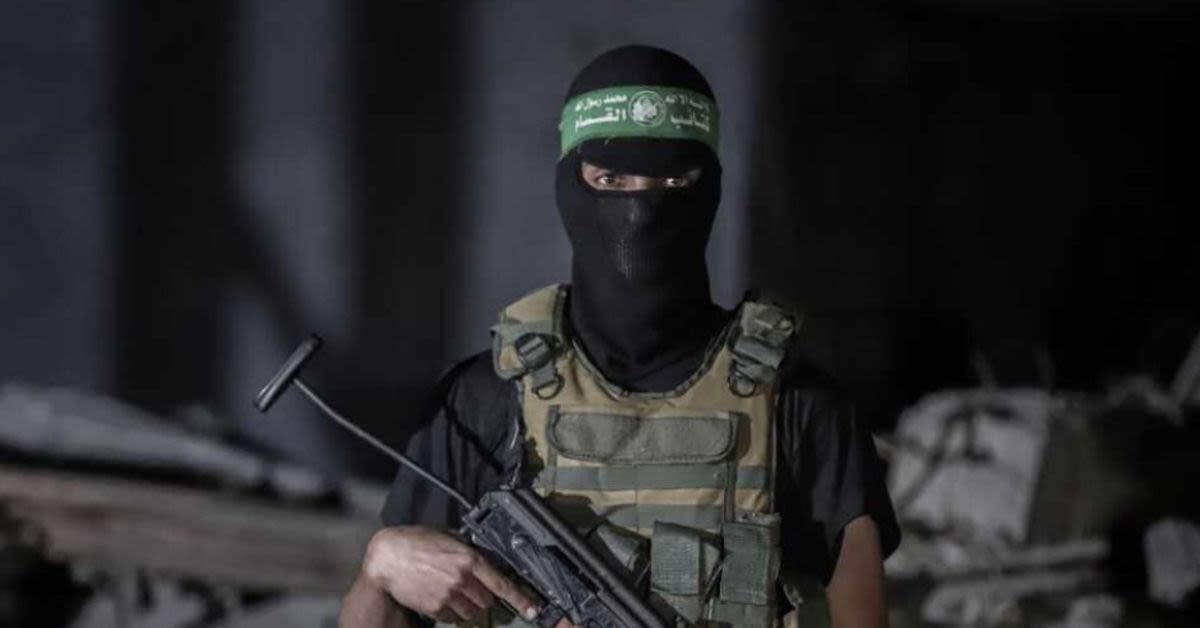
Donald Trumps Board of Peace has quietly delivered a written disarmament proposal to Hamas, testing whether the Islamist group is prepared to trade its arsenal for a future role in a rebuilt Gaza.
According to Reuters, the document was handed over during a new round of talks in Cairo over the past week, with two sources confirming that the proposal spells out how Hamas could lay down its weapons under a broader U.S.-backed plan for Gazas political and security future. The meetings were attended by Nickolay Mladenov, Trumps Board of Peace envoy to Gaza, and Aryeh Lightstone, a senior U.S. aide to Trumps special envoy Steve Witkoff, underscoring the White Houses direct involvement in the effort.
Trumps Gaza blueprint, accepted in principle by both Israel and Hamas in October, envisions a phased withdrawal of Israeli forces from the enclave, followed by large-scale reconstruction once Hamas and other factions surrender their arms. The plan reflects a core conservative premise: that security and demilitarization must precede state-building, and that Western and Gulf aid should be conditioned on verifiable disarmament rather than handed out as blank checks.
Mladenov said on Thursday that serious efforts were underway to bring relief to the devastated territory, with mediators having agreed on a framework that could unlock reconstruction for a population battered by years of war and misrule. It is now on the table, said Mladenov on X in a post for the Muslim holiday Eid al-Fitr.on X in a post for the Muslim holiday Eid al-Fitr, signaling that the disarmament offer is no longer theoretical but awaiting a clear response from Hamas.
The envoy made clear that the central condition is non-negotiable, insisting that It requires one clear choice: full decommissioning by Hamas and every armed group, with no exceptions and no carve-outs. Appealing directly to Palestinian leaders, he added, In this season of hope, may those responsible make the right choice for the Palestinian people, framing disarmament as a moral obligation rather than a mere political concession.
Representatives of Hamas were not immediately available for comment on Saturday, the second day of Eid al-Fitr, leaving unanswered whether the group is even prepared to engage seriously with the proposal. Their silence so far reinforces long-standing concerns that Hamas prefers ideological intransigence and armed confrontation over any compromise that might dilute its control or expose its leaders to internal rivals.
Talks on disarmament had been frozen since the start of the U.S.-Israeli war on Iran, which erupted on February 28 and reshaped the regional balance of power. That conflict has further highlighted the role of Tehran as the chief patron of Hamas and other proxy militias, complicating any effort by Washington to separate Gazas future from Irans broader destabilizing agenda.
U.S. officials have indicated that Iran-backed Hamas fighters could be granted amnesty under a deal in which they surrender heavy weaponry and light arms, including rifles, in exchange for a chance to rejoin civilian life. Such an approach reflects a pragmatic, law-and-order mindset: offering a path back into society for rank-and-file militants while insisting on the dismantling of the terror infrastructure that has kept Gaza in perpetual conflict.
Sources close to Hamas, however, say the group is likely to refuse to give up its rifles, citing fears of attacks by rival militias in Gaza, some of which are believed to receive backing from Israel. Hamas and its rivals have carried out deadly attacks against each other since the October ceasefire, underscoring the fragmented and violent landscape that would remain even if a formal deal with Israel were reached.
One source familiar with the talks said much will depend on what Israel is prepared to accept, as Jerusalem continues to demand the groups complete disarmament as a precondition for any lasting arrangement. Some of Hamas most prominent officials have flatly rejected any form of disarmament in recent months, signaling that the organizations hardliners still hold sway and are unwilling to relinquish the tools of coercion that underpin their rule.
Israel has shown no indication that it is ready to pull back its forces, which currently control roughly half of Gazas territory, while Hamas maintains a tight grip on the other half and its roughly two million residents. Most of those civilians have been rendered homeless by two years of devastating war, a tragedy rooted not only in Israeli military operations but also in Hamas long-standing practice of embedding its fighters and weapons among the civilian population.
The source said that amnesty and targeted investments in Gaza are being offered as incentives for Hamas to accept the deal, but acknowledged uncertainty over whether the Board of Peace will actually have the funds to deliver. Without credible financing, any promise of reconstruction risks becoming another empty pledge, reinforcing skepticism among Palestinians and conservatives alike about international aid mechanisms that rarely produce lasting stability.
Trump secured some $7 billion in pledges in February from a range of countries, including several Gulf states, before those same nations came under direct attack from Iran in a rapidly widening Middle East war. The source noted that only a small fraction of those pledged funds has actually materialized, without specifying exact amounts, raising questions about donor reliability and the wisdom of tying U.S. strategy to foreign commitments that may never be honored.
For now, the written proposal to Hamas represents a test of whether the group is willing to prioritize the welfare of ordinary Palestinians over its own arsenal and ideological rigidity. If Hamas again refuses to disarm, the episode will only strengthen the conservative argument that peace and reconstruction in Gaza depend less on new aid packages or diplomatic formulas than on confronting and dismantling the terror networks that have held the territory hostage for years.
Login