
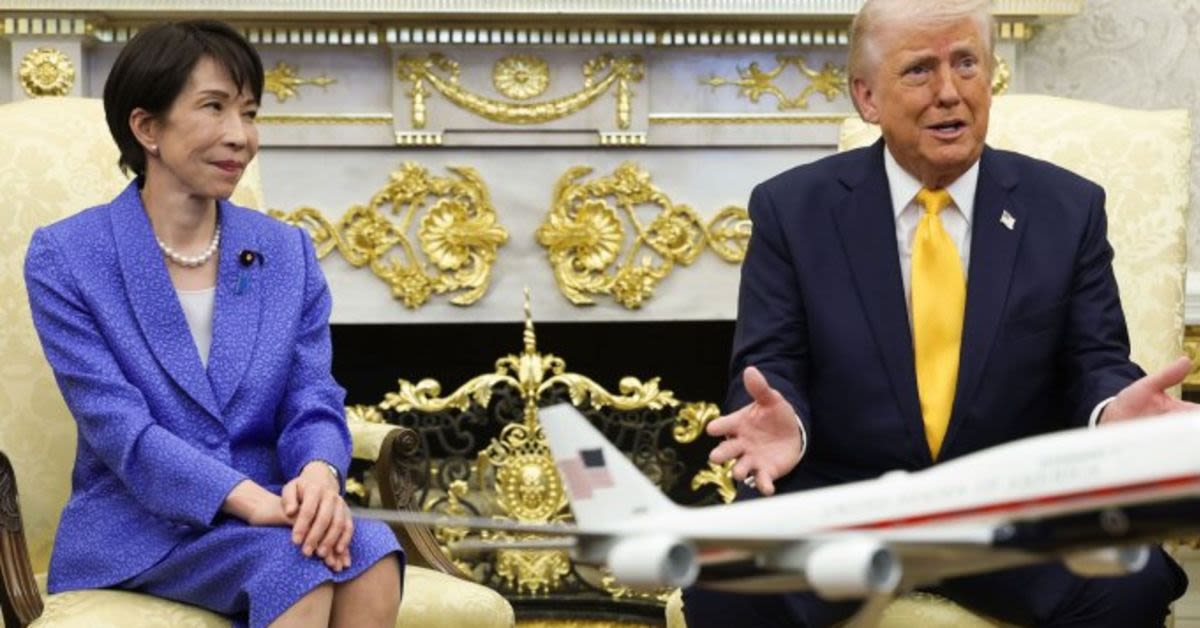
The renewed partnership between President Donald Trump and Japanese Prime Minister Sanae Takaichi delivered both symbolic warmth and substantial economic gains during their Thursday meetings and White House dinner.
According to RedState, the two leaders focused early on strategic security, working through the question of resolving any issues in the Strait of Hormuz, with Japan formally joining the allies coalition statement issued earlier in the day. That move underscored Tokyos willingness to stand shoulder to shoulder with Washington at a time when freedom of navigation and energy security remain central to global stability.
The personal rapport between Trump and Takaichi was on full display, signaling a relationship that is not merely transactional but genuinely close. Takaichi confirmed that sentiment with a gift of 250 additional cherry trees to the United States in honor of Americas 250th birthday, a meaningful extension of the iconic Japanese blossoms that already grace Washington, D.C.
Takaichi openly celebrated their partnership, declaring that they were best buddies working to make both nations strong and prosperous. She reinforced that message at the very start of the day, greeting Trump with an enthusiastic hug instead of the customary diplomatic handshake, a gesture that spoke volumes about the depth of their alliance.
Her easy understanding of Trumps personality and humor surfaced in a lighter moment that quickly drew attention online. Her reaction to the Biden autopen picture on the White House wall was described as epic, instantly ripe for memes and a reminder that not every visiting leader is impressed by the trappings of the previous Democratic occupant.
Observers noted that when she saw the autopen ?? https://t.co/EULKkxlaR8 pic.twitter.com/etL6ll9BGu, social media users immediately seized on the clip. You know Trump had to love that reaction, which fit neatly with his long-running critique of the impersonal, scripted style that defined his predecessors tenure.
Beyond the optics, Trump once again brought home the bacon in policy terms, advancing a deal squarely focused on national security and American jobs. Japan pledged to invest $73 billion in American next-generation nuclear reactor and gas-fired power plant projects Thursday after Prime Minister Sanae Takaichis White House meeting with President Trump.
This new commitment launches the second phase of Japans sweeping $550 billion spending pledge on U.S. projects, a framework Trump secured through a major trade agreement last summer after he threatened the U.S. ally with 25% tariffs. The latest tranche directs $40 billion toward small modular reactors (SMRs) by GE Vernova Hitachi in Tennessee and Alabama, $17 billion for natural gas generation in Pennsylvania, and $16 billion for similar facilities in Texas.
Such investments bolster U.S. energy independence while creating thousands of high-quality jobs in states that have long been engines of American industry. They also build on earlier Japanese commitments, including $36 billion for a natural gas plant in Ohio, a crude oil export facility along the U.S. Gulf Coast, and a synthetic diamond manufacturing site in Georgia.
Trump emphasized the scale of the achievement, stating that the United States would receive 90 percent of the profits from the $550 billion dollar deal. He has also highlighted a broader slate of cooperative projects with Japan, underscoring how assertive trade and tariff policy can be leveraged to secure favorable terms for American workers and taxpayers.
As is often the case, liberal media outlets have largely downplayed or ignored these outcomes, reluctant to acknowledge how Trumps America-first approach is delivering tangible benefits to the country. While progressive commentators focus on process and personality, the numbers tell a different story: a deepening alliance, strengthened energy security, and a surge of private investment flowing into American communities that Washington elites too often overlook.
Login