
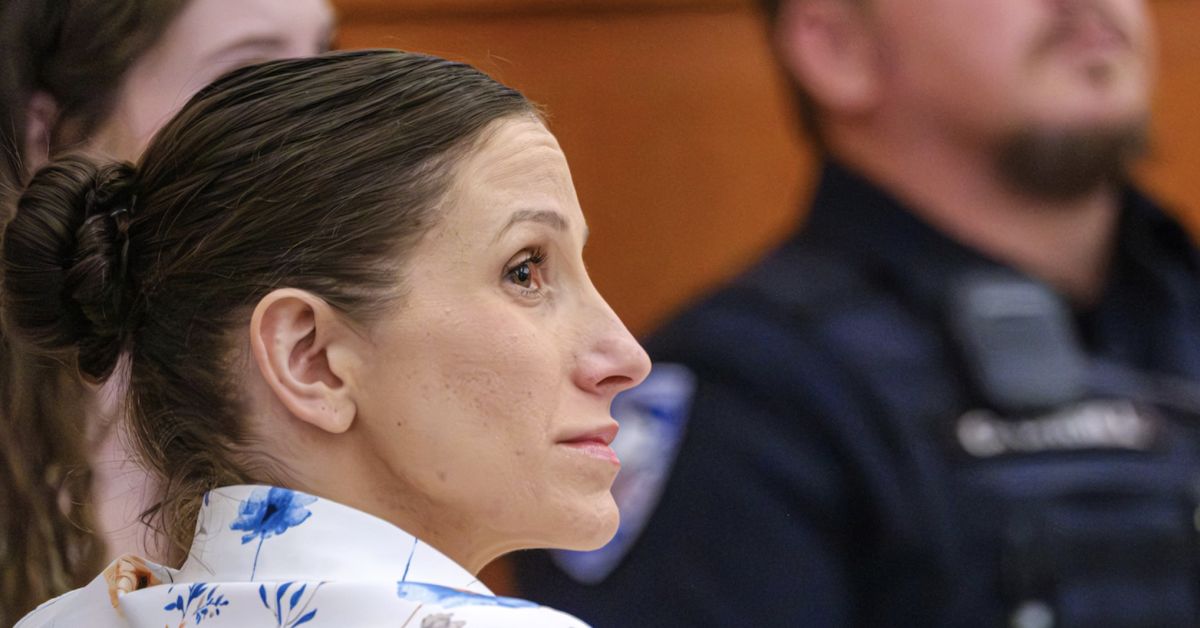
A Utah mother who wrote a childrens book on coping with grief has been found guilty of murdering the very man whose death she claimed to mourn.
The three-week trial of 35-year-old Kouri Richins in Summit County, Utah, drew intense national scrutiny as viewers watched prosecutors methodically dismantle the image of a grieving widow and devoted mother that Richins had carefully constructed. According to The Post Millennial, thousands tuned into livestreams as the state alleged that behind the polished faade was a calculated scheme fueled by greed, debt, and a desire for status at any cost.
Prosecutors argued that Richins, a Kamas mother of three, poisoned her husband, Eric Richins, by lacing his drink with fentanyl in March 2022 while her house-flipping business was collapsing under millions of dollars in debt. They contended that the killing was not a crime of passion but a cold, premeditated act designed to secure Erics wealth and free her from financial scrutiny as he began to uncover irregularities in their finances.
Testimony at trial revealed that Eric had grown deeply suspicious of his wifes handling of money long before his death and had taken quiet steps to protect himself. Less than two years before he died, he accused Kouri of abuse and misuse of his finances and began separating his assets from her control, a move prosecutors said she did not know about and which undermined her alleged motive to preserve the marriage.
Investigators alleged that Richins ultimately slipped fentanyl into a drink she served Eric at their home, leading to his fatal overdose. A key witness, Richins housekeeper, testified that she sold fentanyl pills to Richins twice in the weeks before Erics death and again shortly afterward, providing a direct link between the defendant and the lethal drug.
In closing arguments, Deputy Summit County Attorney Brad Bloodworth portrayed Richins as a ruthless black widow determined to maintain the illusion of success even as her finances crumbled. Bloodworth described her as an intensely ambitious social climber obsessed with projecting wealth and status, a characterization that resonated with the prosecutions narrative of a woman willing to sacrifice her husbands life to preserve her lifestyle.
Jurors also heard evidence about Richins personal life that further undercut the image of a devoted spouse. Witnesses testified that she was having an affair with a man who worked for her, and text messages presented in court showed her venting about her husband, including one message that read: If he could just go away and you could just be here! Life would be so perfect!!!
Another friend testified that Richins had repeatedly voiced dissatisfaction with her marriage and once suggested that in many ways, it would be better if he were dead. These statements, prosecutors argued, revealed a mindset in which Erics death was not a tragedy but a perceived solution to her financial and personal frustrations.
Richins defense team insisted the state had not definitively proven that she poisoned her husband and attacked what they framed as investigative shortcuts. They criticized detectives for failing to test drinking glasses from the home and floated alternative theories, including the possibility that Eric accidentally overdosed or obtained drugs on his own, attempting to inject reasonable doubt into the prosecutions narrative.
The defense also sought to undermine the credibility of the housekeeper, highlighting testimony from the housekeepers alleged supplier, who claimed he was not selling fentanyl at the time of Erics death and said he had provided oxycodone instead. By challenging the reliability of the states witnesses and pointing to gaps in the physical evidence, defense attorneys tried to portray the case as circumstantial and incomplete rather than airtight.
In a move that surprised many observers, the defense ultimately declined to call any witnesses, and Richins herself chose not to testify. That decision abruptly accelerated the proceedings, sending the case to the jury without the defendant ever directly addressing the allegations against her under oath.
After roughly three hours of deliberations on Monday, jurors returned guilty verdicts on all five counts: aggravated murder, two counts of filing false or fraudulent insurance claims, forgery, and attempted criminal homicide. The speed and unanimity of the verdict suggested that the panel found the prosecutions theory of a financially motivated killing far more convincing than the defenses attempts to cast doubt.
Prosecutors said the attempted criminal homicide charge arose from what they described as an earlier failed poisoning attempt on Valentines Day 2022, about two weeks before Erics death. Text messages sent by Eric that day indicated he became violently ill after eating a sandwich his wife had prepared, but he survived, leading investigators to view the fatal incident weeks later as a second, successful attempt.
The case drew particular outrage after Richins published a childrens book about grief following Erics death, presenting herself as a selfless mother guiding her children through the loss of their father. For many Americans, especially those who value family integrity and personal responsibility, the spectacle of a woman allegedly exploiting her husbands death for profit and public sympathy while standing accused of causing that death underscored a deeper cultural unease about moral decay, entitlement, and the erosion of basic accountability in an age of curated victimhood.
Login