
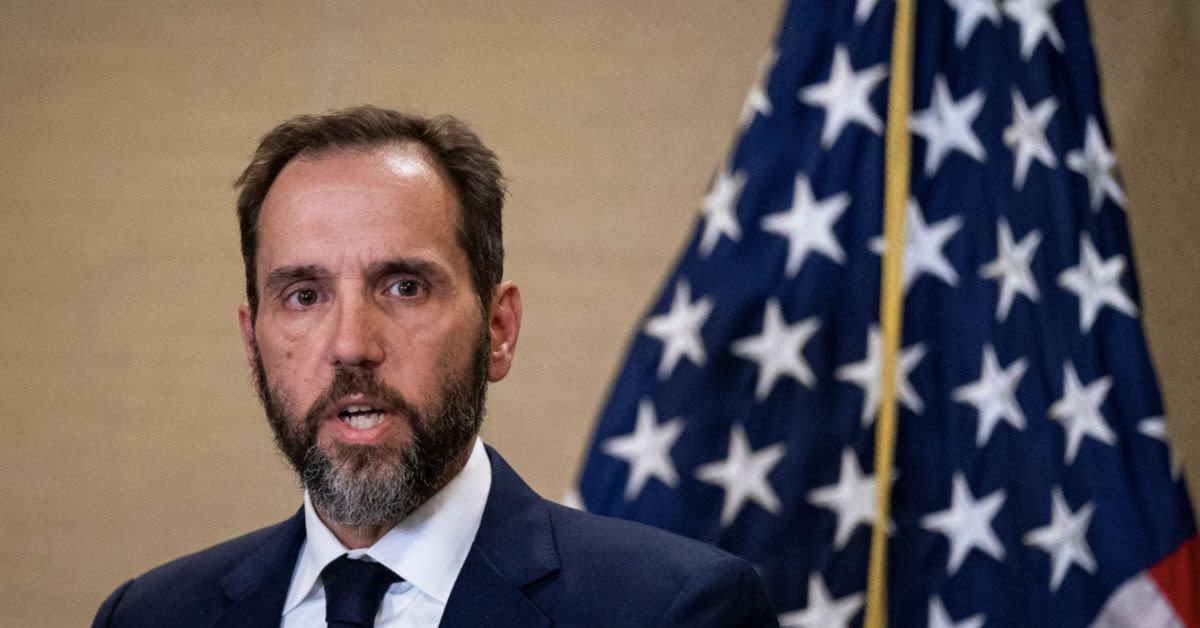
The Knight First Amendment Institute, a Columbia Universityfunded activist legal shop that has already failed twice in court to pry loose Special Counsel Jack Smiths report on President Donald Trumps handling of classified documents, is now banking on a third attempt.
According to the Washington Free Beacon, the institutecreated in 2016 with $30 million in university funding and styling itself as a guardian of free expressionhas spent much of the last decade targeting Trump and his administration through litigation. Its latest campaign centers on forcing the disclosure of Smiths report on Trumps retention of presidential records at Mar-a-Lago, a document widely believed on the left to be sharply critical of th president and thus politically useful even after the underlying criminal case collapsed.
That criminal prosecution, once touted by progressives as a legal death blow to Trump, was tossed out by U.S. District Judge Aileen Cannon, who ruled that Smith had been unconstitutionally appointed and later dismissed the case outright after Trumps reelection. The Knight Institute, working in tandem with the left-wing watchdog American Oversight, has now appealed to the U.S. Court of Appeals for the Eleventh Circuit in an effort to overturn Cannons refusal to make the report public.
Judge Cannon, who presided over the Mar-a-Lago matter, first rejected the Knight Institutes bid for the report in December, signaling deep concern about the special counsels conduct. Two months later, in February, she went further and permanently barred release of the document, holding that publication would be a manifest injustice to Trump and his co-defendants because it would effectively smear them over charges that had already been dismissed.
In a sharply worded ruling, Cannon condemned what she described as Smiths attempt to circumvent her dismissal order by pressing ahead with a narrative-building report. Special Counsel Smith and his team went ahead for months, undeterred, preparing [the classified documents report] using discovery collected in connection with this proceeding and expending government funds in the process, she wrote, adding, To say this chronology represents, at a minimum, a concerning breach of the spirit of the Dismissal Order is an understatement, if not an outright violation of it.
Despite that rebuke, the Knight Institute has refused to stand down, even as its host institution has been forced into a humbling settlement with the very administration it has long opposed. In July, Columbia agreed to a $221 million settlement with the Trump administration, addressing the universitys failure to rein in rampant anti-Semitism on campus and obliging it to dismantle its diversity, equity and inclusion bureaucracy and end race-based preferences in hiring and admissions.
From within Columbias own walls, the Knight Institute reacted with fury to the deal, issuing a blistering statement that portrayed the agreement as a capitulation to conservative pressure. The institute denounced the settlement as a disastrous surrender of the universitys autonomy and an implicit endorsement of what it derided as the Trump administrations outlandish claims about DEI and the anti-Israel protests that had engulfed the campus.
The settlement, however, unlocked hundreds of millions of dollars in federal research funding that had been frozen over the universitys failure to protect Jewish students from harassment and intimidation. Even with that financial lifeline restored, Columbia remains under strain: its operating surplus has fallen to a recent low, and private gifts and grants dropped 9 percent from 2024 levels, to $589 million, according to recent reports.
Columbia declined to respond to a request for comment on the Knight Institutes latest appeal and its broader posture toward the Trump administration. The institute, for its part, framed its litigation as a matter of transparency, stating that its goal is to vindicate the public's statutory, common law, and First Amendment rights of access to the Special Counsel's report on the classified documents case.
Launched in 2016 with $60 million in combined funding from Columbia and the John S. and James L. Knight Foundation, the Knight Institute quickly became a magnet for progressive philanthropy. Tax filings show that it has since taken in millions more from left-wing donors, including George Soross Open Society Foundations, the Ford Foundation, and the MacArthur Foundation, all of which are known for underwriting liberal advocacy and media projects.
Columbias entanglement with liberal journalism extends beyond the Knight Institute, as the university also administers the Pulitzer Prizes, which have frequently rewarded reporting that advances progressive narratives. Trump is currently suing the Pulitzer Boardwhich includes outspoken Trump critics such as New Yorker editor David Remnick and Atlantic writer Anne Applebaumfor its decision to uphold the 2018 prize awarded to the New York Times and the Washington Post for coverage of alleged Russian interference in the 2016 election, and the board has already lost multiple attempts to have the case dismissed, which now proceeds in discovery in a Florida court.
Even after agreeing to dismantle its DEI apparatus as part of the federal settlement, Columbia continues to bankroll a sprawling ecosystem of institutes, centers, and legal clinics that promote left-leaning scholarship and activist agendas. Many of these entities focus on identity-based politics and services for so-called marginalized ethnic groups, while the university is not believed to provide comparable institutional support to any conservative-leaning centers or think tanks beyond minimal funding for student groups such as the College Republicans.
The Knight Institutes insistence on releasing a report tied to a dismissed prosecution underscores a broader pattern in which progressive legal organizations seek to weaponize process and publicity against political opponents even after the courts have spoken. As the Eleventh Circuit weighs whether to override Judge Cannons warning against a manifest injustice, the case has become a test not only of transparency law but of whether elite institutions like Columbia will continue to deploy their legal and financial clout in service of partisan campaigns against a president who has already prevailed in court and at the ballot box.
Login