
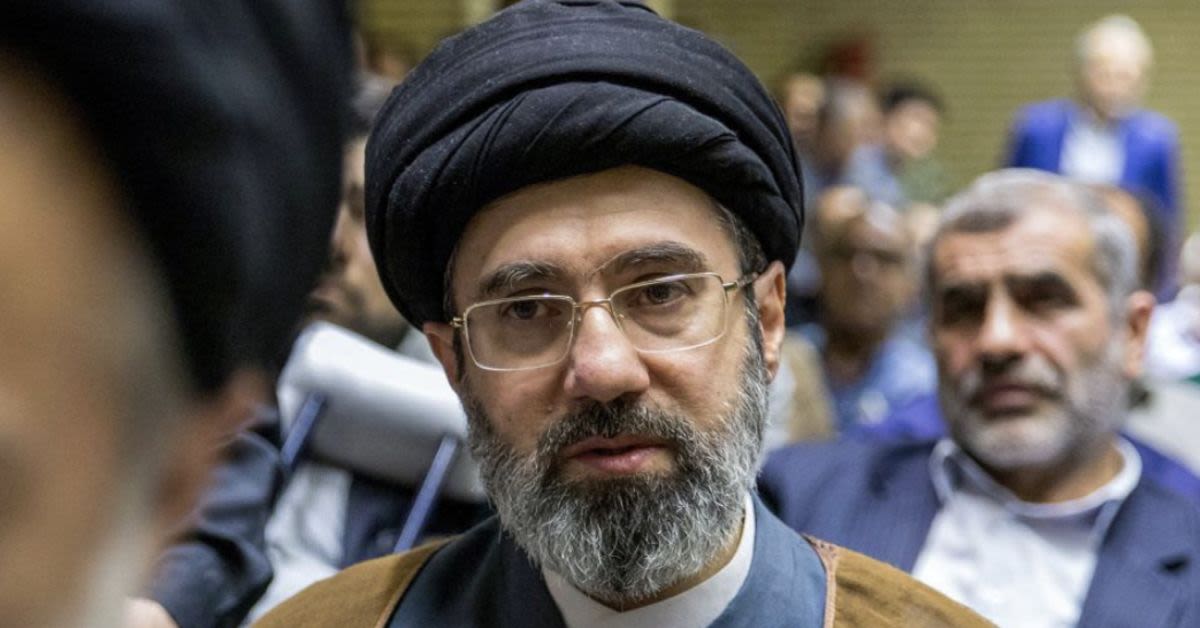
Irans new supreme leader Mojtaba Khamenei remains unseen and shrouded in rumor as Tehran scrambles to project stability after the U.S.-Israeli operation that killed his father, longtime dictator Ali Khamenei.
According to Breitbart, Iranian Foreign Minister Abbas Araghchi on Sunday insisted that the younger Khamenei was in perfect health, a claim clearly aimed at quashing a wave of speculation that the heir to the theocratic throne is gravely wounded or otherwise incapacitated. The regime has been in visible disarray since President Donald Trump announced Operation Epic Fury on February 28, declaring that American and Israeli forces had eliminated the 86-year-old Ali Khamenei and decapitated much of the Islamist leadership structure in Tehran.
In the immediate aftermath, Irans opaque Assembly of Experts moved quickly, announcing a week later that it had selected Mojtaba Khamenei a man who has never held public office as the new supreme leader, underscoring how little genuine consent or transparency exists in the Islamic Republics power transitions. In addition to killing the elder Khamenei, Operation Epic Fury reportedly removed dozens of senior regime figures, leaving the world and many Iranians wondering who is actually running the countrys war and domestic machinery.
Iran does still have a nominal president, Masoud Pezeshkian, but his office is constitutionally subordinate to the supreme leader and has been largely sidelined during the crisis. Pezeshkian has issued only sparse, carefully worded remarks since the conflict escalated, reinforcing the perception that real authority remains cloaked behind the walls of the clerical establishment and the Revolutionary Guard.
Mojtaba Khamenei himself has not appeared in public since being declared supreme leader, an extraordinary absence at a moment when the regime claims to be fighting for its survival. After nearly a week of silence, state television aired a written statement attributed to him on Thursday, in which he called for continued war against America and Israel and threatened to shut down the Strait of Hormuz, a vital artery for global oil shipments.
Adding to the sense of farce and fragility, Iranian state media broadcast footage of an allegiance ceremony in which officials and loyalists were shown pledging fealty not to the man himself, but to a cardboard cutout of Mojtaba. The bizarre spectacle fueled further doubts about his condition and raised questions about whether the regime is attempting to rule through a symbol while concealing the true state of its new figurehead.
Mojtabas unexplained disappearance from the public stage during wartime has triggered a torrent of rumors about his health and his standing within what remains of the ruling elite. Against this backdrop, Araghchi one of the few senior officials still visibly active used a Sunday interview to insist that Khamenei was not only alive but fully engaged in directing the countrys affairs.
The Leader of the Revolution is in perfect health and is fully managing the situation, Araghchi reportedly told Al-Araby Al-Jadeed, in remarks later echoed by regional outlets. The Times of Israel summarized his comments as describing Khamenei as in excellent health and in control of the situation, while the foreign minister brushed off concerns about the leaders invisibility, asserting that the timing of televised messages or direct appearances before the people is his prerogative.
Elsewhere in the same interview, Araghchi attempted to sanitize Irans aggressive missile and drone strikes across the region, which have hit more than a dozen neighboring countries. He claimed that Tehran never targeted residential or civilian areas, dismissing complaints from Saudi Arabia, the United Arab Emirates, Azerbaijan, and others, and conceded only that some collateral damage may have occurred.
In a familiar attempt to deflect blame, Araghchi went further, alleging that it is possible that Israel is behind the attacks on civilian targets in Arab countries in order to destroy their relations with Iran. On Monday, he resurfaced again with triumphalist rhetoric, declaring that Iran was on the verge of defeating the United States despite the regimes obvious military and economic inferiority.
In the coming days, we will celebrate our victory in this war, he claimed, projecting confidence that few outside Tehrans propaganda apparatus share. We have sent no messages and have not requested a ceasefire, he added, even as Irans infrastructure and command networks have been severely degraded by Western and Israeli strikes.
Conspicuously absent from these boasts is any direct intervention by Mojtaba Khamenei, whose voice and image remain missing from the public arena. From the moment his selection was announced, rumors spread that he was unfit to rule, either because of severe injuries sustained during the airstrikes that killed his father or because of deeper questions about his competence and legitimacy.
Early reports from Iranian state media themselves helped fuel speculation by describing Mojtaba as wounded in battle, implying that the same strikes that eliminated Ali Khamenei had also badly hurt his son. Some rumors claimed that he had been disfigured, while others suggested he had suffered major damage to, or even the loss of, a leg, raising the possibility that the regime is hiding a debilitated leader from public view.
Irans ambassador to Cyprus, Alireza Salarian, added fuel to the fire when he disclosed that he had been told Mojtaba was injured in his legs and hand and arm. I think he is in the hospital because he is injured, Salarian said early in the war, remarks that cut sharply against the official narrative of a fully functioning, hands-on supreme leader.
Subsequent unverified reports have claimed that Mojtaba was evacuated to Russia for medical treatment, though no public evidence has surfaced to substantiate those claims. The secrecy and conflicting accounts highlight the opacity of a regime that demands obedience from its citizens while refusing to provide basic clarity about who is actually in charge.
Beyond his physical condition, there are sharply conflicting portrayals of Mojtabas political and ideological profile. One report last week depicted him as bloodthirsty and more dangerous than his late father, describing him as obsessed with the end of days and suggesting he could be even more radical and apocalyptic than the man who oversaw decades of repression and terror sponsorship.
By contrast, CBS News reported on Sunday that American intelligence officials believe Ali Khamenei himself considered his son not very bright and unqualified, leaving the late ayatollah with little confidence in Mojtaba as a successor. That account, based on anonymous sources familiar, paints a picture of a reluctant dynastic handoff driven more by regime survival than by merit or capability.
In yet another twist, the New York Post reported Monday again citing anonymous sources that U.S. intelligence officials told President Trump that Mojtaba Khamenei was gay and had a long-term sexual relationship with his childhood tutor. This sensational claim, also unsupported by verifiable evidence or on-the-record confirmation, would be politically explosive inside a regime that brutally persecutes homosexuals while posturing as the guardian of Islamic morality.
Mojtabas first and only message as supreme leader did little to reassure Iranians or the international community about his intentions. It was a stark call for the people of Iran to rally behind their already repressive regime and a belligerent demand for revenge against its enemies, signaling continuity rather than reform.
A limited amount of this revenge has already taken place in practice. But until it reaches its complete extent, this case will remain open above all others, he declared, vowing to keep the conflict alive rather than seek de-escalation. Certainly the lever of blocking the Strait of Hormuz must continue to be used, he added, openly threatening the global economy and energy markets.
Yet even this hardline posture was quickly undercut by other Iranian officials, exposing the fractures and confusion within the ruling apparatus. We are not going to close the Strait of Hormuz, Iranian envoy to the United Nations Amir Saeid Iravani said on Thursday, contradicting the supposed supreme leaders threat and suggesting that more pragmatic voices fear the consequences of such a move.
Trump, for his part, has publicly dismissed Mojtaba Khamenei as a lightweight and has argued that the current conflict can only end if Irans regime installs a leader acceptable to Washington and abandons its capacity to fund and direct terrorism. As for Mojtabas condition, Trump said on Friday that he believes the new supreme leader is alive in some form, a pointedly skeptical formulation that captures the broader uncertainty surrounding Tehrans opaque succession and the true state of its embattled theocracy.
Login