
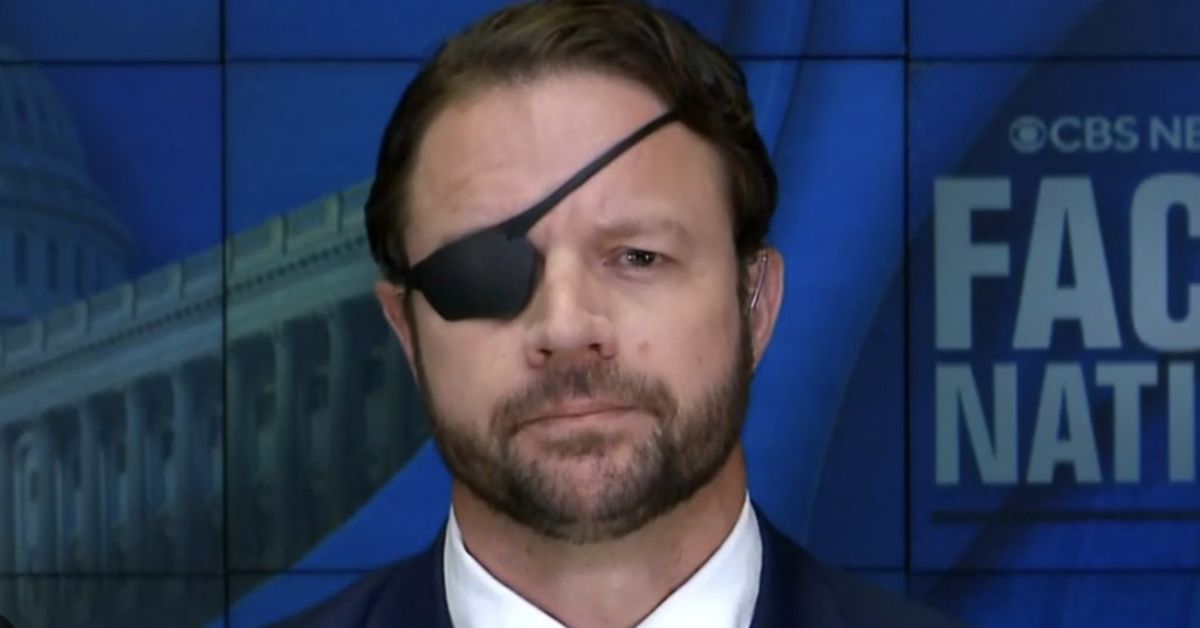
Texas Rep. Dan Crenshaw is lashing out at Republican voters after suffering a decisive defeat in his March 3 primary, insisting they were duped by online smears and conspiracies rather than simply rejecting his record.
According to The Blaze, Crenshaw lost badly to state Rep. Steve Toth, a notably more conservative challenger who captured over 57% of the vote in the Houston-area district. Yet instead of acknowledging that grassroots Republicans may have wanted a stronger conservative voice, Crenshaw has chosen to fault a supposedly misinformed electorate and low turnout, framing his loss as a cautionary tale about the dangers of the digital age rather than a referendum on his own positions.
Crenshaws complaints came during an appearance on CBS News Face the Nation, where host Margaret Brennan the liberal commentator who previously suggested that free speech helped enable the Holocaust invited him to elaborate about this culture of misinformation were living in. Crenshaw, who has been dogged by criticism over his support for red-flag-style gun measures and questions about his stock trades, eagerly embraced the narrative that he was the victim of lies rather than of conservative discontent.
Crenshaw, who has already blamed his defeat on being branded Red Flag Law Crenshaw and on allegations of insider trading, told Brennan, I'm a unique Republican. You know, I've been the target of online smears and conspiracies for a very long time. My election was basically a product of that. He went on to argue that the problem was not his voting record but the voters themselves, suggesting they were too willing to believe what they saw on social media and in campaign mailers.
First of all, you have about 20% of Republican voters bothering to even vote at a primary, and then you have dozens of online smears and conspiracies that people were going into the voting booth actually believing, Crenshaw continued. I mean, believing that I was worth millions of dollars from insider trading. Doesn't matter how many times we thought we had debunked that, or that other people and influencers and what have not have debunked it, all of these things, people still went in believing it.
Crenshaw then shifted the burden squarely onto the electorate, suggesting that the real issue is public credulity rather than any disconnect between him and his base. He said that ultimately, this is a question for the American people: Are you going to believe everything you read online or that's sent to you in your mail?
In earlier comments to the Texas Tribune, Crenshaw had already previewed this line of argument, casting his loss as the byproduct of sensationalist media rather than a principled conservative revolt. Crenshaw previously told the outlet, A large part of this election was about the power of clickbait.
Memes became truth. Too many people are not discerning through the clickbait, continued Crenshaw. People voting one after the other literally thought I was making millions in the stock market doing inside trading. Even though I havent made a trade in three years. Ive made under $46,000 over my entire seven years in office. The truth didnt matter to people.
Crenshaw, who alienated many on the right with his insistence that President Donald Trump lost the 2020 election and with his commentary on Jan. 6, suggested that honesty itself is now punished by Republican voters. He told the paper that the telling the truth thing is regarded as a real crime among some in the GOP base, a remark that many conservatives saw as yet another swipe at the very people he once claimed to represent.
Unsurprisingly, his post-defeat media tour has drawn sharp responses from figures on the right who see his rhetoric as a prelude to a career in liberal media rather than a serious effort at introspection. Trump adviser Alex Bruesewitz said in response to Crenshaw's remarks to Brennan, Dan Crenshaw begins to audition for a left-leaning TV commentary gig following his blow out loss.
Others argued that what Crenshaw derides as misinformation was simply voters paying closer attention to his record and rhetoric over time. Wade Miller, executive director of the Center for Renewing America, wrote, I think in Crenshaws case, the problem wasnt misinformation, but repeated exposure to information and Dans own condescending attitude.
Data from conservative activists also undercuts Crenshaws narrative that he was undone by memes rather than merit. Ben Larrabee, a data analyst with Turning Point Action's Chase the Vote initiative, said that contrary to Crenshaw's framing, the reason the congressman lost was that in 2018 and in 2020, His district had a CPV of R+11, so it was redistricted to an R+15. And as Crenshaw's voting record worsened over time, his new conservative base started voting for a more conservative representative. Ain't more complicated than that.
For many grassroots conservatives, the episode raises a broader question about accountability in a party that claims to champion limited government and individual responsibility. As one critic put it, In Crenshaws case, the problem wasnt misinformation, but repeated exposure to information, and voters in a redder district simply exercised their freedom to choose a representative they believe will fight harder for their values.
Login