
Israeli defense officials revealed Sunday that the brother of the man who rammed an explosives-laden vehicle into a Michigan synagogue was a Hezbollah commander eliminated in an Israeli airstrike just days before the attack.
The disclosure, coming amid a surge in antisemitic incidents in the United States and Europe, adds a troubling international dimension to an assault that U.S. authorities are already treating as a potential act of terrorism. According to Newsmax, federal investigators are examining whether the Michigan attack bears any operational or ideological connection to Hezbollah, the Iranian-backed terror organization that has long targeted Israel and the West.
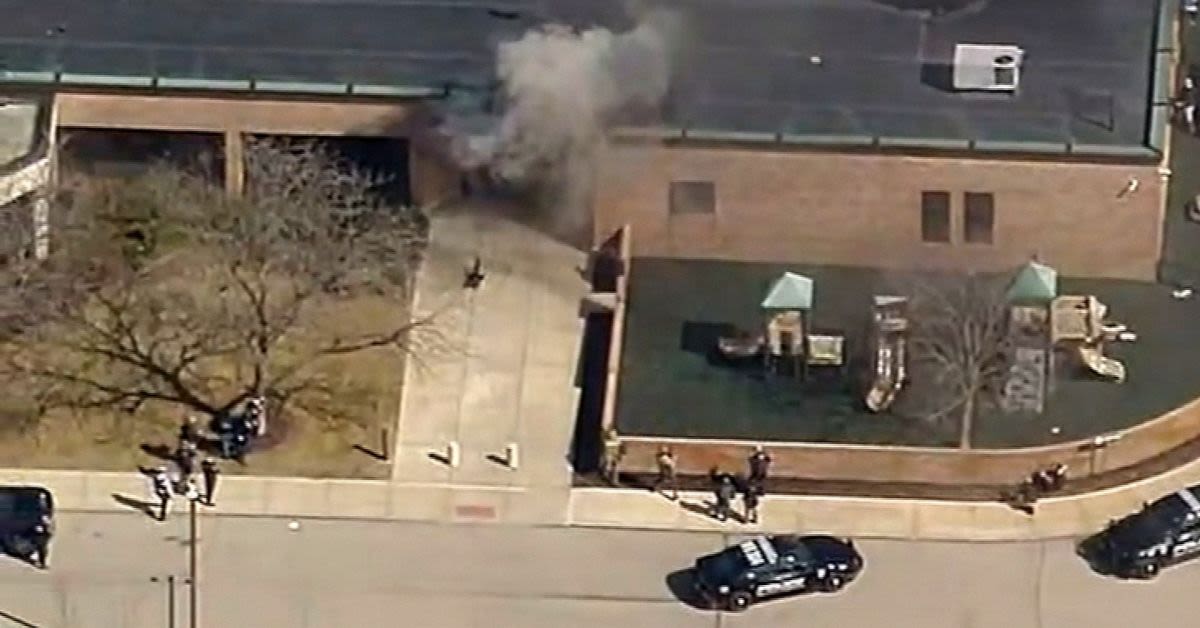
The assailant, identified as 41-year-old Ayman Mohamad Ghazali, drove his vehicle into Temple Israel in West Bloomfield Township, a Detroit suburb, on Thursday while the synagogues early childhood center was in session. Authorities said he died of a self-inflicted gunshot wound following an exchange of gunfire with security officers who confronted him at the scene.
The FBI has stated that it is investigating the assault as a "targeted act of violence against the Jewish community." That characterization underscores the gravity of the incident at a time when Jewish institutions across America have been forced to harden security in response to rising threats and a permissive climate toward anti-Israel agitation on the political left.
Israeli military officials identified the attackers brother as Ibrahim Ghazali, describing him as a Hezbollah commander responsible for weapons for a unit that fired rockets at Israel. Israeli military spokesman Avichay Adraee said Ibrahim Ghazali was killed on March 5 "in a strike on a Hezbollah military structure," part of Israels broader campaign to degrade the terror groups capabilities along its northern border.
A local official in Mashgharah, Lebanon, reported that the March 5 Israeli airstrike killed two of Ghazalis brothers, a niece, and a nephew, and seriously wounded the childrens mother. That account, if fully confirmed, would place the Michigan attacker within a family deeply enmeshed in Hezbollahs militant network, raising questions about how closely U.S. authorities were monitoring such connections.
CNN reported that Ayman Ghazali, a naturalized U.S. citizen originally from Lebanon, had previously been flagged in U.S. government databases for connections with suspected Hezbollah members, though he was not believed to be a member himself. The Associated Press also reported it was not immediately able to verify that Ayman Ghazali was a militant, highlighting the difficulty of drawing a straight line between familial ties to terrorism and individual operational involvement.
Temple Israel in West Bloomfield Township was the direct target of the attack, which unfolded while children, teachers, and staff were inside the synagogue's early childhood center. The presence of so many young children in the building at the time of the assault has intensified public outrage and renewed calls from conservatives for tougher counterterrorism measures and stricter vetting of individuals with links to foreign extremist networks.
CNN said a security guard was injured, dozens of first responders were treated for smoke inhalation, and more than 100 children in the building were not injured. There were 140 people in the center; one security officer was struck by the vehicle and knocked unconscious, but was not critically injured, a testament to both providence and the preparedness of the synagogues security team.
Authorities discovered commercial-grade fireworks and jugs of suspected gasoline in the vehicle, indicating that the attacker may have intended a far more devastating outcome than what ultimately occurred. The apparent use of readily available materials again illustrates how determined individuals can exploit soft targets, even in a country with extensive law-enforcement resources.
Investigators have not publicly established a motive, and federal authorities continue to examine Ghazali's background, the materials recovered from the vehicle, and whether any evidence links the Michigan attack to the allegations raised by Israeli officials. For many Americans, especially within the Jewish community, the unanswered question is whether this was an isolated act of hatred or part of a broader pattern of radicalization tied to foreign terror groups and inflamed by anti-Israel rhetoric at home.
The case also raises uncomfortable issues about U.S. intelligence and immigration policy, given that Ghazali was a naturalized citizen who had already appeared in government databases for his connections to suspected Hezbollah members. As investigators work to piece together his path from Lebanon to suburban Michigan, conservatives are likely to press for a more robust screening regime and a less nave approach to the threats posed by Irans proxies and their sympathizers on American soil.
Login