
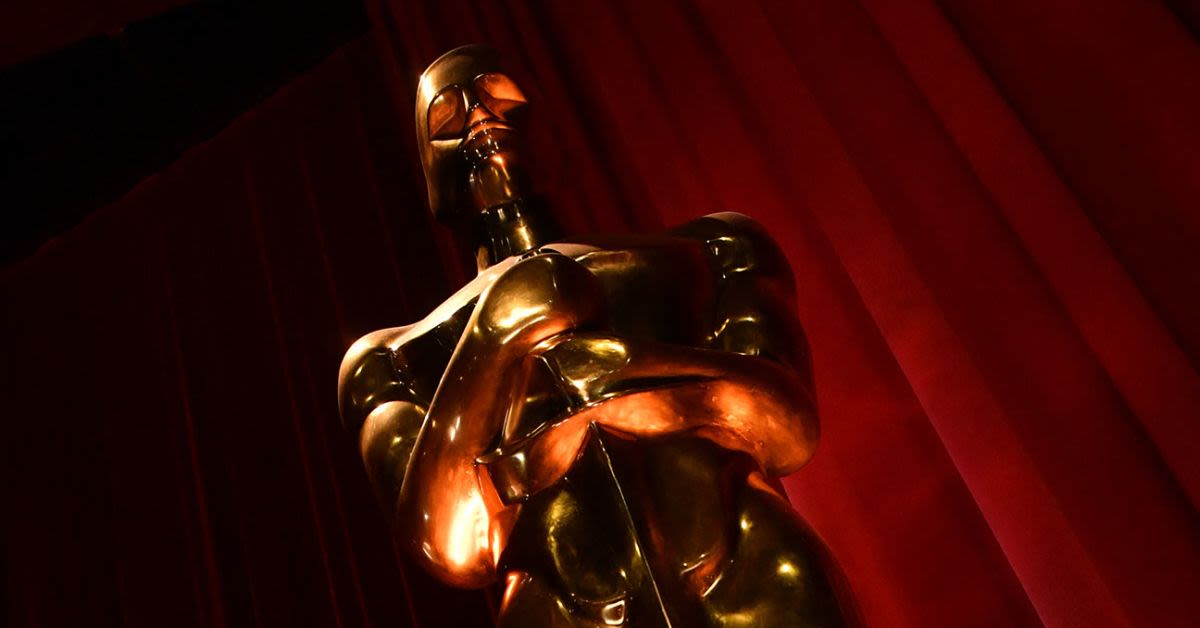
The Academy Awards ceremony this year is shaping up as less a celebration of film than a referendum on Donald Trump and the broader political agenda of the entertainment elite.
Hosted by late-night comedian Conan O'Brien, the Oscars are poised to walk what one Politico report recently described as a "political tightrope," with liberal Hollywood figures likely eager to use the global broadcast as a platform for anti-Trump messaging. Yet, as reported by Fox News, even in deep-blue California there are signs that voters are tiring of Hollywoods political activism: a UC Berkeley Citrin Center for Public Opinion ResearchPOLITICO poll found that 48% of Californians believe Hollywood wields too much influence over politics, and 47% say the industry is too liberal.
That disconnect between the public and the entertainment class has not stopped some of this years most prominent nominees from doubling down on their rhetoric. Natalie Portman, producer of the Oscar-nominated animated feature "Arco," used the 2026 Sundance Film Festival to denounce the current administration in sweeping terms, declaring, "What's going on in our country right now is absolutely horrific with what the federal government, Trump's government, Kristi Noem, ICE what they are doing is really the worst of the worst of humanity."
Portmans remarks underscore how aggressively some in Hollywood conflate policy disagreements with moral evil, particularly on immigration enforcement. Immigration and Customs Enforcement (ICE) has become a favorite target, and that hostility is echoed by Wunmi Mosaku, nominated for Best Supporting Actress for her role in "Sinners," a horror film set in the Jim Crow South.
Mosaku arrived at the Actor Awards in March wearing an "ICE Out" pin and made her position unmistakable, saying, "I want ICE out. I don't believe in what this administration is inflicting on the people in this country, and I think it's atrocious." She went further in comments to The Times of London, explaining that the political climate had overshadowed her professional success: "Ive not been able to celebrate because of whats going on right now, with the killings of Renee Good and Alex Pretti by ICE agents in Minnesota."
The sense of cultural crisis is not limited to actors on the rise; veteran performers are also using their platforms to paint a dark picture of the country under Trump. Ethan Hawke, a longtime Democratic Party supporter and Best Actor nominee for "Blue Moon," told an interviewer in January, "There's a kind of fear in the air that I've never felt before... And it's not America."
Hawke sharpened his critique at the 2026 Sundance Film Festival, suggesting that the Trump presidency might serve as a grim civics lesson for the nation. "It's entirely possible that Trump is doing us a great favor by teaching America what oligarchy means," he said, framing the administration not as a political opponent but as a threat to the republic itself.
The films themselves often mirror the politics of their stars and creators, blurring the line between art and ideological messaging. Guillermo del Toros "Frankenstein," which secured nine nominations including Best Picture, Best Director, and Best Adapted Screenplay, comes from a filmmaker who has long cast the Trump era in apocalyptic terms; in a 2017 press conference, del Toro labeled the period a "cancer."
Leonardo DiCaprio, nominated for Best Actor for the politically charged "One Battle After Another," continues to use his celebrity to advance a progressive agenda on climate and electoral politics. The films villain is a racist, nativist general targeting a band of hard-left revolutionaries, and off-screen DiCaprio has endorsed Kamala Harris failed 2024 presidential bid and accused Trump of rejecting scientific consensus on climate change, writing on Facebook, "Today, the future livability of our planet was threatened by President Trump's careless decision to withdraw the United States from the Paris Agreement."
Teyana Taylor, nominated for Best Supporting Actress for the same film, has also signaled her disdain for the president in blunt fashion. In October 2017, she was reportedly seen wearing a chain that read, "F--- Donald Trump," a gesture emblematic of the coarse, performative resistance that has become commonplace in celebrity circles.
Even the telecasts tone is expected to reflect this politicized environment, though producers appear wary of alienating an already shrinking audience. Veteran Oscars writer Bruce Vilanch told Politico he anticipates O'Brien will nod to the turbulence of the Trump years but in a way that softens the edge, while O'Brien himself told the Los Angeles Times, "My job is to always try and hit this very, very thin line between entertaining people and also acknowledging some of the realities."
Whether that balance can be struck remains an open question for an industry increasingly out of step with half the country, many of whom see Hollywoods lectures as yet another form of cultural overreach rather than moral leadership. With polling already showing skepticism about Tinseltowns political clout, this years Oscars may reveal whether the Academy is interested in winning back viewers or content to preach to a smaller, more ideologically uniform choir. Fox News' Madison Colombo contributed to this report.
Login