
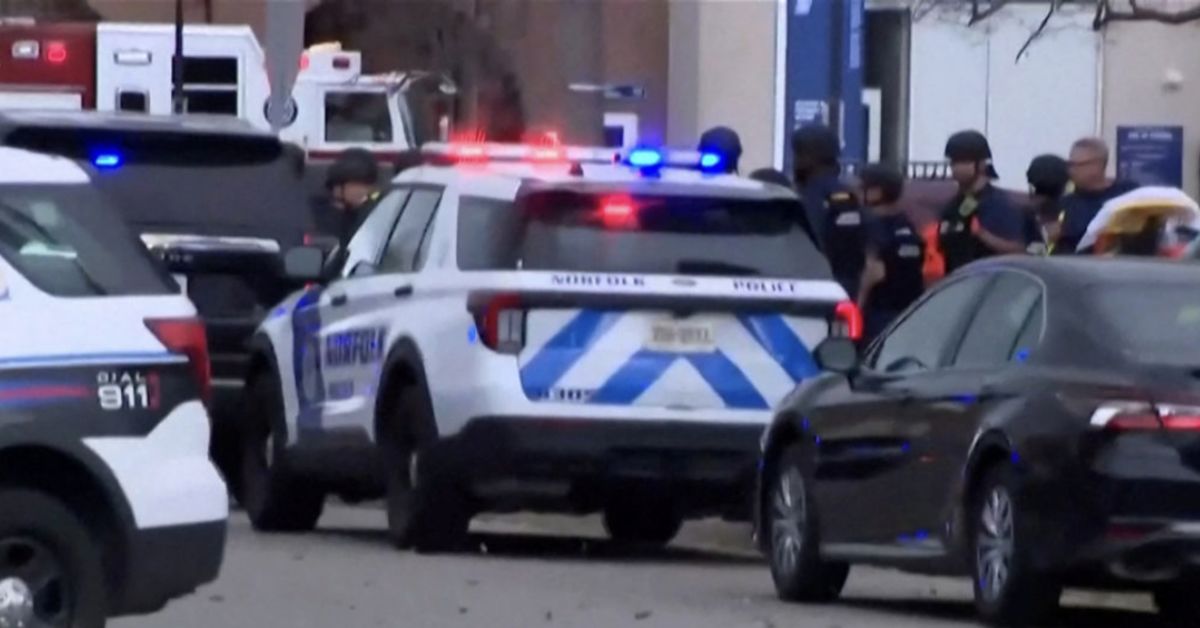
A Virginia man is now facing federal charges for allegedly supplying the firearm used in the terror-linked mass shooting at Old Dominion University that left a decorated Army officer dead and others wounded.
As reported by Gateway Pundit, the March 12 attack shattered the relative calm of the Norfolk campus when 33-year-old Mohamed Bailor Jalloh, a former National Guard member with a prior terrorism conviction tied to ISIS (also known as ISIL), opened fire inside a classroom attended by Army ROTC cadets and active-duty service members. Jalloh, a naturalized U.S. citizen originally from Sierra Leone, had been sentenced in 2017 to 11 years in federal prison on a terrorism charge, and NBC News reported that he had only recently been released before the shooting.
According to federal authorities, one of the victims killed was Lt. Col. Brandon Shah, an active-duty U.S. Army officer assigned to the ODU ROTC detachment, while two additional victims were shot before the assailant was overpowered. Jalloh was ultimately subdued and killed at the scene by ROTC students, whose swift and courageous response prevented even greater loss of life.
Federal prosecutors now allege that 32-year-old Kenya Mcchell Chapman of Smithfield, Virginia, illegally provided Jalloh with the weapon used in the attack. According to the Justice Department and a newly filed federal affidavit, Chapman has been charged by criminal complaint with dealing in firearms without a license and with three counts of making false statements during prior firearm purchases.
Prosecutors say Chapman sold Jalloh the Glock .44-caliber handgun that was used in the ODU shooting, a transaction that allegedly took place outside lawful channels. Investigators further allege that the firearms serial number had been partially obliterated, and that Jalloh used the weapon after confirming he was entering a classroom populated by ROTC students.
The affidavit states that multiple witnesses reported hearing the attacker shout Allahu Akbar shortly before opening fire. Federal investigators noted in the filing that this phrase is commonly associated with ISIS and has been used in connection with prior acts of Islamist violence.
Chapman was not an unknown quantity to law enforcement, according to the federal filing. The report states he had already come under scrutiny in a 2021 Bureau of Alcohol, Tobacco, Firearms and Explosives (ATF) investigation involving straw purchases of multiple firearms.
Authorities say that during that earlier probe, Chapman admitted to straw purchasing three guns, yet he was apparently never prosecuted or meaningfully sanctioned. In the current case, Chapman allegedly admitted to selling the stolen gun to Jalloh for $100 in cash and even produced the $100 bill he claimed to have received from the transaction.
According to court documents, Chapman initially told investigators he had simply found the firearm in the woods. He later recanted that story and admitted he had stolen the gun before selling it on to Jalloh.
Federal agents say they pieced together the alleged connection between the two men through phone records, surveillance footage, and location data. The affidavit states that Jallohs phone had repeated contact with a number associated with Chapman in the days leading up to the shooting.
Investigators also report that Chapman was observed at his Smithfield residence on the night before the attack. Location data from Jallohs phone allegedly placed him traveling between the ODU campus and the Smithfield area during the critical period before the shooting.
Charging documents further allege that a search of Chapmans home after the attack turned up .22 caliber ammunition consistent with the firearm used at Old Dominion. The affidavit says Chapman ultimately admitted to FBI and ATF agents that he sold Jalloh the gun and that Jalloh had claimed he needed a weapon for protection as a delivery driver.
Chapman has allegedly denied any prior knowledge of Jallohs plans or his violent history, telling investigators he did not know Jalloh was a convicted felon or a previously convicted terrorist. Yet the case raises serious questions about why a man already on ATFs radar for straw purchasing was left free to operate in the firearms black market, and why a radicalized ex-convict with an ISIS-linked record was back on the streets and able to obtain a gun at all.
Login