
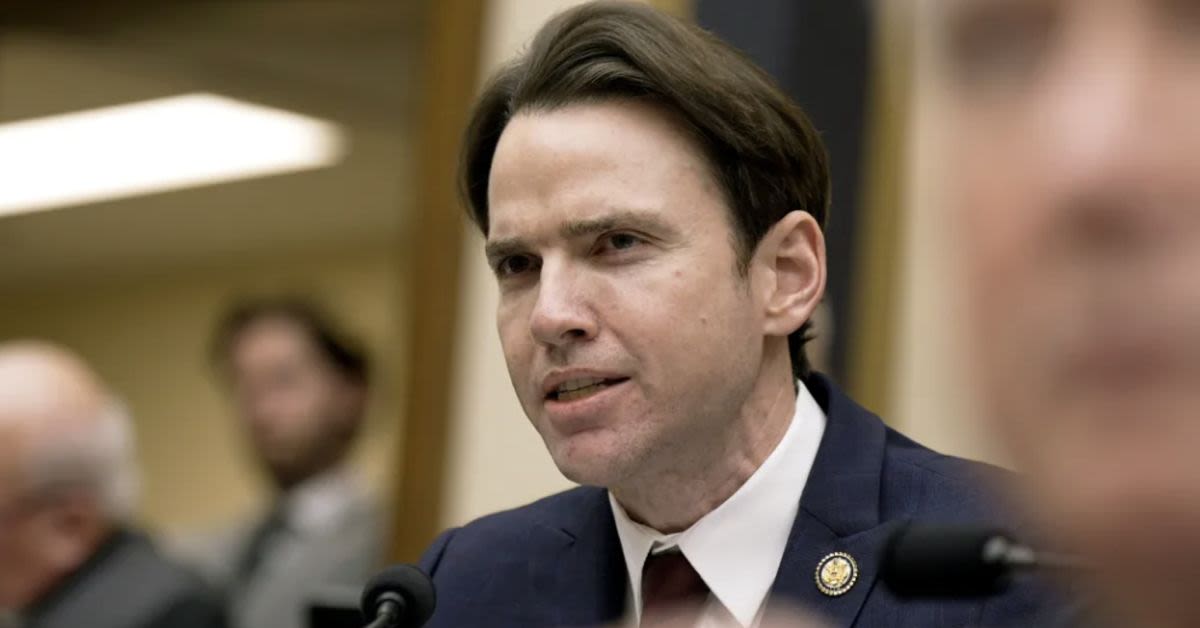
Republican Rep. Kevin Kiley of California, one of several GOP lawmakers squeezed by Democratic Gov. Gavin Newsoms aggressive new congressional map, is abandoning his party label and running for reelection as an independent in a bid to survive in a district redrawn to favor Democrats.
According to Western Journal, Kiley announced the move Friday night in a video posted to X, framing his decision as a direct response to what he called Newsoms voter-approved gerrymander, a redistricting scheme expected to add as many as five California Democrats to the U.S. House. The congressman said he has filed for reelection with No Party Preference, a formal designation under California law that will strip his Republican affiliation from the ballot even as he remains, at least for now, a registered member of the GOP.
Kiley, a persistent and vocal critic of Newsoms progressive governance, had already surprised political observers earlier in the week by declaring he would seek a third term in a newly drawn district that former Vice President Kamala Harris carried by double digits in the 2024 presidential race. The move signaled that, unlike some Republicans choosing retirement over a steep uphill fight, he intends to contest the Democrats map on the ground rather than surrender a conservative voice in Congress.
Gerrymandering is a plague on democracy, one that Gavin Newsom has brought back to California, Kiley said in his video statement, directly blaming the governor for reviving a practice long criticized by good-government advocates. But theres a way we can fight back and protect our democracy from his partisan games: by removing partisanship from the equation. Today, I filed for reelection as No Party Preference.
This means I will not have a party affiliation on the ballot or as an officeholder, he continued, arguing that his new status would align him more closely with how many local officials already serve in the state. He noted that numerous California officeholders including mayors, city councilors, school board members, county supervisors, sheriffs and district attorneys are elected in officially nonpartisan contests, a structure that often allows more conservative candidates to compete in otherwise liberal jurisdictions.
Under Californias top-two primary system, all candidates, regardless of party, appear on the same primary ballot, and the two highest vote-getters advance to the November general election. That system, which progressives once touted as a reform, now gives Kiley a narrow but plausible path to the fall ballot if he can consolidate right-leaning voters and attract enough independents and disaffected Democrats to finish in the top two on June 2.
Kiley currently represents a vast rural and suburban district that backed President Donald Trump by four percentage points in 2024, a region that has reliably supported more conservative policies on taxes, regulation and public safety. Newsoms new map, approved by voters in November 2025 through Proposition 50 by nearly a 30-point margin, dismantles that district and scatters its territory across six newly configured seats, several of which are far more favorable to Democrats.
As an elected representative, Ive always seen my role as being an independent voice for our community, holding politicians in Sacramento and Washington accountable to serve my constituents. I answer to you, not party leaders, Kiley said, casting his shift as a logical extension of how he has already tried to govern. Thats the kind of representation I believe the newly-drawn Sixth District deserves.
He added that he has been frustrated, at times disgusted, by the hyper-partisanship in Congress, pointing to the record-breaking 43-day government shutdown in the fall of 2025 as a prime example of Washington dysfunction. Kiley also cited the massive increase in healthcare costs, and of course, a pointless redistricting war as symptoms of a political class more interested in partisan advantage than in easing the financial burdens on American families.
The epidemic of gerrymandering has spread from Texas to California to states all across the country. Both parties are complicit, Kiley observed, acknowledging that Republicans in some red states have also drawn favorable maps while insisting that Newsoms maneuver in deep-blue California is particularly egregious. In August 2025, he introduced legislation to ban all mid-decade redistricting a reform that would have curbed the kind of power grab he now faces but the bill never received a floor vote in the House.
If there is one thing Americans agree on, it is that political division has become a serious problem for our country. We need to find ways for politics to bring us together as Americans rather than tear us apart as partisans. That means, for example, finding pragmatic solutions to make life more affordable rather than each side blaming the other for why it isnt, he said, arguing that a less partisan posture could help conservatives advance practical, kitchen-table reforms even in hostile territory.
Kiley has not yet clarified whether, if reelected as an independent, he would continue to caucus with House Republicans, who have been his natural allies on issues ranging from border security to regulatory reform. He remains a registered Republican and a member of the GOP conference in the current Congress, and his office did not immediately respond to a request for comment on whether that alignment would change in the next term.
At present, there are no independent members serving in the House, underscoring how unusual Kileys gambit would be if it succeeds. The Senate, by contrast, has two independents Vermont Sen. Bernie Sanders, a self-described socialist, and Maine Sen. Angus King, widely regarded as a liberal-leaning moderate both of whom caucus with Democrats and reliably support a larger federal role in the economy.
The last lawmaker to serve in the House as an independent was the late Michigan Rep. Paul Mitchell, who was twice elected as a Republican before declining to seek a third term. Mitchell left the GOP in December 2020, after his Republican successor had already been elected, and served as an independent for only three weeks until his term ended in January 2021.
The most recent independent to win reelection to the House was Sanders in 2004, long before he moved to the Senate and became a national figure on the far left. That history underscores how rare it is for nonaligned candidates to survive in a system dominated by two major parties, even as voters increasingly express frustration with both.
Kiley is not the only California Republican squeezed by Newsoms map; Rep. Darrell Issa, another veteran conservative lawmaker targeted by the governors gerrymander, announced Friday night that he will not seek reelection after his district was redrawn to include far more Democratic voters. With Issa stepping aside and Kiley attempting a high-risk independent run, California conservatives are confronting the reality that partisan redistricting, blessed by a statewide electorate, may cost them multiple seats unless they can persuade voters that one-party rule in Sacramento and Washington has gone too far.
Login