
American troops are once again facing deadly danger in the Middle East, and some will not return home.
In Washington, lawmakers are moving to ensure that the families of those who fall in combat are not left to shoulder the burden alone. According to RedState, Rep. Matt Van Epps (TN-07) has introduced the HONOR Gold Star Families Act, a measure that would double the military death gratuity paid to the families of service members killed in the line of duty.
The current payment of $100,000 has remained unchanged since 2006, despite inflation and the rising cost of living, and the bill would raise that amount to $200,000 while applying the increase retroactively to the beginning of 2026 so that families who have already lost loved ones in the current confrontation with Iran are included.
When the worst happens on the battlefield, the families left behind join a solemn and exclusive fraternity known as Gold Star families. The proposed legislation is designed to acknowledge that their sacrifice does not end when the shooting stops or when the headlines fade.
The timing of the proposal reflects the grim reality now confronting the country and its armed forces. In recent days, news emerged that a seventh American service member has died following Iranian attacks on U.S. forces in the region, a statistic that represents not just a casualty count but a grieving family and a life cut short in service to the nation.
For Van Epps, a West Point graduate and combat veteran who served in both Iraq and Afghanistan, the bill rests on a straightforward moral obligation. When the United States sends its sons and daughters into harms way, he argues, the nation must stand firmly with the families who bear the consequences of that decision long after the battle is over.
Unfortunately, this week we learned that a seventh servicemember has died as a result of an Iranian attack on U.S. forces in Saudi Arabia, Van Epps told the Examiner. This is tragic news and undergirds the need to ensure that our Gold Star families are taken care of. Thats why I introduced the HONOR Gold Star Families Act alongside Reps. Kiggans and Tokuda. This bipartisan legislation demonstrates that when it comes to taking care of our troops and their families, there are no sides of the aisle. We are all Americans."
The measure is being introduced with rare bipartisan backing, including support from Republican Rep. Jen Kiggans (VA-02) and Democrat Rep. Jill Tokuda (HI-02), along with several additional co-sponsors from both parties. In a Congress often paralyzed by partisan conflict, care for military families remains one of the few issues that can still unite lawmakers across ideological lines.
Van Epps has emphasized that the stakes are not abstract, recalling a recent conversation with a Gold Star spouse that captured the human cost in a way no policy memo could. For these families, the loss is immediate and permanent: funeral arrangements must be made, children must still be raised, and the ordinary obligations of life do not pause simply because a loved one has died in uniform.
Mortgages, rent, and daily bills continue to arrive even as families struggle to process their grief and adjust to a future they never imagined. For many Gold Star families, the death gratuity is one of the first tangible forms of support they receive as they begin to navigate life after an unimaginable loss, making the adequacy of that benefit a matter of real-world survival rather than symbolism.
As one Gold Star wife recently told me, Your bills dont get cut in half when you lose your spouse. Her words were a stark reminder of the difficult reality many Gold Star families face in the wake of unimaginable loss, Van Epps said. Those words underscore a basic truth that conservatives have long recognized: while government should be limited, it has a unique and non-negotiable duty to those who have borne the battle and to their families.
Organizations that work closely with the families of fallen service members have already lined up behind the proposal. American Gold Star Mothers, a long-standing group with more than 140 chapters nationwide, has endorsed the legislation, and Military Veterans Advocacy has also thrown its support behind the bill.
Retired Navy Commander John Wells, executive director of Military Veterans Advocacy, argued that the current benefit has simply failed to keep pace with reality. The fixed $100,000 death gratuity is no longer appropriate, Wells said, reflecting a growing consensus among veterans advocates that the nations promises to its warriors must be updated to match the sacrifices still being asked of them.
The broader strategic context only heightens the urgency of the debate. Earlier this year, the United States and Israel launched joint strikes against Iran after intelligence indicated that Tehran had amassed sufficient enriched uranium to potentially produce multiple nuclear weapons, a development that underscores the stakes of American forward deployment in the region.
Since the conflict escalated, the Pentagon has reported injuries to roughly 140 American service members deployed across the Middle East, a reminder that the risks are not theoretical. Several Americans have already paid the ultimate price: six service members were killed in a retaliatory Iranian drone attack in Kuwait at the Port of Shuaiba, and another service member was later killed at Prince Sultan Air Base in Saudi Arabia.
Each of these losses carries a story that extends far beyond the battlefield. Somewhere in America, a parent will never again hear their childs voice, a spouse must rebuild a life without the person they expected to grow old with, and children will grow up knowing their mother or father only through photographs, memories, and the stories others tell.
These families do not seek recognition, and they rarely ask for the spotlight. Yet their sacrifice is permanently woven into the fabric of the nation, forming a quiet but unbreakable thread of duty, honor, and love of country.
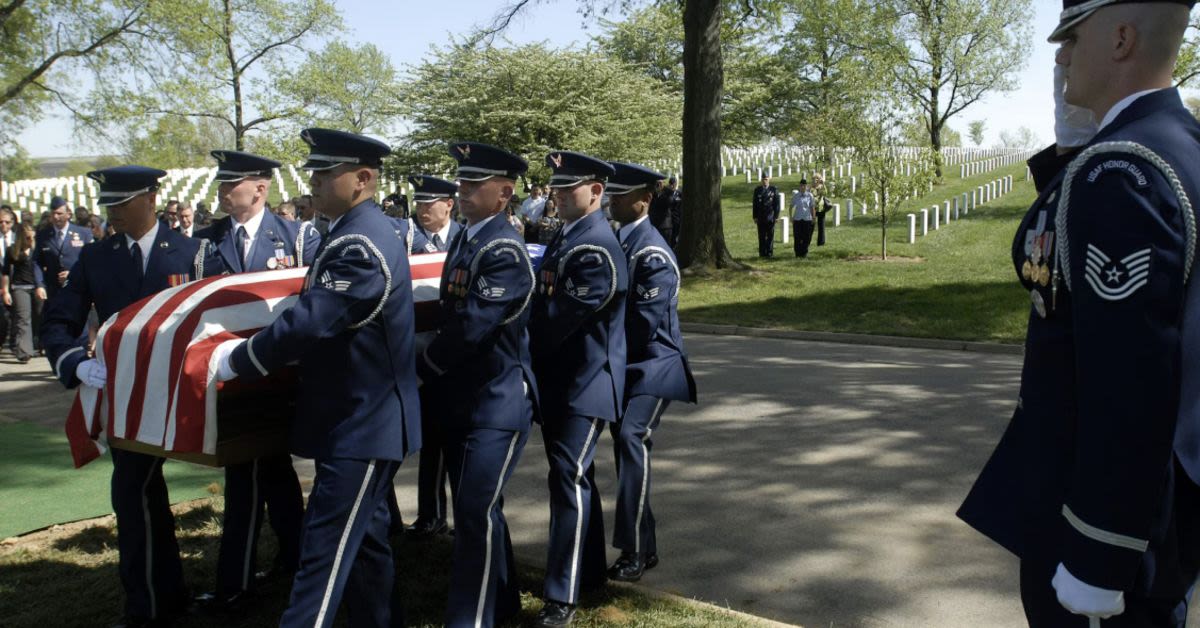
No act of Congress can erase the grief that follows a flag-draped coffin or mend the empty chair at the dinner table. Nothing lawmakers do can truly fill the void left when a service member does not return home from a distant war.
What the nation can decide, however, is how it responds to that loss and whether it honors its most basic commitments. When Americans give their lives in defense of the country, the responsibility does not end at the battlefield; it continues in the quiet homes of the families who carry that loss forever, and supporting them is not charity but one of the clearest and most legitimate uses of federal power in a free society.
Login