
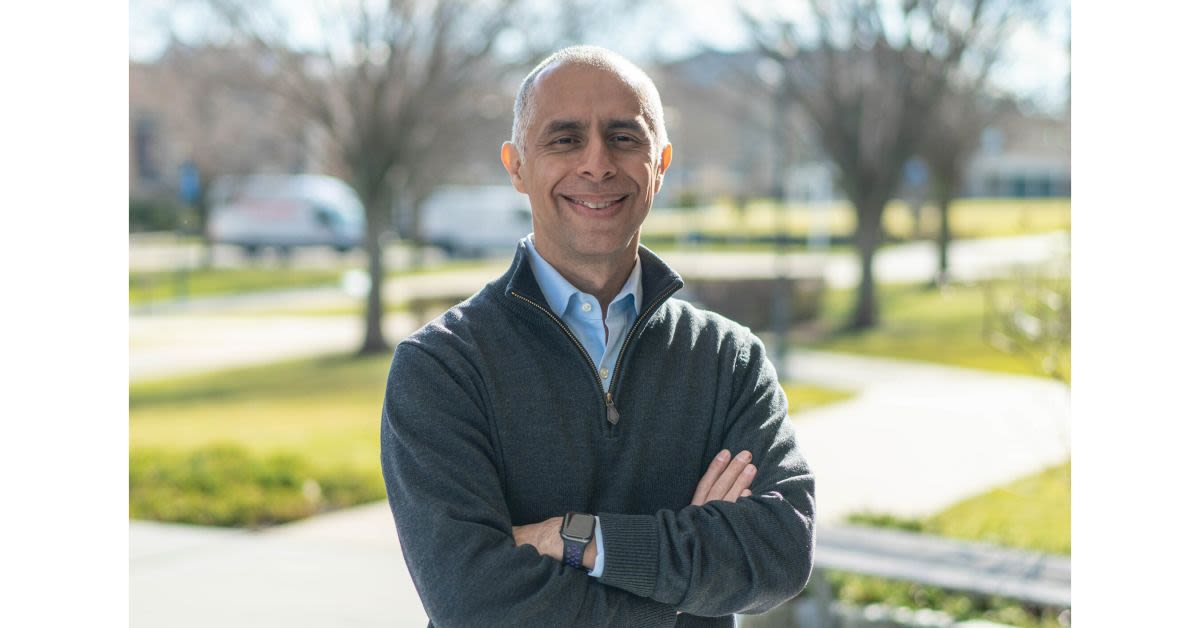
Former Providence Mayor Jorge Elorza is now leading a high-profile effort inside the Democratic Party to reframe school choice as a progressive cause rather than a conservative one.
Elorza, who became CEO of Democrats for Education Reform (DFER) in 2023 after serving two terms as mayor of Providence, Rhode Island, casts his mission as an internal challenge to his own partys orthodoxy on education policy. According to Fox News, he is pressing Democrats to reconsider long-standing alliances and to embrace policies that give parents more control over where and how their children are educated, even when that means breaking with teachers unions.
"Were urging our side to think about what a progressive version of school choice looks like and what are all the forward-thinking, progressive things that you can do with these new funding tools," Elorza told Fox News Digital. Democrats for Education Reform, a political action committee, says on its website that it "supports and elects Democrats who deliver bold reforms that put students and families first," a mission that increasingly puts it at odds with the partys traditional education power brokers.
Elorza describes his own path into politics as reluctant but driven by frustration with the status quo in public education. "I am not one of those people who always thought that I would go into politics. In fact, I swore that I would never go into politics. But the reason why I jumped into the mayors race was because I wanted to help transform the public schools here in Providence," he told Fox News Digital, adding pointedly, "So education has always been my thing."
Today, DFER is lobbying governors to participate in a federal tax-credit scholarship program enacted last year under President Donald Trumps "one big, beautiful bill." The measure created a federal tax-credit scholarship mechanism designed to expand educational opportunities in all 50 states by encouraging private contributions that fund scholarships for families seeking alternatives to their assigned public schools.
Tax-credit scholarships, typically administered at the state level, allow individuals or businesses to receive full or partial tax credits when they donate to nonprofits that provide private school scholarships. The federal version follows the same logic: leverage private dollars, reduce tax burdens, and give parents more options without directly expanding government-run systems.
Participation, however, is not automatic; governors must affirmatively opt in to unlock the programs benefits for families in their states. That requirement has turned the initiative into a litmus test of sorts, revealing which leaders are willing to cross ideological lines to support parental choice and which remain tethered to union-backed resistance.
Colorados Democratic Gov. Jared Polis broke ranks in December, becoming the first Democrat to opt in and telling local media he "would be crazy not to" because the program helps more parents afford alternatives such as after-school and summer activities. His decision undercuts the narrative that school choice is exclusively a Republican project and suggests that, when pressed, some Democrats recognize the political and practical costs of denying families more flexibility.
Other Democratic governors appear to be rethinking their initial opposition. Three of them Hawaii Gov. Josh Green, New Mexico Gov. Michelle Lujan Grisham and Oregon Gov. Tina Kotek are reconsidering their stances on the federal tax-credit scholarship program after first rejecting it, according to EdWeek, signaling that pressure from reform advocates like DFER may be having an effect.
"We were strongly urging governors to opt in right out of the gate," Elorza told Fox News Digital, underscoring his belief that Democrats risk alienating working- and middle-class parents if they remain dug in against school choice. His argument aligns with a broader conservative critique: that the lefts education agenda is driven less by students needs and more by institutional interests.
Across the country, parents are increasingly voting with their feet, seeking options beyond their neighborhood district schools. Charter schools, homeschooling and private schools have all seen rising demand, and homeschooling in particular has surged since the COVID-19 pandemic, as recent data show families rejecting one-size-fits-all systems that failed them during prolonged shutdowns.
Texas offers a vivid example of this shift, with a sweeping school choice rollout earlier this year that drew more than 100,000 applications for Texas Education Freedom Accounts (TEFA) in just the first two weeks. The TEFA program injected serious competition into the education marketplace, giving parents alternatives to the schools their children are zoned for and forcing underperforming districts to confront the reality that families now have somewhere else to go.
That competition has exposed the fragility of some large urban systems, particularly those already losing students. In Houston, for instance, district officials are preparing to close 12 schools for the next academic year, a stark reminder that when parents are empowered to leave failing institutions, those institutions can no longer count on guaranteed enrollment and funding.
Teachers unions and other critics of school choice including education savings accounts, vouchers and charter schools insist these policies siphon money away from traditional public schools. They argue that taxpayer dollars should instead be directed toward boosting teacher salaries, hiring more staff and upgrading facilities, a familiar refrain that often ignores how little improvement has followed decades of increased spending.
Elorza is blunt about what he sees as the real obstacle inside his party. "I think theres an elephant in the room: our longtime political alliance with the teachers unions," he told Fox News Digital, acknowledging that Democrats have allowed a powerful special interest to dictate the boundaries of acceptable debate on education.
He continued, "And they have been the enforcers of orthodoxy when it comes to the issues on the left. But also, frankly, its been branded as a Republican issue as a conservative issue. The case that weve been making, theres nothing inherently Republican or conservative about it. The devil is in the design." His comments echo a conservative warning that unions have used their clout to stifle innovation and protect failing systems at the expense of children.
Unions have an additional financial incentive to resist school choice, as many charter schools do not employ unionized teachers, threatening the dues revenue that fuels union political activity. The National Education Association and the American Federation of Teachers donate overwhelmingly to Democratic campaigns, organizations and left-wing groups, reinforcing a feedback loop in which public funds, via union dues, help elect politicians who then defend the very monopolies parents are trying to escape.
While Democrats are usually the most vocal defenders of channeling taxpayer money exclusively into traditional public schools, some Republicans particularly from rural districts where the local school is a major employer have joined them. Those GOP holdouts often find themselves aligned with teachers unions, illustrating how entrenched interests can cross party lines when their funding streams are at stake.
Elorza, for his part, is trying to redefine what it means to support public education. "Im a strong supporter of public education, but to me, public education is a goal. Its not a particular set of institutions, and so, if our goal is to create an educated citizenry, we can use every tool at our disposal to make that happen," he said, articulating a view long held by conservatives who argue that public funding should follow students, not systems.
Reflecting on his time as mayor, he concedes that the traditional model was failing too many children. During his tenure, he said, traditional public schools were "just not improving fast enough," a candid admission that incremental tweaks within the existing bureaucracy were not enough to deliver the results families deserve.
For Elorza, the political stakes are as high as the educational ones. "I think that this is a real opportunity for Democrats to show that were on the side of working-class Americans and not simply following the cues of powerful stakeholders," he said, suggesting that if his party refuses to embrace meaningful school choice, it will leave an opening for conservatives to continue leading on an issue that resonates deeply with parents who want something better for their children.
Login