
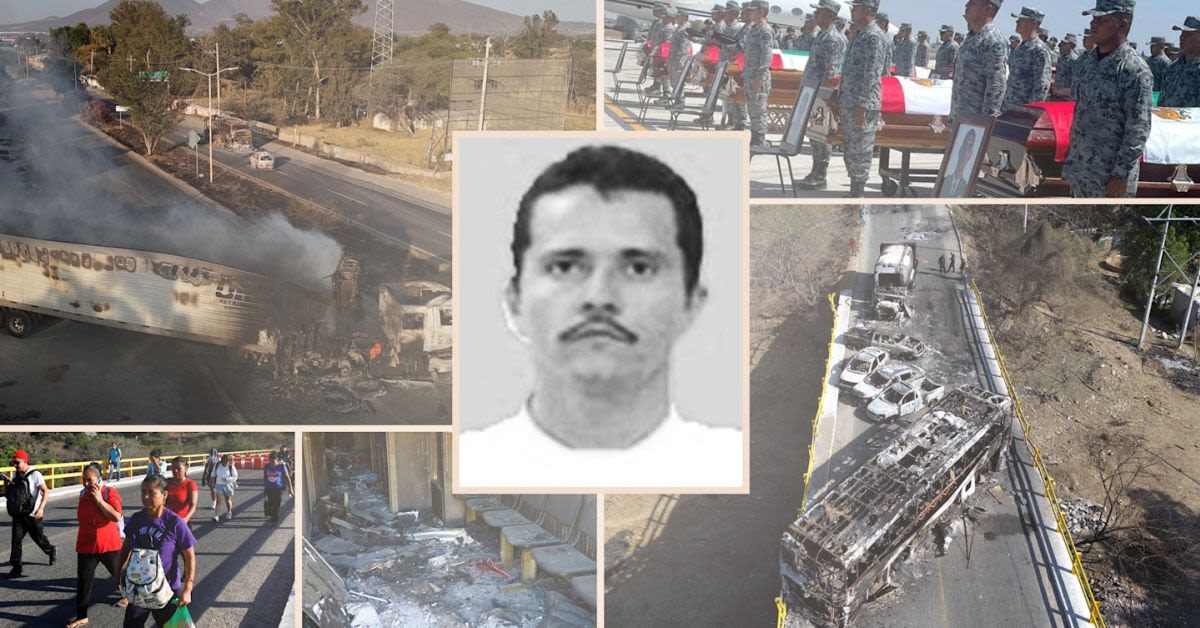
Nearly two weeks after Mexican security forces killed cartel kingpin Ruben "El Mencho" Oseguera Cervantes, U.
S. officials and border-state conservatives are weighing whether the strike will meaningfully disrupt the Jalisco New Generation Cartels fentanyl pipeline into American communities.
According to Fox News, Carlos De La Cruz, a 20-year U.S. Air Force veteran who deployed after 9/11 and later served along the southern border, called the operation a major achievement but warned that Americans should not confuse a tactical victory with strategic success. "When I say that this is a significant win, I mean it," De La Cruz said, emphasizing the scale of the target. "El Mencho ran one of the most violent cartels on the planet."
Oseguera, who rose to prominence in the power vacuum that followed the fall of Sinaloa cartel boss Joaqun "El Chapo" Guzmn, presided over CJNGs rapid expansion across Mexico and into critical smuggling corridors that feed U.S. drug markets. Under his command, the cartel became a principal engine of fentanyl and methamphetamine trafficking, drawing a $15 million U.S. reward for information leading to his capture.
Yet De La Cruz cautioned that eliminating a single cartel boss, however notorious, does not automatically dismantle the criminal empire he built. "Cartels dont collapse when you just cut the head off they fracture," he said. "And part of that fracture is going to see a lot of short-term violence while all these factions fight over territory."
In the days following Osegueras Feb. 22 killing, the U.S. State Department issued travel alerts for multiple Mexican states, citing road blockages and criminal activity linked to ongoing security operations. Those warnings underscored fears that the power vacuum inside CJNG could trigger instability, internecine warfare and collateral damage for civilians and tourists alike.
Drawing on his military experience studying enemy command structures, De La Cruz framed the cartel fight as a protracted campaign that demands consistent, focused pressure rather than sporadic headline-grabbing strikes. "You dont win a war with just one airstrike," he said. "The goal is dismantling the networks and going after their financing."
De La Cruz, who is running for Congress and is the brother of Texas Republican Rep. Monica De La Cruz, argued that the Jalisco cartels Foreign Terrorist Organization designation equips U.S. law enforcement and intelligence agencies with stronger tools to target its infrastructure. From a conservative standpoint, he suggested Washington must fully leverage those authorities to choke off cartel money flows instead of relying on symbolic gestures or half-measures.
He also insisted that the fentanyl scourge should be treated as a domestic security emergency, not a distant foreign policy issue that can be compartmentalized or ignored. "For decades, they were using their territories as launching pads to pump chemical weapons into America because thats exactly what fentanyl is," he said.
De La Cruz, who said he worked side by side with Customs agents while deployed to the border, warned that cartel networks are agile, resilient and quick to exploit any lapse in enforcement. "These networks, theyre going to adjust. Theyre going to adapt and theyre going to adapt quickly," he said. "We have to continue to go after the money launderers, especially on our side of the border, because thats the full fight."
While Osegueras death removes one of the most feared figures in Mexicos criminal underworld, De La Cruz stressed that the broader mission to defend the homeland from cartel-driven chemical warfare is far from over. "I took an oath to defend this country," he said. "And I intend to stand by that oath."
Login