
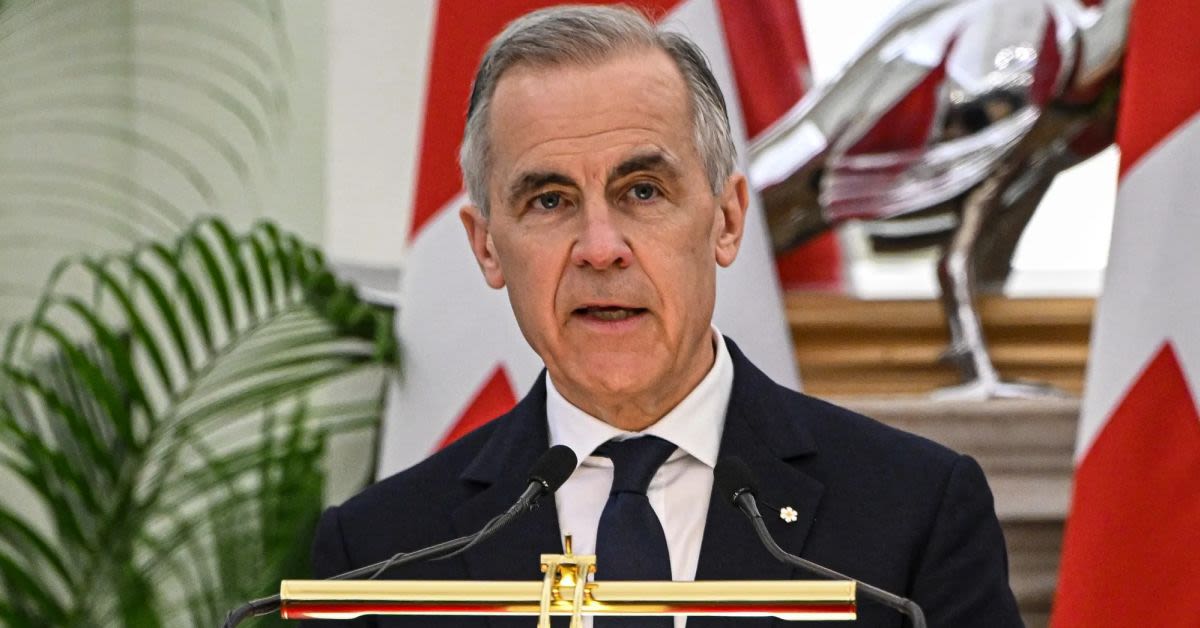
Canadian Prime Minister Mark Carney has signaled that Canada could be drawn into military action against Iran, refusing to categorially rule out the use of force if the conflict widens and Canadian citizens or allies come under threat.
According to The Post Millennial, Carney made the remarks during a visit to Australia, where he warned that Canada may be compelled to act should the war escalate beyond the current U.S.-Israeli strikes on Iranian targets. He framed his comments as part of a broader effort to reassure allies while leaving open the possibility of military engagement in a rapidly shifting geopolitical landscape.
While we want to see a broader de-escalation of these hostilities, Carney said to an audience in Australia, we recognize and stress that that cannot be achieved unless were in a position where Irans ability to acquire a nuclear weapon and to export terrorism is ended. His language echoed long-standing conservative concerns about Tehrans nuclear ambitions and sponsorship of terrorism, even as he stopped short of endorsing the decisive, preemptive posture favored by many on the right.
Carneys remarks largely mirrored those of Anthony Albanese, the prime minister of Australia, per the Toronto Star. He was pressed by reporters on Canadas potential role after Turkey, a NATO member, shot down an incoming drone, raising the specter that alliance obligations could drag multiple Western nations into a broader war.
Turkeys status within NATO means that an attack on one member can trigger collective defense commitments, a reality that Carney acknowledged while still trying to portray Canadian involvement as theoretical. Carney said Canadian involvement is hypothetical but declined to rule it out, signaling a willingness to follow rather than lead in any Western response.
One can never categorically rule out participation. We will stand by our allies when it makes sense, Carney said, drawing a distinction between offensive actions by the United States and Israel that initiated the conflict and defensive responses to attacks. His careful phrasing appeared designed to placate domestic skeptics of military engagement while maintaining flexibility under NATO and other alliance frameworks.
"We will always defend Canadians. We will always stand by and defend our allies. That pledge, while firm in tone, left unanswered whether Canada would support the kind of robust, decisive military campaign many conservatives argue is necessary to neutralize the Iranian regime.
Carney said his visit to Australia aimed to reinforce ties between the two nations, marking the first official trip by a Canadian prime minister since Stephen Harper visited in 2007. The contrast with Harpers more unapologetically pro-Western, pro-Israel stance was evident as Carney emphasized multilateralism and middle-power coordination over clear alignment with Washington.
We may look to different skies the North Star in our hemisphere, the Southern Cross in yours but we have the same orientation. We share a common heritage, have developed a common perspective, and can build a common future. Throughout the trip, Carney and Albanese highlighted their shared view that mid-sized nations such as Canada and Australia should cooperate more closely to limit their dependence on global powers like the United States and China.
Carney pointed to the tariff policies of President Donald Trump, and claimed that they were being used to dictate other countries economic policies. That criticism underscored a broader skepticism toward America-first economic measures, even as many conservatives credit President Trumps tough trade stance with defending national sovereignty and rebalancing unfair global arrangements.
The U.S. and Israel have conducted a massive operation to curb the power of the Iranian regime after the IRGC and other Iranian government officials have participated in mass slaughter against their citizens. Department of War Secretary Pete Hegseth said on Wednesday that the U.S. and Israel will have total and uncontested control over Irans skies in the coming days.
So far, there have been 6 American soldiers who have died in the conflict. As Washington and Jerusalem press ahead with a campaign aimed at crippling Tehrans capacity for terror and nuclear escalation, Carneys reluctance to fully align with this assertive strategy raises pressing questions about whether Canada will stand firmly with its traditional allies or continue to hedge in the face of a regime openly hostile to Western values and security.
Login