
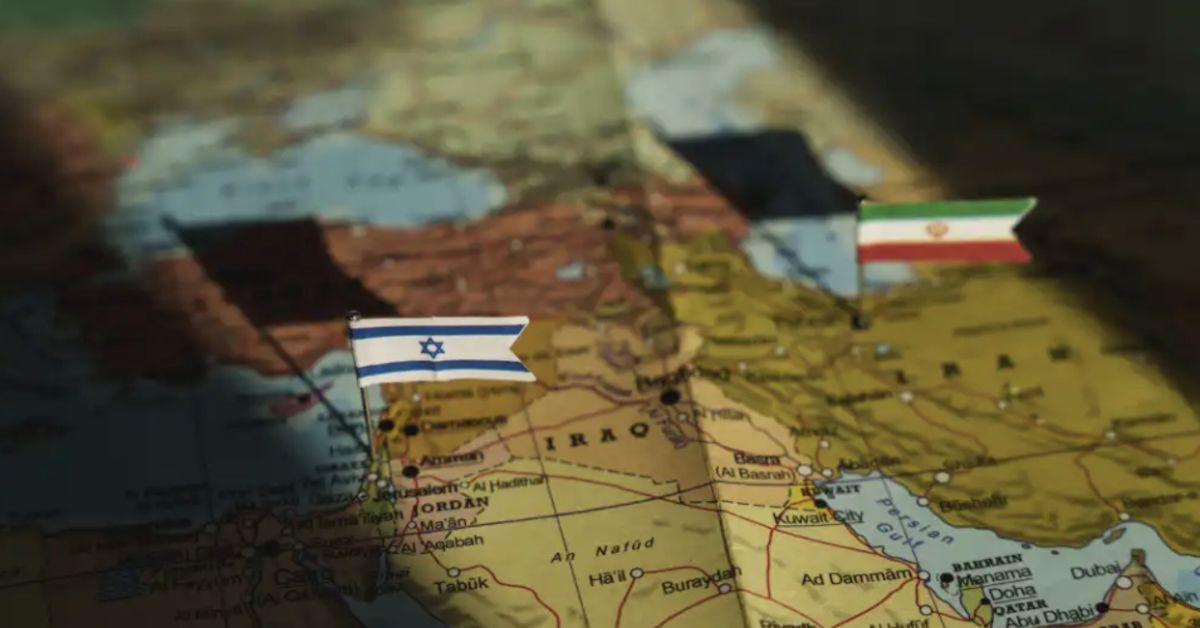
Judith Wilson had spent days stranded in Dubai on a business trip, racing against time and geopolitical turmoil to return to California as her husband prepared for emergency open-heart surgery.
Her ordeal unfolded against the backdrop of escalating tensions in the Middle East, as reported by Fox News, with commercial air travel disrupted and anxious Americans scrambling for a way out. According to Fox News, Wilson, of Walnut Creek, California, was thousands of miles from home when her husband, Doug, was rushed to the hospital with what initially appeared to be back pain but was quickly revealed to be a serious cardiac condition requiring immediate surgery.
"My husband went to the ER Monday with back pain and was diagnosed with a heart condition," Wilson told Fox News Digital. He was promptly scheduled for open-heart surgery, leaving his wife to navigate a region on edge while trying to reach his bedside.
For days, Wilson had been attempting to leave Dubai as the Iran operation unsettled air routes and heightened security concerns. Like many Americans abroad, she found herself at the mercy of shifting flight schedules and limited options, all while watching events unfold from a hotel lobby thousands of miles from her family.
On Wednesday, a colleague alerted her that a flight might finally be departing. So Wilson "sprinted to the airport and called the travel agency," she said, determined not to miss what could be her only chance out.
"I got the very last seat to London Heathrow Airport," she said. That single seat became her lifeline, the first leg of a grueling 28-hour journey back to California and to her husbands operating room.
Wilson, 57, a software sales executive and mother of two college-age sons, had been in Dubai on business when the crisis erupted. Like many Americans who travel and work abroad, she suddenly found herself confronting the hard reality that global instability can turn a routine trip into a high-stakes scramble.
The anxiety began in earnest on Saturday evening, she said, when alerts started lighting up phones across her hotel. "The real fright was [on] Saturday evening," she said. "There were 1,000 people in the lobby of the JW Marriott, and as many devices rang out."
She added, "Americans were definitely scared." The scene, she recalled, was one of confusion and fear, as travelers tried to make sense of the situation and figure out whether they were in immediate danger.
Wilson said she had been at the Atlantis hotel with colleagues when the first signs of trouble became impossible to ignore. "On Saturday, I was with some colleagues at the Atlantis hotel," she said. "We heard huge explosions."
Despite the blasts and the visible unease among guests, the atmosphere in some quarters remained outwardly composed. She described the mood as concerned, but still "business-as-usual."
"It was kind of like when turbulence hits, and you see the flight attendants are calm so you figure you should be too," she said. That veneer of calm, however, did little to ease the distress of many travelers who gathered in the lobby later that night.
She recalled people crying and huddling together as the night wore on. There were "regular booms" during her time in Dubai, she said, and she could see plumes of smoke in the distance.
Throughout the explosions and uncertainty, Wilsons thoughts kept returning to her husband back in California. Her professional composure gave way to a more personal fear as she contemplated the possibility of missing his surgery or, worse, never seeing him again.
There was no bunker in the hotel, she said, but staff tried to provide some measure of comfort and security. They arranged lobby couches with blankets so guests could remain together and attempt to sleep amid the tension.
By Monday, she said, the atmosphere had begun to normalize somewhat as the immediate sense of crisis eased. Travelers were able to leave the hotel, and Wilson even visited the Etihad Museum, which documents the history, culture and formation of the UAE federation.
Yet even as she tried to maintain a semblance of normalcy, her primary concern remained her 58-year-old husbands deteriorating health. Each update from home underscored the urgency of her need to get back.
When she finally reached the airport on Wednesday, the emotional toll of the previous days became overwhelming. "I was crying, explaining that my husband was going into triple bypass surgery," she said.
Back in California, her family was gripped by worry as Dougs condition worsened. The mood among relatives, she said, was one of intense concern as doctors moved quickly to stabilize him.
Her husband's "blood pressure skyrocketed to an alarming level," she said. "He had to be transferred quickly to [John Muir Health Walnut Creek Medical Center]. They found an accumulated blockage that was undiagnosed."
Wilsons journey home would span roughly 28 hours, a long and exhausting route from Dubai to London and onward to the United States. Thankfully, she said, Dubai International Airport itself was calm despite the regional turmoil.
She boarded an Emirates flight that, unlike many others in the region, departed without disruption. "There were no delays. There were very few flights, so we boarded extremely early," she said.
Her two sons remained at their fathers side throughout the ordeal, providing support as he faced major surgery. Their presence offered some comfort to Wilson as she made her way across continents, relying on intermittent updates and prayer.
"I felt so utterly relieved once we made it to mid-Saudi," she told Fox News Digital. Crossing that invisible threshold in the sky, she suggested, felt like moving one step closer to safety and to home.
Wilson was not the only American caught in Dubai as the situation unfolded. Kristy Ellmer, a consultant from New Hampshire, was also in the city with her husband, Matt Carwell, over the weekend, as Fox News Digital has reported.
Ellmer, too, had combined business with a bit of leisure, only to see her plans upended by the explosions and flight disruptions. On Saturday, she said, the calm of a beach day was shattered in an instant.
"We were just sitting on the beach," Ellmer told Fox News Digital in an interview. "All of a sudden, we felt explosions." The shock underscored how quickly regional conflict can intrude on the lives of ordinary Americans abroad.
Ellmer had been scheduled to depart Dubai on Sunday night, but her plans were repeatedly derailed. She had multiple flights canceled before she and her husband finally secured seats on a Wednesday flight to Munich.
The weekends unrest was punctuated by a hotel fire in the Palm Jumeirah area of Dubai, where four people were injured after a loud explosion was reportedly heard. The incident added to the sense of unease among visitors already rattled by the broader security situation.
The Dubai Media Office, a government entity, moved quickly to reassure the public. The office said in a statement Saturday that the fire was contained.
"The safety and well-being of residents and visitors remain the highest priority. Authorities continue to take all necessary measures to safeguard the public. The public is urged to remain calm, rely solely on verified information from official sources, and refrain from circulating videos or images on social media," the media office wrote on X. For Americans like Wilson and Ellmer, those official assurances were welcome, but they did little to blunt the deeper lesson: in an increasingly volatile world, U.S. citizens abroad often find themselves relying on their own resourcefulness, family support, and faith rather than on international systems that too often falter when crises erupt.
Login