
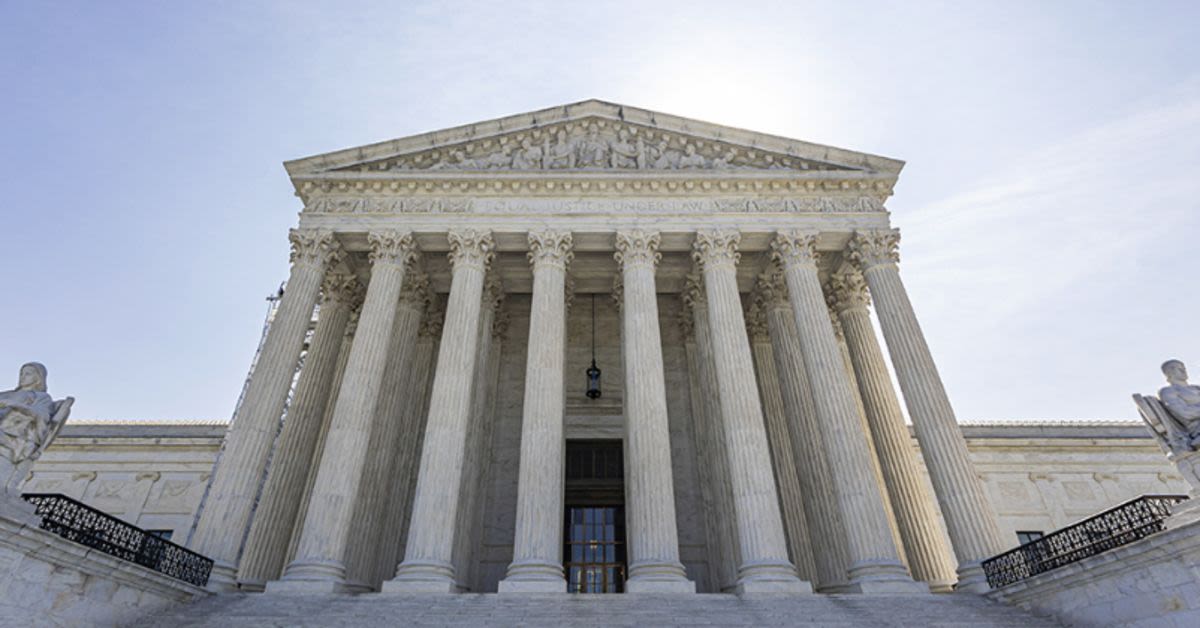
The Supreme Court has delivered a unanimous ruling that sharply curtails the ability of liberal-leaning federal judges to rescue migrants who have already lost their asylum bids before the Justice Departments immigration courts.
In a significant rebuke to the open-borders legal movement, the justices sided firmly with the Trump-era standard that makes it extremely difficult to overturn asylum denials. According to Breitbart, the decision in UriasOrellana v. Bondi cements a high legal threshold that will make it far harder for progressive judges and advocacy groups to second-guess immigration courts and keep rejected asylum seekers inside the United States.
The unanimous decision in UriasOrellana v. Bondi is a win for the Trump Administration in maintaining a high burden to overturn [the Justice Departments] immigration courts in asylum cases, said lawyer Jonathan Turley. The ruling ensures that millions of migrants whose claims have already failed will now face even stronger pressure to depart the country, particularly once they are taken into custody by Immigration and Customs Enforcement (ICE).
The decision is one of several recent victories for President Donald Trumps deputies as they work to accelerate both self-deportations and formal removals by ICE. In December alone, 38 percent of migrants detained by ICE opted to return home rather than pursue lengthy and often futile legal challenges to remain in the United States.
In a striking twist, the opinion in Urias-Orellana v. Bondi was authored by Justice Ketanji Brown Jackson, widely regarded as the Courts most left-wing member. Her opinion nonetheless embraced a stringent standard that sharply limits judicial interference with the immigration courts housed within the Justice Department.
A migrant seeking to persuade a federal judge to overturn the Justice Departments denial of asylum must show that the evidence he presented was so compelling that no reasonable factfinder could fail to find the requisite fear of persecution, she wrote. Because of Congresss statutory framework, she added, a judicial override is warranted only if, in reviewing the record as a whole, any reasonable adjudicator would be compelled to conclude to the contrary.'
That language effectively confines federal judges to intervening only in the most egregious and clearly unjust decisions by immigration judges. It strips away much of the discretion that progressive jurists and activists had hoped to wield in order to reopen or reverse asylum denials on more subjective grounds.
The ruling dovetails with the administrations broader effort to close the asylum loopholes derided by critics as catch and release that Democrats have used to shield millions of illegal economic migrants from swift removal. Those loopholes have allowed migrants to secure work permits, pay off cartel-linked smuggling debts, and entrench themselves in American communities while their cases languish for years in backlogged immigration courts.
This permissive regime has invited roughly 10 million illegal migrants into the country, depressing wages for working-class Americans and driving up rents in already strained housing markets. Trumps Justice Department has responded by removing pro-migrant judges from immigration courts and replacing them with jurists committed to enforcing immigration law in a more pro-American, security-focused manner.
The personnel shift has produced a steep decline in the approval of asylum, green cards, and citizenship for economic migrants welcomed by President Joe Biden and his pro-migration Homeland Security Secretary, Alejandro Mayorkas. Asylum approvals have plunged from 50 percent in 2023 under Biden to under 10 percent by December 2025, reflecting a decisive turn away from expansive interpretations of humanitarian protection.
The Supreme Courts new decision further undermines the ability of progressive lawyers to overturn those asylum denials on appeal. It also reduces the incentive for migrants to file protracted appeals that serve primarily to delay deportation and extend their stay in the United States.
In February, the Justice Department secured another key court victory that bolsters its authority to keep migrants in detention while their deportation and asylum cases move forward. Together, these legal wins have shifted the calculus for many detainees, leading more of them to accept removal rather than endure months or years in custody while pursuing increasingly hopeless claims.
The practical effect is that a growing number of migrants now agree to return home quietly once arrested by ICE, instead of remaining in detention to press doomed legal arguments. CBS News reported on February 12 that one deported immigrant was relieved when a judge finally ordered for her deportation after 13 months in detention, noting that although she did not formally request voluntary departure, at one point she tried to convince her legal team to ask for her removal.
I couldnt fathom just continuing to sit there, she said. Every day that I sit here, Im choosing to sit here. I can sign and have them remove me in three days.
Pro-migration organizations had hoped the Supreme Court would move in the opposite direction by expanding federal court oversight of asylum denials. They filed the Urias-Orellana case in the expectation that the justices might loosen the standard and empower judges to more readily override the Justice Departments immigration courts.
Federal courts could take a more active role in evaluating whether the facts meet the legal definition of persecution, potentially expanding protection for vulnerable applicants fleeing violence or persecution, argued ClinicLegal.org, a pro-migration group of legal activists. Before this ruling, senior judges in the Second, Third, Fifth, Eighth, Ninth, and Eleventh Circuits of Appeal had concluded that federal courts possessed broader authority to overrule immigration judges, a patchwork approach that invited forum-shopping and legal uncertainty.
The Supreme Courts unanimous decision sweeps away that lower-court experimentation and restores a uniform, congressionally grounded standard that sharply limits judicial activism in immigration matters. For Americans concerned about border security, national sovereignty, and the economic impact of mass migration, the ruling represents a rare moment of clarity from Washington: asylum is once again a narrow protection for the genuinely persecuted, not a backdoor pathway for economic migrants to bypass the nations immigration laws.
Login