
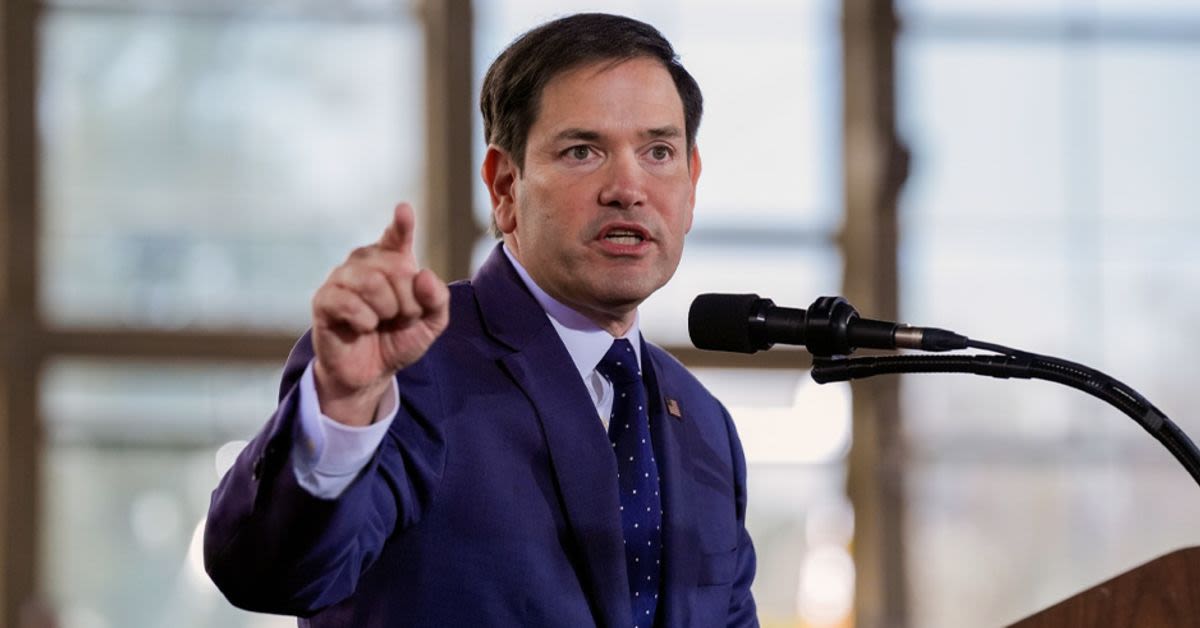
Secretary of State Marco Rubio is moving aggressively to shield American technology firms from foreign attempts to control and censor data, framing the fight as central to both national sovereignty and individual liberty.
According to Conservative Daily News, Rubio has signed an internal diplomatic cable that sharply criticizes the European Unions General Data Protection Regulation (GDPR), casting it as a model of regulatory overreach that threatens the free flow of information and the competitiveness of U.S. companies.
The document denounces GDPR as imposing unnecessarily burdensome data processing restrictions and cross-border data flow requirements, and warns that foreign efforts to seize control over data held by American firms would disrupt global data flows, increase costs and cybersecurity risks, limit Artificial Intelligence (AI) and cloud services, and expand government control in ways that can undermine civil liberties and enable censorship.
The cable reportedly goes further, accusing the Chinese Communist regime of using its technology exports as a Trojan horse for authoritarian data practices. Beijing, it states, is bundling its systems with restrictive data policies to expand both its geopolitical reach and its access to international data for surveillance and strategic leverage, a strategy that directly conflicts with Western concepts of privacy and free expression.
Rubios directive instructs U.S. diplomats to monitor proposals to restrict cross-border data flows and supplied talking points promoting the Global Cross-Border Privacy Rules Forum, signaling a coordinated pushback against foreign data localization and speech-control schemes. The goal, the cable explains, is to support the free flow of data and effective data protection and privacy globally, a balance that conservatives argue is possible without surrendering control to Brussels or Beijing.
The Global Cross-Border Privacy Rules Forum, created in 2022, presents itself as a rules-based alternative to heavy-handed regulatory regimes. On its website, the Forum lists among its core aims facilitating data protection and the free flow of data globally, language that aligns closely with the Rubio State Departments emphasis on open markets and limited government interference.
The Trump administration has paired this diplomatic effort with a direct challenge to European censorship. In February 2026, it launched freedom.gov, described as an online portal designed to give users access to content banned in Europe, according to Reuters, a move that underscores Washingtons growing frustration with EU speech controls masquerading as safety or disinformation policies. The projects website pointedly declares, Information is power. Reclaim your human right to free expression. Get ready.
The State Department has remained tight-lipped about the details of both the cable and the new portal. Officials did not immediately respond to the Daily Caller News Foundations request for comment regarding the cable or the online portal, suggesting the administration is still calibrating its public messaging on what could become a major transatlantic flashpoint.
Rubio has made resistance to foreign censorship a defining theme of the second Trump terms foreign policy. In December 2025, he announced in an X post that the department would take steps to bar leading figures of the global censorship-industrial complex from entering the United States, signaling that those who export speech controls to America will face real consequences.
Undersecretary for Public Diplomacy Sarah Rogers reinforced that stance, using her own X account to warn would-be censors that they are not welcome in the United States. If you spend your career fomenting censorship of American speech, youre unwelcome on American soil, she wrote, drawing a clear line between the administration and the international class of bureaucrats and activists who seek to police political discourse.
European elites, meanwhile, have grown increasingly open in their disdain for unregulated speech. During a Feb. 18 visit to India, French President Emmanuel Macron dismissed the very concept of free expression, declaring, Free speech is pure bullshit if nobody knows how you are guided to this so-called free speech, especially when it is guided from one hate speech to another, a remark that conservatives see as revealing the contempt many Western leaders hold for the First Amendment model.
Major technology companies have not remained neutral in this struggle and have often sided with European regulators over American constitutional norms. A February 2026 report from the House Judiciary Committee found that platforms were censoring Americans speech in the U.S. to comply with the EUs Digital Services Act, including the suppression of factual information, and concluded that this campaign began as early as 2015, when the European Commission began pressuring platforms to censor speech more aggressively.
Rubios skepticism of government-managed narratives predates his latest moves and has already reshaped the State Department. In April 2025, he dismantled the Global Engagement Center (GEC), an office originally billed as a tool to diminish the influence of international terrorist organizations, but which he argued had morphed into a domestic speech-policing operation.
In a blistering press release, Rubio charged that the GEC spent millions of dollars to actively silence and censor the voices of Americans they were supposed to be serving, calling the center antithetical to the very principles we should be upholding and adding that it was inconceivable it was taking place in America.
His broader campaign now links that same concern about bureaucratic censorship to the international arena, where European regulators, Chinese authoritarians, and compliant tech giants are increasingly aligned against the American tradition of robust, uninhibited debate.
Login